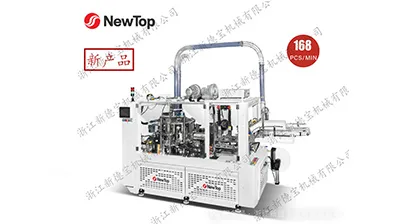

NewTop people pursue the concept of high quality and technology leading.
By changing the working mode with intelligent paper cup machine to make the operation more and more simple.

Every cup manufacturer remembers that moment: a major client’s order jumps from 100,000 pieces a week to half a million. Excitement quickly turns into anxiety when your existing production line starts gasping for air. Shift workers run overtime, quality becomes inconsistent, and delivery deadlines slip.
You are not alone. According to industry feedback from mid-sized packaging suppliers, nearly 60% of production bottlenecks appear when monthly volume exceeds 3 million cups — exactly the point where traditional low-speed equipment hits its ceiling.
Many business owners hesitate to upgrade because their current cup forming equipment still runs. But here’s what often gets overlooked: low-speed machines don’t just limit output — they quietly raise your per-unit cost.
Take a typical 40–50 cups per minute (CPM) machine. At full capacity (assuming 85% efficiency), it produces roughly 20,000 cups per 8-hour shift. To fulfill a 500,000-cup weekly order, you would need three shifts running six days a week — plus frequent die changes for different cup sizes. Each changeover consumes 45–90 minutes of non-productive time.
In contrast, modern high-speed lines operate at 100–120 CPM with automated size adjustment. That same weekly volume requires just one shift, five days a week. The math is simple: lower labor cost, less energy consumption, and fewer maintenance interruptions.
Not every growing business needs to invest immediately. Based on operational benchmarks used by industry consultants, here are four clear signals that it’s time to evaluate high-speed alternatives:
1. Your machine utilization rate exceeds 90% for three consecutive months.
That means no buffer for unexpected orders or emergency maintenance. Any spike becomes a crisis.
2. Overtime pay has grown faster than your cup revenue.
If your labor cost per thousand cups jumps by more than 15% year-over-year, your equipment is inefficient.
3. You are turning down small-to-medium orders because changeover takes too long.
These are your future big clients. Losing them stunts growth.
4. Defect rates rise whenever you push speed beyond 80% of rated capacity.
This indicates your current system lacks the rigidity and precision needed for consistent high-speed forming.
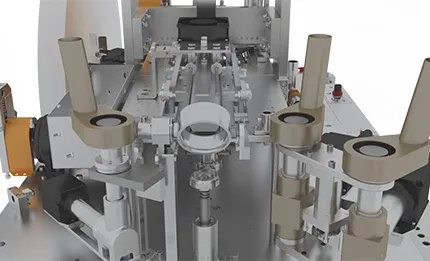
If you recognize two or more of these signals, it’s worth exploring what modern cup forming lines can do for your bottom line. Learn more about the key technical upgrades that eliminate these bottlenecks — from servo-driven indexing to intelligent temperature control.
Many buyers focus solely on the purchase price. That’s a mistake. The real calculation is Total Cost of Ownership (TCO) over 3–5 years.
Let’s walk through a simplified example (based on actual quotes from Asian machinery suppliers):
| Factor | Low-Speed (50 CPM) | High-Speed (110 CPM) |
| Machine price | $45,000 | $98,000 |
| Operators per shift | 2 | 1 |
| Energy (kWh per 10k cups) | 32 | 21 |
| Die change time (minutes) | 60 | 15 |
| Scrap rate | 2.5% | 1.2% |
| Annual maintenance cost | $6,000 | $4,500 |
Assuming a 500,000-cup weekly order, 50 working weeks per year:
Low-speed TCO (year 3): $45k + (labor & energy & scrap) ≈ $214,000
High-speed TCO (year 3): $98k + (lower labor & energy & scrap) ≈ $176,000
The high-speed system pays for the difference in less than 18 months — and after that, it keeps saving.
Through dozens of conversations with plant managers, three myths keep coming up:
Myth 1: “High-speed machines are harder to maintain.”
Actually, most modern systems use modular components with self-diagnostics. Mean time to repair (MTTR) is often lower than low-speed machines because parts are standardized.
Myth 2: “We need perfect operators.”
High-speed equipment typically comes with user-friendly HMIs that guide operators through size changes and troubleshooting. Some even include remote support capabilities.
Myth 3: “Our current molds won’t fit.”
This can be a valid concern — but many suppliers now offer adapter kits or will customize the forming turret to accept your existing tooling. Always ask before assuming incompatibility.
To avoid costly mismatches, always request a full compatibility check before purchasing. See how modular cup machine designs handle different mold standards — including the most common European and Asian rim-forming systems.
When evaluating high-speed cup production equipment, don’t just compare CPM numbers. Here are three underrated features that separate reliable systems from problematic ones:
Heating zone uniformity: Poor temperature distribution causes inconsistent rim sealing. Ask for thermal imaging reports or test-run samples at maximum speed.
Paper feeding tension control: Automatic tension regulation prevents paper tearing and reduces waste. Manual tension systems are a red flag on any machine rated above 80 CPM.
Lubrication system: Centralized auto-lubrication extends cam follower life by 300% compared to manual greasing. Check if it’s standard or optional.
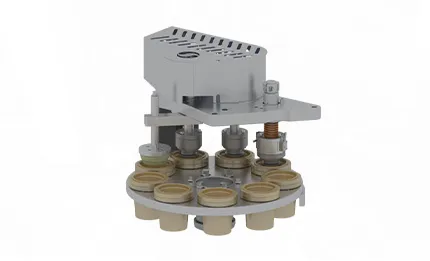
You don’t have to replace your entire floor at once. A common growth strategy is to keep your existing units for small-batch or backup purposes, and add one high-speed line for your top 3–5 cup sizes (typically 8 oz, 12 oz, 16 oz). Once you’ve validated the ROI, expand.
Also, don’t overlook after-sales support. A machine is only as good as the parts and service behind it. Ask potential suppliers about spare part lead times, remote troubleshooting availability, and whether they offer operator training at your facility.
If you are currently evaluating high-speed cup forming solutions for your growing business, NewDeBao provides systems designed specifically for scaling manufacturers — from 80 CPM entry-level high-speed to 120 CPM fully automated lines. Check out their product lineup and request a TCO worksheet tailored to your order volume.
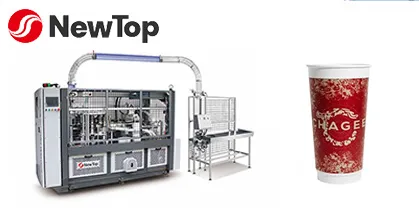
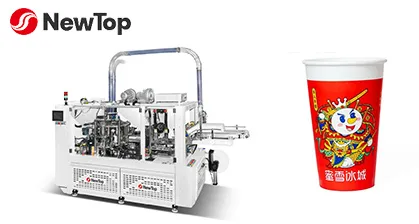
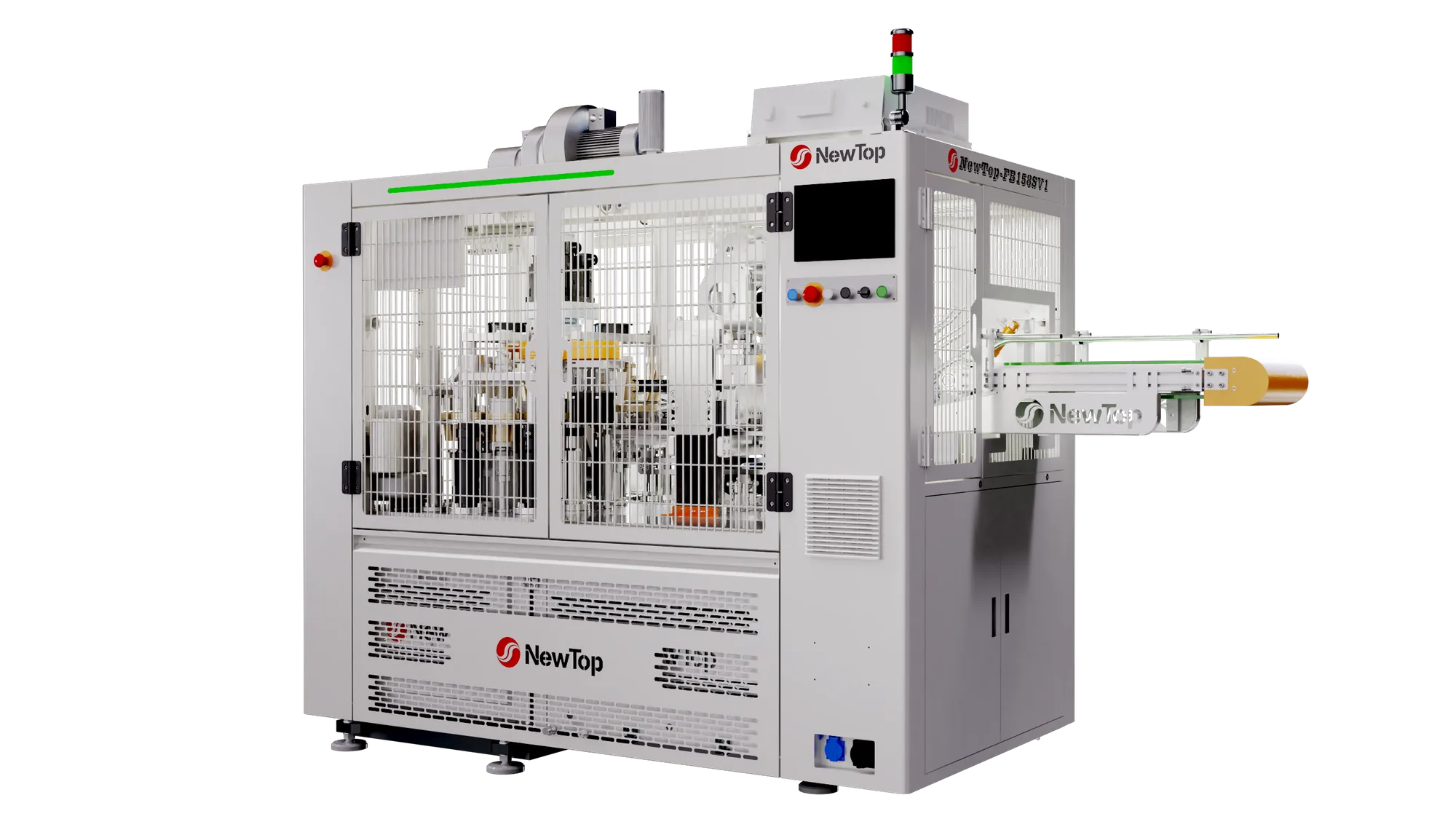
2.5oz-12oz Paper Cup Size
168-175 pcs/min Max Capacity
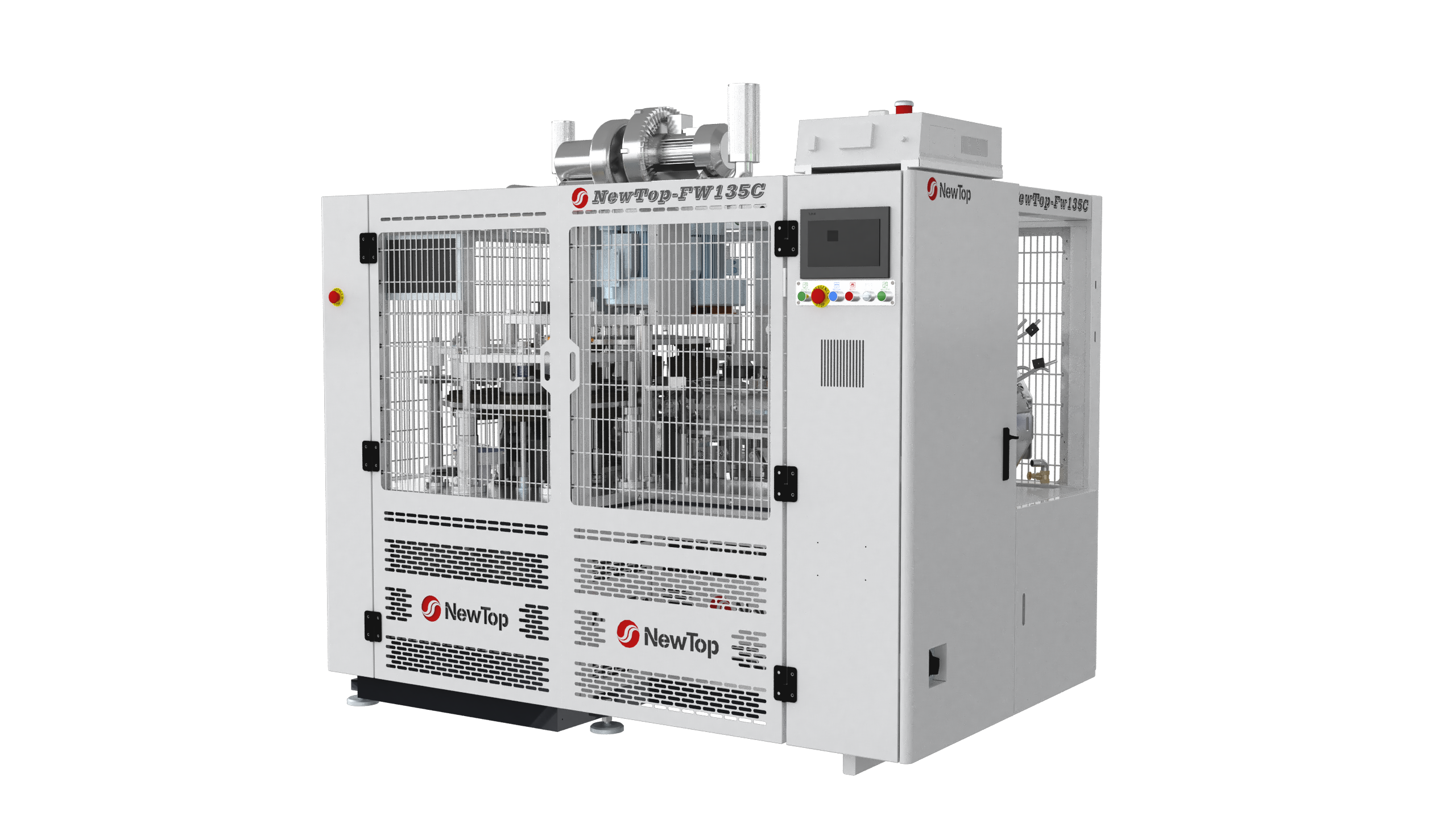
16-42oz Paper Cup Size
140 pcs/min Max Capacity
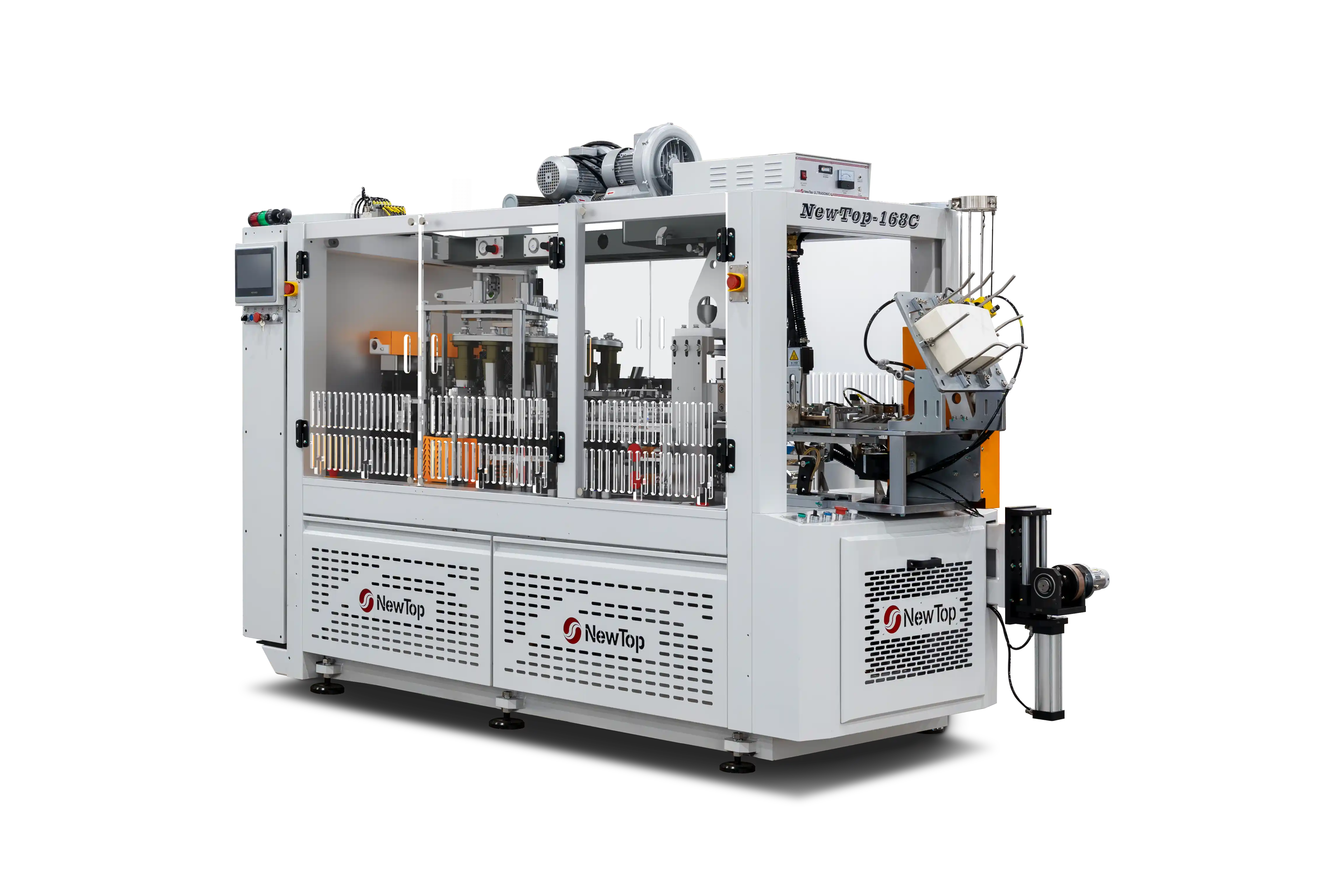
16-22oz Paper Cup Size
138 pcs/min Max Capacity


NewTop people pursue the concept of high quality and technology leading.
By changing the working mode with intelligent paper cup machine to make the operation more and more simple.
Fengzhai Natural Village,Wandu Village, Wanquan Town, Pingyang County, Zhejiang Province,China