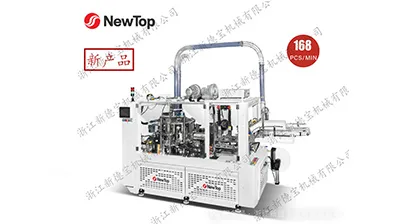

NewTop people pursue the concept of high quality and technology leading.
By changing the working mode with intelligent paper cup machine to make the operation more and more simple.

A food packaging startup in Texas bought a high-output forming line rated at 200 cups per minute. The price was right. The speed was impressive.
Then they tried to install it.
The line was 12 meters long. Their rented warehouse had a support pillar exactly where the paper unwind needed to go. The electrical panel required an upgrade that they hadn't budgeted. And six months later, they were running at 70 CPM because the operator couldn't keep up with the output.
They learned a painful lesson: capacity without fit is just a number.
Choosing cup-forming equipment isn't just about cups per minute. It's about matching production volume, physical footprint, operator skill, and future growth to a system that fits your reality. This guide breaks down the trade-offs.
Every cup-forming line balances three variables that conflict with each other:
| Variable | Compact Lines | High-Capacity Lines |
| Output speed | 40–100 CPM | 150–250+ CPM |
| Physical length | 4–8 meters | 10–18 meters |
| Floor space total | 15–30 m² | 40–80 m² (with paper storage) |
| Operator stations | 1 person | 2–3 people |
| Changeover time | 10–20 minutes | 20–45 minutes (mechanical) |
| Energy per cup | Slightly higher | Lower (economies of scale) |
The sweet spot depends entirely on your production profile. A coffee chain with 50 locations needs different equipment than a packaging supplier running 24/7.
Most buyers measure their factory length and width. Few measure door widths, column spacing, ceiling height, and access paths.
Real example: A manufacturer in Indonesia ordered a 10-meter line. Their factory door was 2.1 meters wide. The line arrived in three crates, each 3.8 meters long. They had to remove a wall to bring it inside. Added two weeks to installation and $4,000 in unexpected construction.
Critical measurements before you spec any equipment:
Doorway width and height (including crated dimensions)
Column-to-column distance (can a line fit between supports?)
Ceiling height (paper roll loading requires clearance)
Electrical panel location relative to the machine
Compressed air line access
Floor flatness (some precision lines require leveling within 2mm over 10m)
Practical advice: Request 3D CAD models of the equipment from suppliers. Overlay them on your factory layout. Many offer free basic layout assistance.
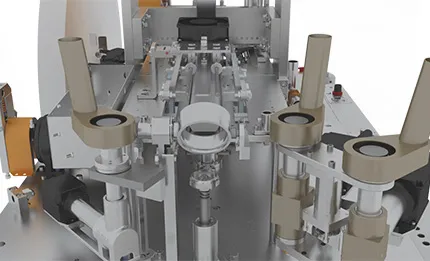
The biggest mistake is buying for peak demand that happens two weeks per year.
A better approach: Calculate your required sustained output using this formula:
Required CPM = (Annual cups needed × 1.2) ÷ (Operating hours per year × 0.75)
The 1.2 factor adds 20% for growth. The 0.75 accounts for real-world OEE (Overall Equipment Effectiveness) – most lines run at 70-80% of rated speed after breaks, changeovers, and minor stops.
Example: You need 5 million cups annually. Operating 2,000 hours per year (one shift, 250 days).
(5,000,000 × 1.2) ÷ (2,000 × 0.75) = 6,000,000 ÷ 1,500 = 80 CPM required
A line rated at 100-120 CPM gives a comfortable margin. A 200 CPM line would be vastly overkill – and would cost more, occupy more space, and require faster paper feeding that your material handler might not manage.
What actually happens: Many owners buy 150 CPM lines but run them at 90 CPM because the operator can't keep up with jam clearing or quality checks. That extra capacity never gets used.
This is where capacity and size interact with your product mix.
Changeover-heavy operations (10+ size changes per week): Multiple smaller lines often outperform one giant line. While one large line spends 30 minutes per changeover, two compact lines can run different sizes simultaneously with zero changeover time between batches.
Real-world data: A promotional cup supplier runs three compact lines (60 CPM each) instead of one 180 CPM line. Their reasoning: “When we have three different orders for three different cup sizes, we run all three lines at once. Total output 180 CPM, but no changeover delays. With one big line, we'd spend half the day switching.”
Dedicated high-volume operations (one size, months-long runs): One large line makes sense. Changeover time amortizes over millions of cups. The larger footprint is justified by lower labor cost per cup.
| Your Profile | Recommended Approach | Typical Footprint | Output RangeStartup/cafe |
| e integration | Single compact line, 40-80 CPM | 15-20 m² | 200k-1M cups/year |
| Growing regional supplier | One flexible line, 100-130 CPM | 25-35 m² | 2-5M cups/year |
| High-mix promotional products | 2-3 compact lines (60-80 CPM each) | 40-60 m² total | 1-3M cups/year (total) |
| Large packaging company | One high-speed line (180+ CPM) + changeover line | 60-100 m² | 10-20M cups/year |
| Industrial user (filling integration) | Dedicated high-speed line, minimal changeover | 40-60 m² | 15-30M cups/year |
The smartest equipment choice leaves room to scale without replacing your entire line.
Option A – Buy larger now: You pay more upfront, occupy space for years before needing it, but avoid a second capital expense.
Option B – Buy modular, expand later: Some suppliers offer lines where you can add a second forming station, faster servo drives, or additional printing modules as volume grows. This often delivers the best long-term value.
A cautionary tale: A bakery chain bought a 180 CPM line “for future growth.” Three years later, they still run 60 CPM. The line never operated above 35% capacity. They could have bought two compact lines at half the price, run one, kept the second as a spare, and saved $90,000.
Ask suppliers these questions before buying:
Can this line be upgraded to a higher speed later (servo retrofits)?
Can additional cup sizes be added with the new change parts?
Is there a trade-in program for larger models?
1. What is your current annual cup volume, and what is your realistic volume in 24 months? (Not your dream scenario – your funded, contracted projection.)
2. How many different cup sizes do you run in a typical week? (Each size beyond 2-3 increases changeover costs dramatically.)
3. What is your facility's actual available space after accounting for paper storage, maintenance access, and finished goods? (Measure twice. Draw once.)
4. Who will operate the line? (Experienced mechanics can handle complex mechanical lines. New teams need servo-assisted changeover and guided interfaces.)
5. What is your tolerance for downtime? (If one machine breaks, can you absorb the loss, or do you need redundancy?)
Mistake 1: Buying the largest line that fits the budget, not the smallest that meets demand.
Fix: Size to 120% of your 24-month forecast, not 300%.
Mistake 2: Ignoring paper roll size. Larger lines often require 1200mm+ paper rolls. Your current supplier might only offer 900mm rolls.
Fix: Confirm paper width compatibility with your existing material sources.
Mistake 3: Forgetting operator walkways. A line that fits tightly between columns leaves no room for maintenance or cleaning.
Fix: Add 1 meter on each side for access. Add 2 meters at the infeed and outfeed ends.
Mistake 4: Assuming faster is always more profitable. A line running at 50% capacity still consumes power, requires maintenance, and ties up capital.
Fix: Calculate cost per cup at your actual planned speed, not max-rated speed.
Smaller works better when:
You have limited space (shared facility, rented warehouse)
Your team is new to cup production
You run many short batches (under 20,000 cups per setup)
You want redundancy (two small lines vs one big line)
Larger wins when:
You have a dedicated space and industrial power
Your operators are experienced
You run long runs (over 200,000 cups per setup)
Labor cost is high (automation reduces headcount)
Start with the smallest line that comfortably handles your current volume plus 20% growth. Use the space and capital savings to add a second line when you actually need the capacity.
You can always buy more equipment. It's much harder to un-buy a line that's too big, too expensive to run, and too cramped in your facility.
The right fit isn't the fastest line on the spec sheet. It's the line that runs smoothly in your space, with your team, making your cups, day after day.
If you're mapping out your production requirements and want to see how modular cup forming systems can scale with your growth – from compact startup lines to expandable configurations – Newdebao offers solutions that prioritize fit over oversizing.
Explore capacity and footprint options, and request a space planning checklist tailored to your facility: [View Newdebao's modular cup forming system configurations]
Texas startup case study – interview conducted March 2025 (company name redacted)
Indonesian installation data – field report from logistics partner
Promotional cup supplier example – industry roundtable discussion, Q4 2024
OEE benchmarks – based on multiple anonymous plant audits (2022–2024)
All images are for illustrative purposes only
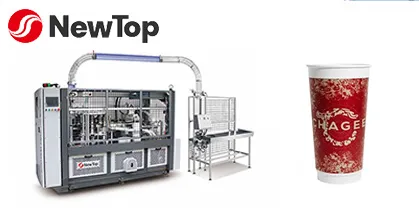
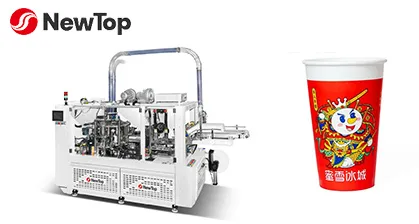
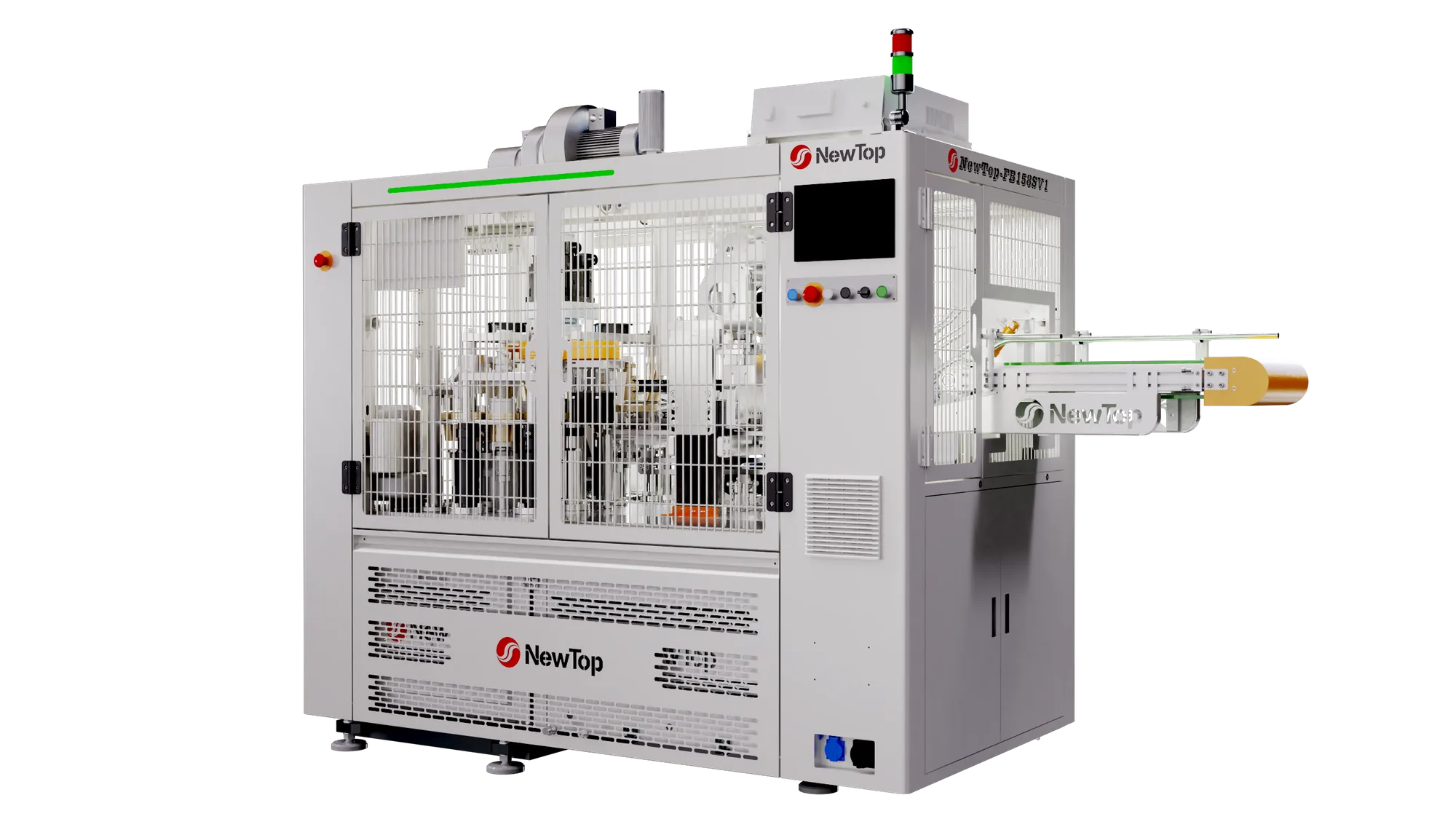
2.5oz-12oz Paper Cup Size
168-175 pcs/min Max Capacity
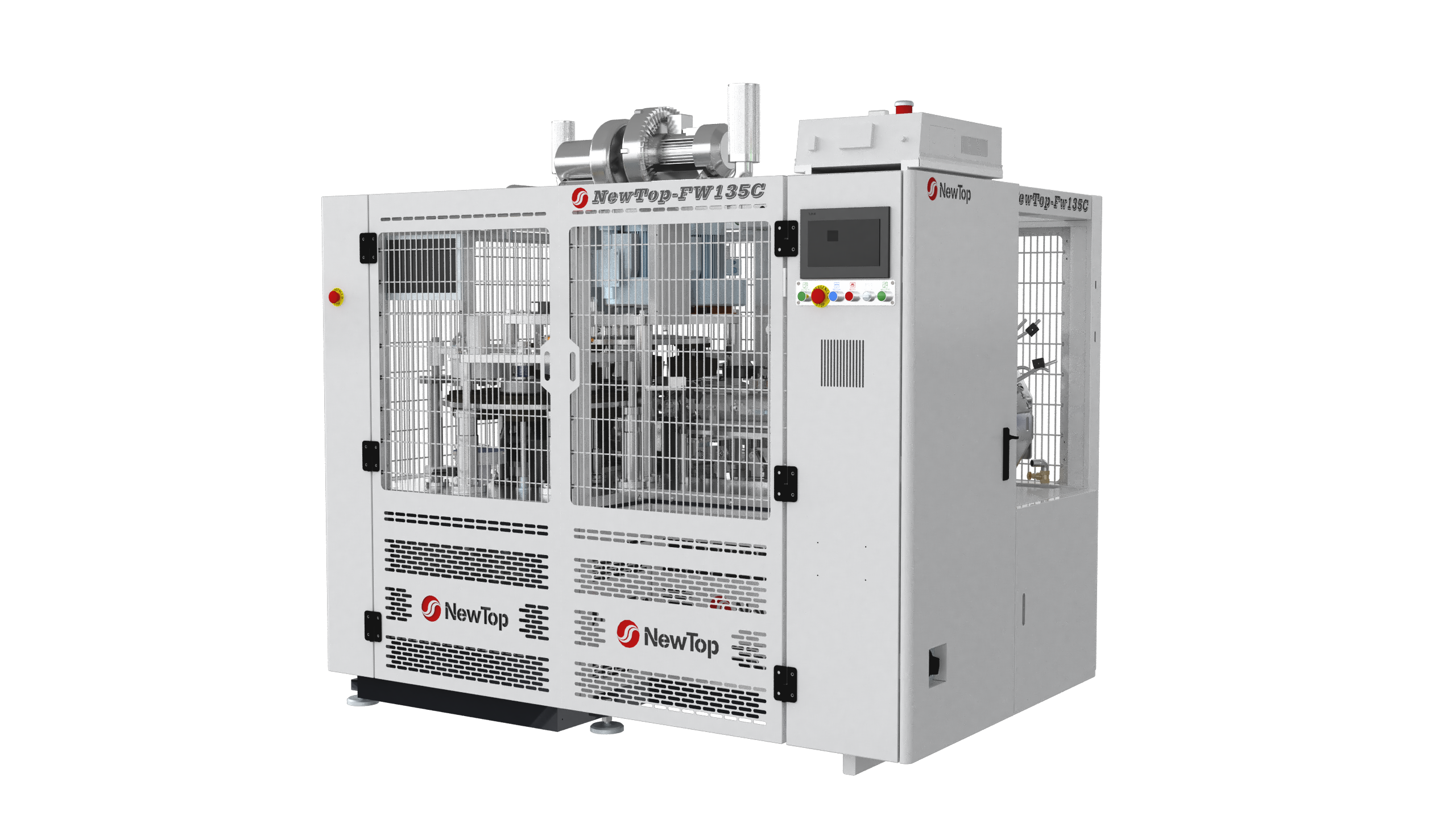
16-42oz Paper Cup Size
140 pcs/min Max Capacity
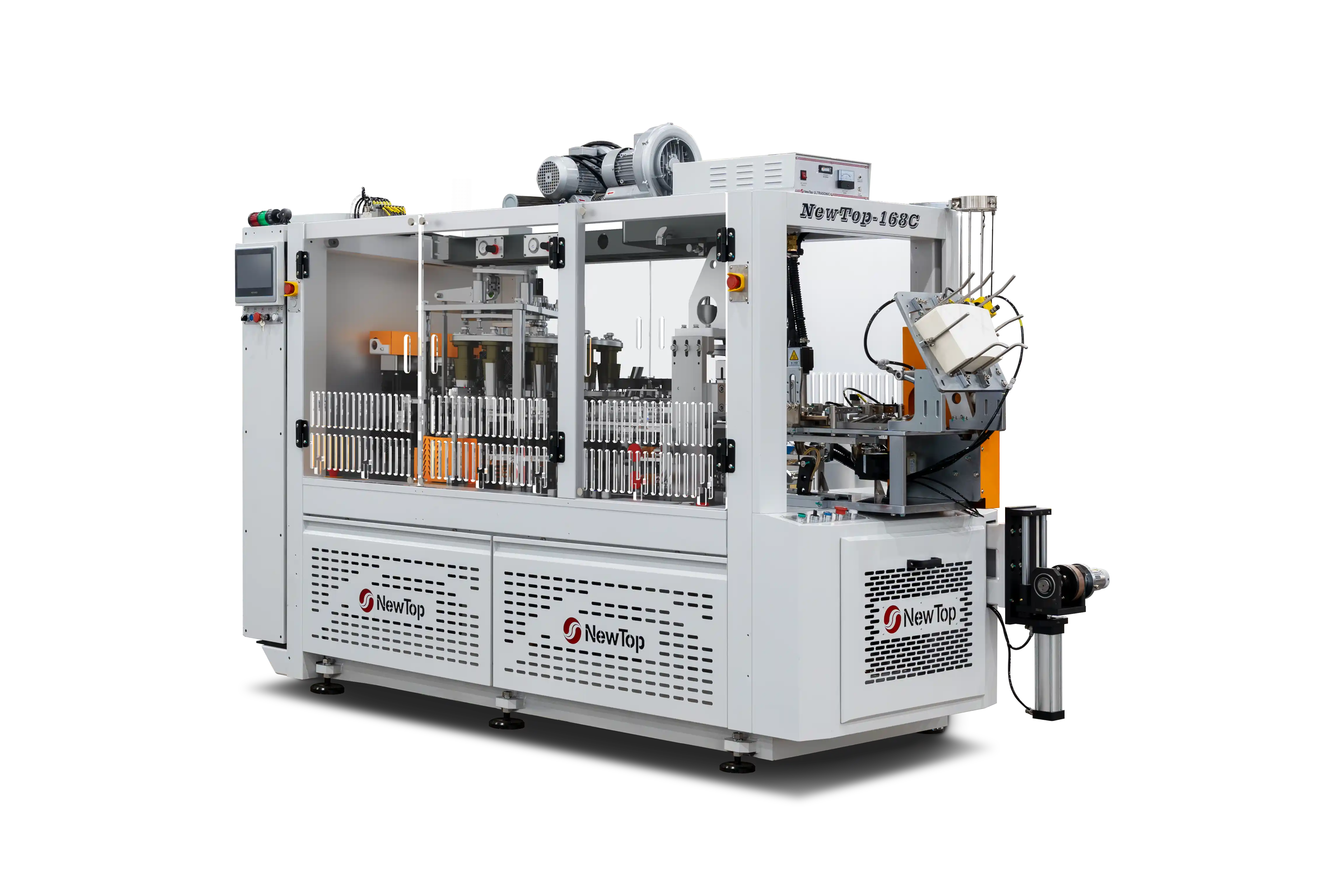
16-22oz Paper Cup Size
138 pcs/min Max Capacity


NewTop people pursue the concept of high quality and technology leading.
By changing the working mode with intelligent paper cup machine to make the operation more and more simple.
Fengzhai Natural Village,Wandu Village, Wanquan Town, Pingyang County, Zhejiang Province,China