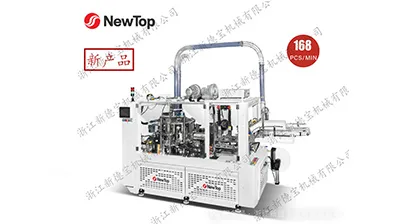

NewTop people pursue the concept of high quality and technology leading.
By changing the working mode with intelligent paper cup machine to make the operation more and more simple.

A packaging consultant once shared a painful story: A new manufacturer bought an entire forming line, installed it in a rented warehouse, and ordered 20 tons of paperboard. Three weeks later, they couldn't produce a single cup that passed basic leak testing.
The paper was wrong for their machine's forming station. The warehouse's humidity caused curling issues. And no one had checked the voltage compatibility.
Starting cup production isn't just about finding a supplier and pressing "start." This guide covers the essential industry knowledge that experienced plant managers learn through trial and error—so you don't have to.
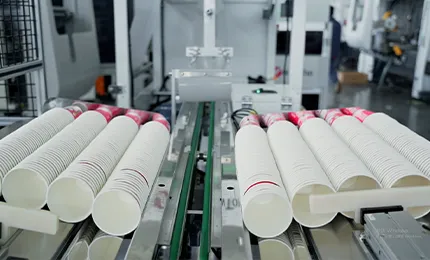
Not all paperwork in all forming systems. Three common types dominate the industry:
*Critical specification: Cup forming equipment manufacturers design their forming stations for specific paper stiffness (measured as Taber stiffness, typically 80-120 Taber units for 12oz cups). Using paper outside this range causes wrinkling or poor seam sealing.*
Paper is hygroscopic—it absorbs moisture from the air. A plant in Thailand learned this the hard way when monsoon season arrived. Their stored paperboard swelled by 3% in thickness, jamming the paper feeding track every 15 minutes.
Best practices from industry standards (ISO 12625 series):
Store at 23°C ± 2°C and 50% ± 5% relative humidity
Use within 6 months of delivery (coated paper degrades faster)
Rotate stock FIFO (First-In-First-Out)
Never store directly on concrete floors—use pallets with moisture barriers
A common mistake is underestimating space for auxiliary equipment. The forming line itself might be 8 meters long, but you also need:
| Area | Minimum Space | Notes |
|---|---|---|
| Paper roll storage | 50-100 m² | Depends on inventory volume |
| Forming a line operation | 30-50 m² per line | Includes operator access |
| Quality lab | 10-15 m² | Leak tester, micrometer, vision system |
| Packaging and palletizing | 40-80 m² | Depends on output speed |
| Maintenance workshop | 20-30 m² | Tool storage, spare parts |
*Total typical requirement for one forming line: 200-350 m²*
Power requirements vary significantly by system type:
Mechanical systems: 15-25 kW for main motor + heaters (typically 380-480V, 3-phase)
Servo-driven systems: 20-35 kW but with lower peak demand (servos draw power only when moving)
Compressed air: Most cup forming lines need 6-8 bar (85-115 psi) at 500-1500 L/min, depending on cup size and speed. Install a refrigerated air dryer—moisture in compressed air ruins heater bands and causes condensation inside finished cups.
A cup line generates heat—lots of it. Heater bands on the forming station and bottom knurler run at 200-300°C. Without proper ventilation, ambient temperature can exceed 40°C, causing:
Operator fatigue and safety risks
Electronic control cabinet overheating (PLCs fail above 55°C)
Finished cup warping before packaging
Solution: Install exhaust fans rated for at least 20 air changes per hour above the forming station. Consider zoning the line area from the raw material storage.
Before selling a single cup, understand which regulations apply to your market:
| Market | Standard | Key Requirements |
|---|---|---|
| USA | FDA 21 CFR 176.170 | Extractable substances limits, specific paper and coating suppliers |
| EU | EU 10/2011 + 1935/2004 | Overall migration limits (10 mg/dm²), positive list for coatings |
| China | GB 4806.8-2022 | Food contact paper standards, heavy metal limits |
| Global | BRCGS Packaging | Food safety management system (audit-based) |
Note: Your cup forming line doesn't need certification—but your production process and materials do. Many first-time manufacturers discover this only when a customer demands compliance documentation.
Experienced plants monitor five critical parameters every shift:
Leak test – Fill cup with hot water at specified temperature, hold for 5-10 minutes, check for seepage through bottom seam or side seam
Wall thickness – Use a micrometer at three heights (top, middle, bottom) – variation should be under 0.05mm
Rim roll diameter – Should be 2.5-3.5mm for comfortable drinking – use go/no-go gauge
Bottom knurl pattern – Visual inspection under magnification – incomplete knurling causes leaks
Side seam peel strength – Peel test with force gauge – minimum 3N/15mm width (industry typical)
One manufacturer's rule of thumb: If the first cup after changeover passes all five tests, the next 10,000 cups will be fine. If it fails, stop immediately and re-check the setup.
A forming line rated for 200 cups per minute sounds impressive. But that speed assumes perfect paper, ideal temperature, and experienced operators. Real-world sustained speed is typically 70-80% of rated speed.
Better approach: Ask suppliers for "OEE (Overall Equipment Effectiveness) data" from existing customers. A line rated at 150 CPM with 85% OEE produces more good cups than a 200 CPM line running at 65% OEE.
One plant owner told us, "The supplier said the machine is intuitive." Three months later, they had burned through two heater banks, scrapped 40,000 cups, and still couldn't change over in under an hour.
Industry practice: Budget for at least 40 hours of on-site training per operator. Require formal sign-off on changeover procedures, maintenance schedules, and troubleshooting flowcharts.
Heater bands, thermocouples, and wear plates fail. If you don't have spares, your line stops. A stopped line costs thousands per hour in lost production.
Practical rule: Stock one complete set of consumables for every 2,000 operating hours. For critical parts (heater bands for the bottom knurler), keep two.
Before calculating ROI, know your cost components:
| Cost Category | Typical Percentage | Notes |
|---|---|---|
| Raw paperboard | 55-65% | Single largest cost; bulk buying matters |
| Coating (if not pre-coated) | 10-15% | PE or PLA |
| Labor | 8-12% | Varies by automation level |
| Energy | 5-8% | Heating and motors |
| Maintenance & consumables | 3-5% | Heater bands, wear parts |
| Packaging (sleeves, cartons) | 4-6% | Customer-specific |
| Quality & compliance | 2-3% | Testing, certifications |
| Overhead & logistics | 8-12% | Rent, shipping, and administration |
Industry benchmark: Target material cost under 70% of selling price for sustainable margins.
Answer these ten questions honestly:
What cup sizes will you run most frequently? (Start with 2-3 sizes max)
What coating type do your target customers require? (PE, PLA, or both?)
Do you have a facility with proper humidity control and ventilation?
Is 3-phase power available at sufficient capacity?
Have you budgeted for operator training (not just equipment)?
Do you have a lab setup for the five quality tests above?
What food safety certifications will your first customer demand?
Do you have working capital for 3 months of raw materials before the first payment?
Who will handle maintenance—in-house or contract?
Have you visited a reference installation running your target cup size?
If you answered "no" or "unsure" to more than two questions, slow down. The industry is full of stories from people who rushed and paid for it later.
Starting cup production is absolutely achievable. Thousands of successful plants prove it every day. But success comes from understanding the ecosystem—raw materials, facility requirements, quality standards, and realistic cost structures—before you sign any equipment agreement.
The forming line is important. But it's just one component in a system that includes paper, people, processes, and compliance.
If you're ready to explore specific production line configurations that match your cup sizes, volume targets, and facility constraints, Newdebao offers modular systems that scale from single-line startups to multi-line operations.
Get detailed specifications and request a facility readiness checklist tailored to your location: [Explore Newdebao's production system configurations]
ISO 12625 series – Paper and board tissue products (storage and handling)
FDA 21 CFR 176.170 – Components of paper and paperboard in contact with food
EU Regulation 10/2011 – Plastic materials and articles intended to come into contact with food
BRCGS Global Standard for Packaging Materials – Issue 6
Industry cost benchmarks from multiple anonymous manufacturers (compiled 2023-2024)
All images are for illustrative purposes only
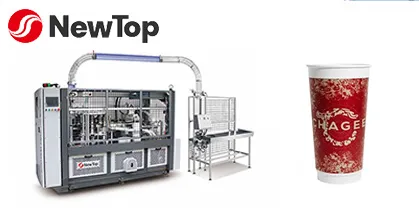
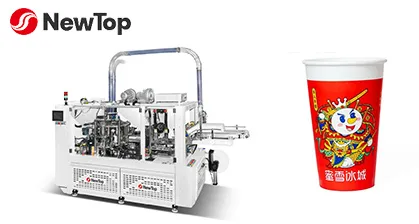
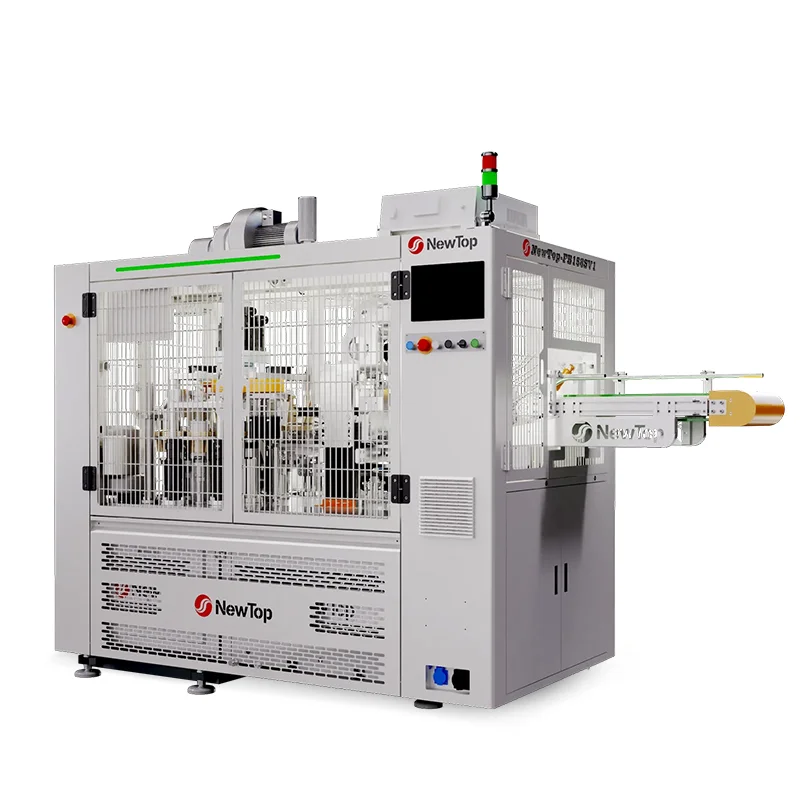
2.5oz-12oz Paper Cup Size
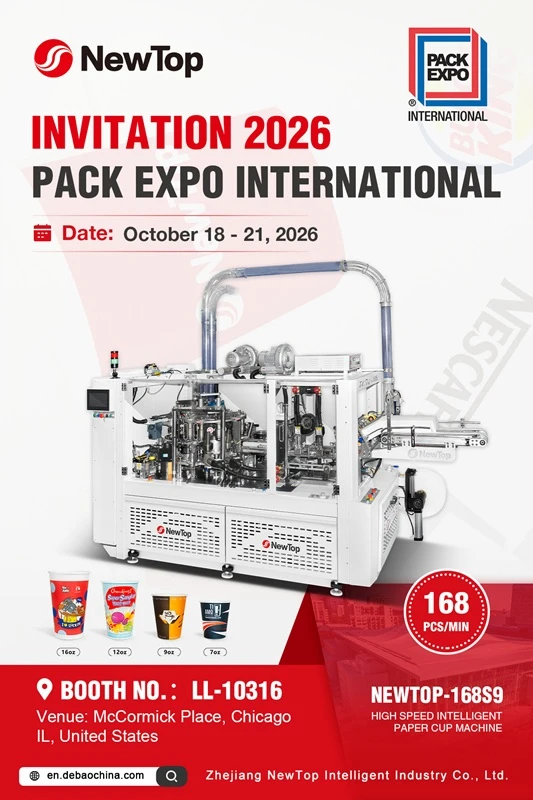
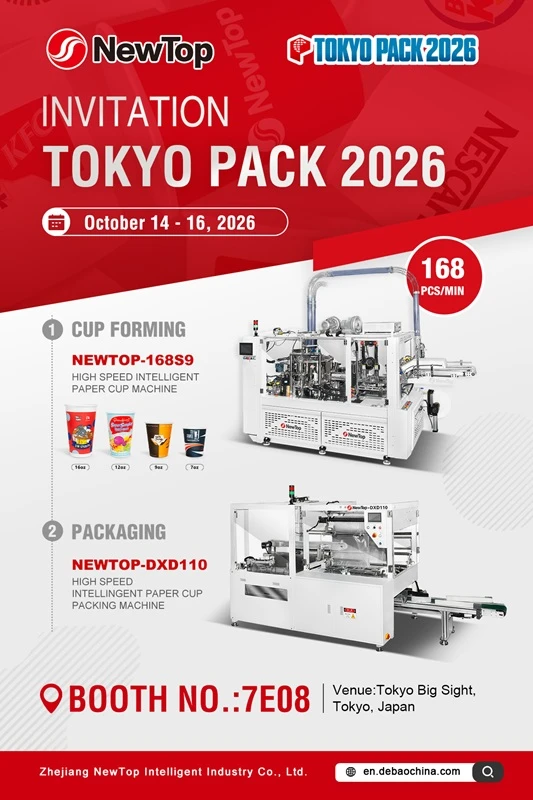
168-175 pcs/min Max Capacity
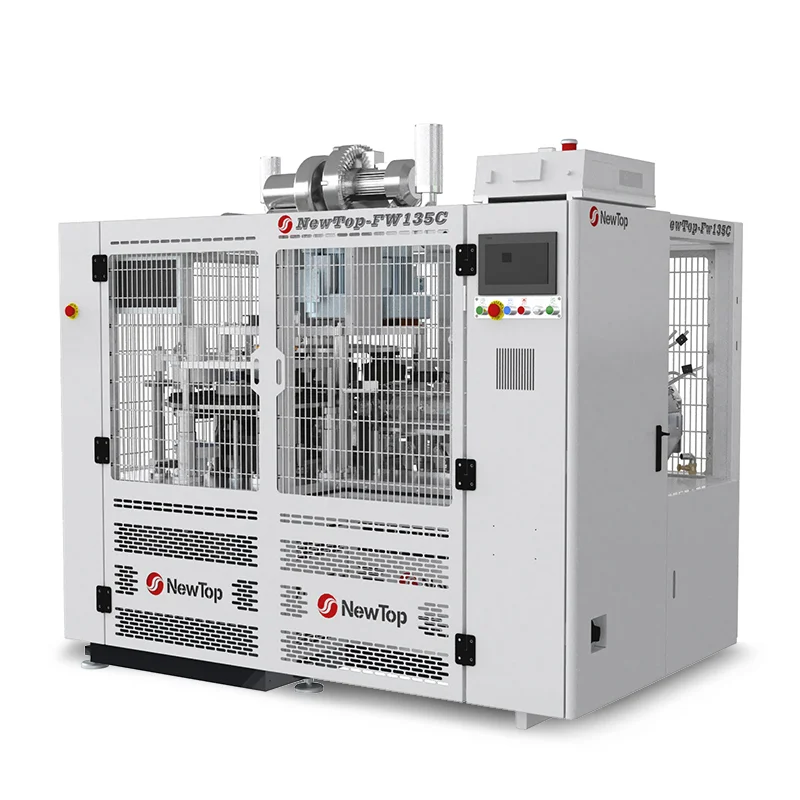
16-42oz Paper Cup Size
140 pcs/min Max Capacity
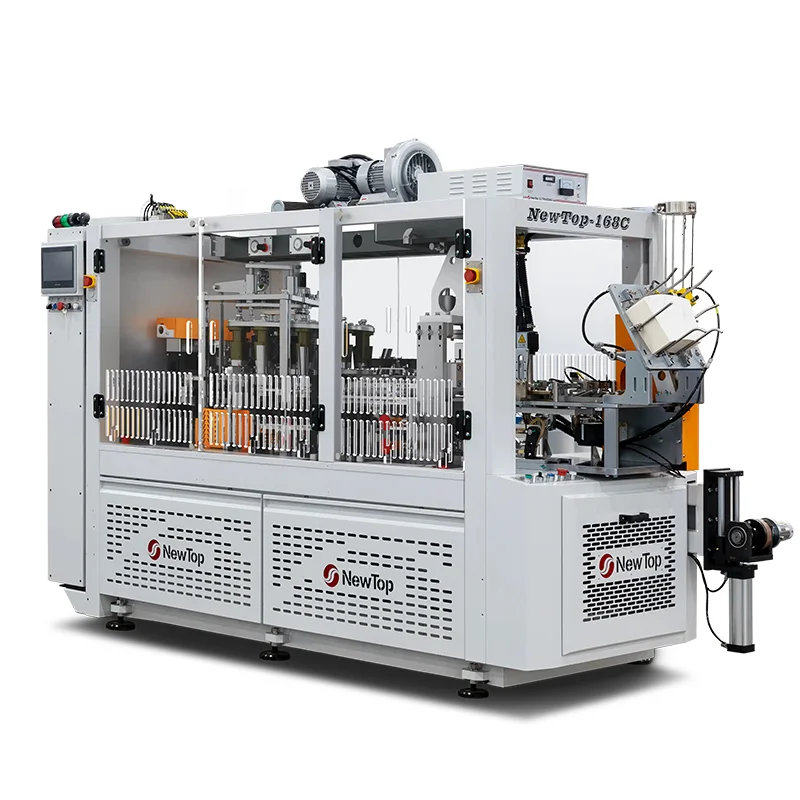
16-22oz Paper Cup Size
138 pcs/min Max Capacity


NewTop people pursue the concept of high quality and technology leading.
By changing the working mode with intelligent paper cup machine to make the operation more and more simple.
Fengzhai Natural Village,Wandu Village, Wanquan Town, Pingyang County, Zhejiang Province,China