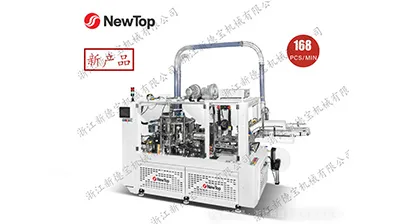

NewTop people pursue the concept of high quality and technology leading.
By changing the working mode with intelligent paper cup machine to make the operation more and more simple.

Paper-based food packaging has become an important part of the global food service and takeaway industry. Coffee shops, restaurants, supermarkets, food delivery businesses and quick-service food chains increasingly rely on paper cups, paper bowls and other disposable paper containers to meet diverse packaging requirements.
As the market develops, manufacturers face growing expectations for product consistency, production efficiency, material compatibility and packaging quality.
Producing a reliable paper container involves more than a single forming operation. It requires coordination between raw material preparation, printing, converting, forming, inspection and final packaging. Each stage contributes to the performance and appearance of the finished product.
Understanding how these manufacturing processes work together helps packaging manufacturers improve production management, identify quality risks and develop more efficient manufacturing systems.
This article explores the major stages of paper food packaging manufacturing, the technologies involved and the factors that influence production quality, with insights into the intelligent manufacturing capabilities developed by NewTop.
Paper food packaging includes a wide range of products designed for different food and beverage applications.
Common product categories include:
Disposable paper cups for hot and cold beverages
Paper bowls for soups, noodles and takeaway meals
Paper containers for salads and prepared foods
Special-shaped paper packaging
Double-wall and insulated paper containers
Although these products have different structures and applications, their manufacturing systems share several important stages.
A typical production workflow can be divided into five interconnected areas:
Raw Material Preparation → Printing and Converting → Container Forming → Quality Inspection → Counting and Packaging
Each stage must be coordinated with the next to maintain production continuity and finished-product consistency.
The specific process configuration depends on the container design, paper material, coating technology and manufacturing requirements.
The characteristics of raw materials have a direct influence on the performance of paper food containers.
Paperboard selection affects forming stability, structural strength, sealing performance and the final appearance of the product.
Common materials used in paper container manufacturing include:
PE-coated paperboard
Polyethylene coating provides a moisture barrier and is widely used in disposable beverage cups and food containers.
Double PE-coated paperboard
Both sides of the paperboard are coated to provide additional barrier properties for applications requiring greater moisture resistance.
PLA-coated paperboard
Polylactic acid coating is used in certain paper packaging applications where alternative coating materials are required.
Water-based coated paperboard
Water-based barrier technologies are increasingly considered in the development of alternative paper packaging structures.
Material suitability depends on the intended application, converting process, sealing technology and applicable food-contact requirements.
Before production begins, manufacturers should evaluate several material characteristics:
Paper grammage and thickness
Coating type and coating uniformity
Moisture content
Paper stiffness and flexibility
Surface quality
Dimensional stability
Inconsistent material properties can cause feeding problems, forming deformation, sealing defects and variations in finished-product quality.
For this reason, raw material evaluation should be integrated into the overall manufacturing quality management system.
Printing and converting are important upstream processes in the manufacturing of printed paper food packaging.
They transform paperboard from a raw material into printed and shaped components suitable for subsequent container forming.
For branded paper cups and food containers, printed graphics play an important role in product identification and visual presentation.
Printing quality is influenced by:
Color consistency
Registration accuracy
Ink adhesion
Drying performance
Substrate characteristics
Printing speed and production stability
Flexographic printing is one of the printing technologies used in paper and flexible packaging production.
After printing, paperboard is converted into specific shapes required for the final container structure.
Typical components include:
Fan-shaped side-wall blanks
Circular bottom blanks
Special-shaped container blanks
Structural components for different packaging designs
Die-cutting accuracy is important because blank dimensions directly influence the fit and alignment of subsequent forming operations.
Incorrect cutting dimensions or inconsistent material feeding can create problems during container forming.
The relationship between printing and forming should be considered during production planning.
Important factors include:
Printed graphic positioning
Blank cutting accuracy
Paper material consistency
Production batch identification
Material handling and storage
Effective coordination between these stages helps reduce material waste and maintain consistent packaging appearance.
Container forming is the central stage of paper cup and paper bowl manufacturing.
During this process, prepared paper components are shaped into three-dimensional containers through synchronized mechanical, thermal and forming operations.
Paper cups are commonly produced through an automated sequence involving side-wall forming, seam bonding, bottom insertion, bottom sealing and rim curling.
The quality of the finished cup depends on the coordination of these operations.
Important production considerations include:
Accurate paper blank positioning
Consistent side-seam bonding
Stable bottom sealing
Uniform bottom forming
Smooth rim curling
Dimensional consistency
These factors determine whether the finished cup can maintain its intended shape, withstand normal handling and perform reliably during use.
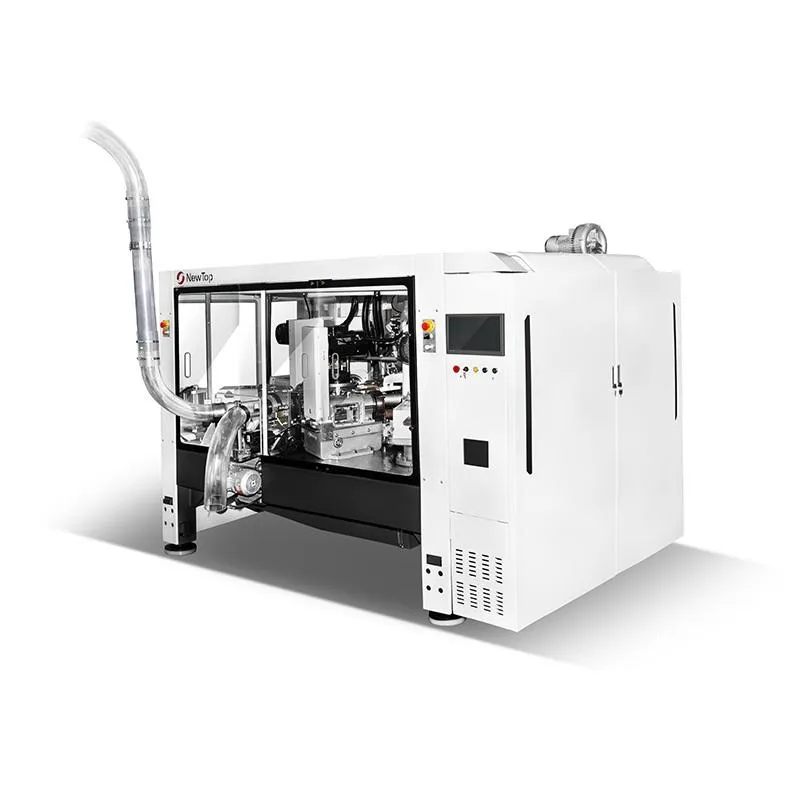
Paper bowls generally require different forming structures and tooling configurations from standard beverage cups.
Their larger diameters, different depths and specific structural requirements create additional manufacturing considerations.
Typical applications include:
Instant noodle packaging
Soup containers
Salad bowls
Takeaway meal packaging
Large-capacity food containers
Manufacturers should evaluate the relationship between bowl dimensions, paperboard properties, forming structures and sealing requirements.
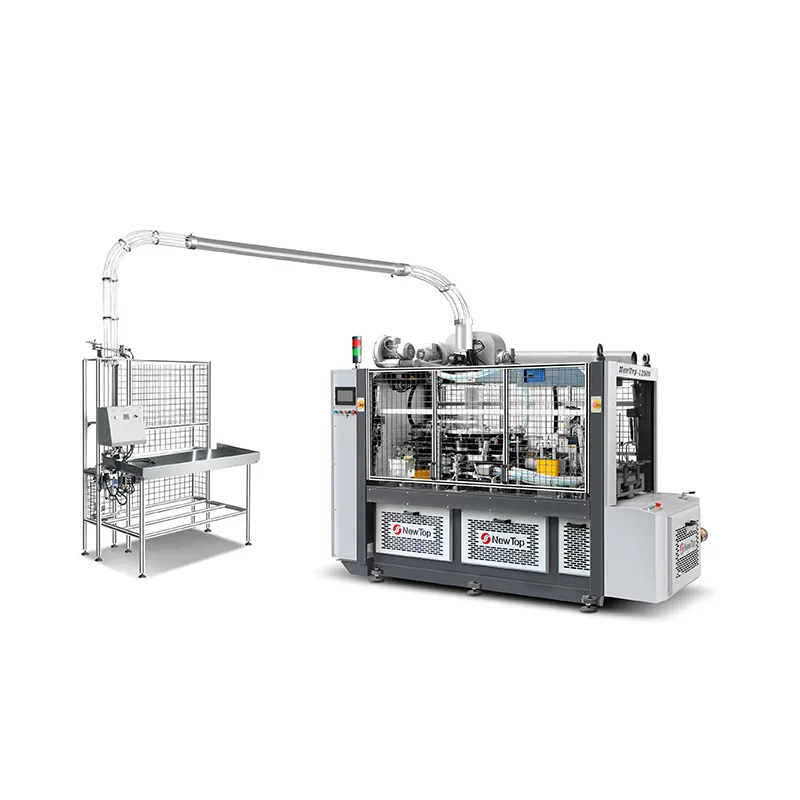
The development of food delivery, prepared meals and customized food packaging has created demand for more diverse container structures.
Special-shaped paper containers may require customized forming processes and dedicated tooling.
Manufacturers developing these products should consider structural design, material compatibility, forming accuracy and production repeatability.
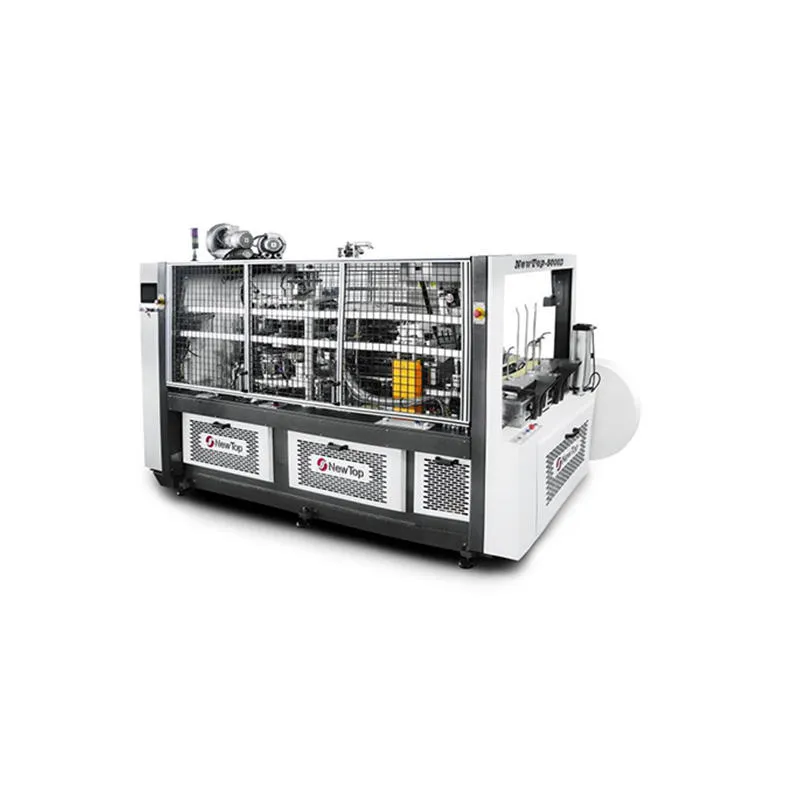
As production requirements become more demanding, automation is playing an increasingly important role in paper packaging manufacturing.
Traditional production systems may involve multiple independent processes and manual handling between stages.
Intelligent manufacturing technologies aim to improve coordination, reduce repetitive operations and provide more consistent production management.
Depending on the production configuration, automation can be applied to:
Paper feeding
Container forming
Product transfer
Finished-product counting
Visual inspection
Stacking and packaging
Automated operations help reduce unnecessary manual intervention and support more stable production workflows.
Servo-driven systems provide precise control over mechanical movements and production parameters.
In paper container manufacturing, these technologies can support:
Accurate positioning
Synchronized mechanical movements
Parameter adjustment
Product specification changes
Production process consistency
Digital control systems can also help operators manage different product specifications more efficiently.
Product inspection is an important part of modern paper container manufacturing.
Depending on the machine configuration, inspection systems can help identify:
Irregular rim shapes
Side-seam defects
Bottom sealing problems
Surface contamination
Dimensional deviations
Other visible product defects
Inspection technology helps manufacturers identify unsuitable products before final packaging.
However, automated inspection should complement rather than replace proper process control and raw material management.
Finished-product quality is influenced by every stage of manufacturing.
A problem originating in raw material preparation or printing may become more difficult to identify after the container has been formed.
Therefore, effective quality management should cover the entire manufacturing workflow.
| Manufacturing Stage | Main Quality Considerations | Potential Problems |
|---|---|---|
| Raw material preparation | Paper thickness, coating, moisture | Cracking, poor sealing |
| Printing | Color, registration, ink adhesion | Misalignment, uneven appearance |
| Die-cutting | Blank dimensions and cutting accuracy | Feeding and forming deviations |
| Container forming | Sealing, curling and structural precision | Leakage, deformation |
| Inspection | Detection accuracy and consistency | Defective products passing inspection |
| Packaging | Counting, stacking and protection | Damaged products, incorrect quantities |
Material waste can result from incorrect settings, inconsistent raw materials, forming defects and production interruptions.
Manufacturers can reduce waste by improving:
Incoming material inspection
Equipment adjustment procedures
Production parameter management
Operator training
Preventive maintenance
Defect recording and analysis
Consistency is particularly important for manufacturers supplying large-volume orders.
Stable production requires more than high machine speed. It also depends on repeatable forming conditions, suitable materials and effective equipment maintenance.
Monitoring production quality at different stages helps manufacturers identify problems earlier and improve overall production performance.
Zhejiang NewTop Intelligent Industry Co., Ltd. is a Chinese manufacturer specializing in paper container manufacturing equipment.
Operating under the NewTop brand, the company focuses on research and development, equipment manufacturing and intelligent production technologies for paper-based food packaging.
With more than 20 years of industry experience, NewTop has developed equipment for different paper cup, paper bowl and special-shaped container applications.
NewTop's manufacturing capabilities include:
Factory building area exceeding 90,000 square meters
More than 580 employees
Nearly 80 professional and senior technical personnel
More than 200 patents
77 software copyrights
The company operates CNC machining equipment from internationally recognized manufacturers, including DMG MORI, Hardinge, Doosan, TSUGAMI and Mazak.
Its inspection facilities include Zeiss 3D coordinate measuring equipment and Mitutoyo precision measurement instruments.
These resources support precision component processing, equipment assembly and manufacturing quality control.
NewTop develops equipment platforms for different paper container manufacturing applications.
Its equipment portfolio covers:
High-speed paper cup forming
Servo-controlled paper container production
Paper bowl forming
Special-shaped container manufacturing
Paper cup sleeve processing
Automatic counting and packaging
Different equipment configurations allow manufacturers to evaluate solutions according to their product specifications, production volumes and factory requirements.
NewTop continues to develop intelligent production technologies aimed at improving the coordination of different manufacturing operations.
Its integrated production concepts combine container forming, visual inspection, auxiliary processing and packaging equipment.
This approach helps manufacturers explore opportunities to reduce manual handling and improve production organization.
The appropriate configuration depends on the customer's product range, production objectives and existing factory facilities.
NewTop has established quality management systems supported by certifications including:
ISO 9001 Quality Management System
ISO 14001 Environmental Management System
ISO 45001 Occupational Health and Safety Management System
CE certification for relevant products
Its equipment serves customers in different international markets, supporting diverse requirements in the paper food packaging industry.
The paper packaging industry continues to evolve as manufacturers respond to changes in consumer demand, material technologies and production requirements.
Several developments are influencing the future direction of manufacturing.
Research and development involving PLA, water-based coatings and other alternative barrier technologies are creating new material options for paper food packaging.
Equipment manufacturers need to consider material compatibility and forming performance when developing production technologies.
Packaging manufacturers increasingly need to produce different container sizes and designs.
Flexible equipment configurations, efficient specification changes and improved parameter management can help manufacturers respond to diversified orders.
Digital control and inspection technologies are creating opportunities for more systematic quality monitoring.
The integration of production data, defect records and equipment operating information can help manufacturers identify production issues and improve process management.
As production volumes increase, manufacturers may seek to connect previously independent processes.
Integrated production systems can help coordinate forming, inspection, counting and packaging operations, reducing unnecessary manual handling and improving production organization.
Establishing or upgrading a paper container manufacturing facility requires a comprehensive understanding of production requirements.
The following areas should be evaluated before selecting equipment or designing a production layout.
| Planning Area | Important Considerations |
|---|---|
| Product portfolio | Cup sizes, bowl dimensions and container structures |
| Raw materials | Paperboard specifications and coating types |
| Production processes | Printing, converting, forming and packaging |
| Equipment configuration | Production capacity and automation requirements |
| Quality management | Inspection procedures and defect control |
| Factory layout | Equipment arrangement and material flow |
| Utilities | Electrical supply, compressed air and other requirements |
| Workforce | Operator skills and maintenance capabilities |
| Future development | Product expansion and production flexibility |
A well-planned manufacturing system should balance production efficiency, equipment investment, product quality and long-term operational requirements.
Rather than selecting individual machines independently, manufacturers should consider how each production stage contributes to the overall manufacturing process.
The main stages generally include raw material preparation, printing, die-cutting, container forming, quality inspection and final packaging. The exact process depends on the container design and material specifications.
Common materials include PE-coated paperboard, double PE-coated paperboard, PLA-coated paperboard and certain water-based coated papers. Material selection depends on the intended food application and manufacturing requirements.
Printing quality influences the appearance and brand presentation of paper food packaging. Accurate registration, consistent color reproduction and proper ink adhesion are important for maintaining finished-product quality.
Potential causes include inconsistent raw materials, incorrect machine settings, poor sealing conditions, inaccurate forming and inadequate maintenance. Quality management should cover the entire manufacturing process.
Automation can reduce manual handling, synchronize production operations and support consistent processing. Depending on the configuration, visual inspection and automatic packaging can further improve production organization.
Manufacturers should evaluate existing production capacity, product specifications, material compatibility, factory layout, equipment integration, quality requirements and future expansion plans.
Different coating technologies and paperboard characteristics may affect feeding, heating, bonding and forming performance. Equipment compatibility should be verified through material testing and production trials before commercial operation.
The production of paper cups, paper bowls and other food containers involves a coordinated manufacturing system rather than a single processing operation.
Raw material quality, printing accuracy, converting precision, forming technology, automated inspection and final packaging all contribute to the performance of finished products.
As the industry develops, manufacturers are placing greater emphasis on production flexibility, intelligent control and integrated manufacturing technologies.
NewTop continues to focus on paper container equipment development, precision manufacturing and intelligent production solutions for different packaging applications.
For manufacturers planning to establish new facilities, upgrade existing production lines or expand their paper container product portfolios, understanding the complete manufacturing process is an important step toward making informed equipment and production decisions.
Discover NewTop's paper container manufacturing equipment and intelligent production solutions.
Visit the official website: https://www.newdebao.com/
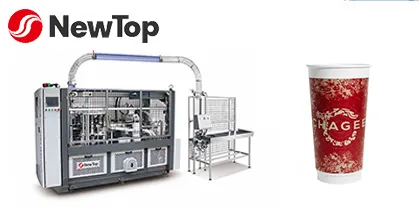
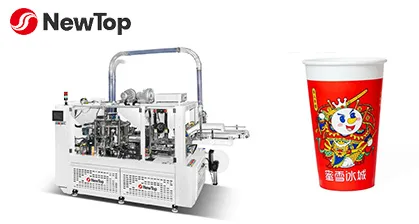
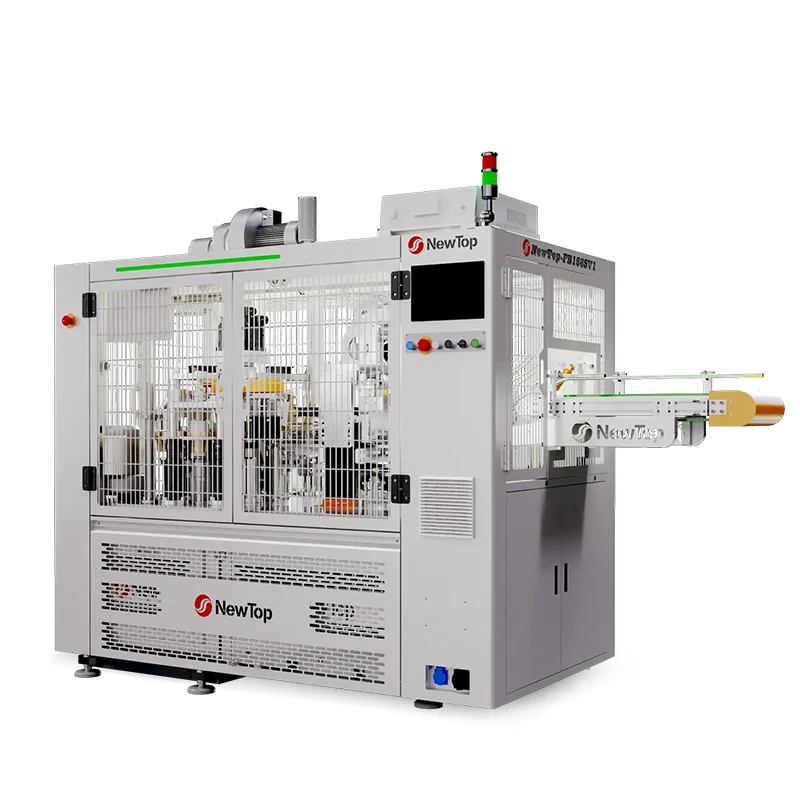
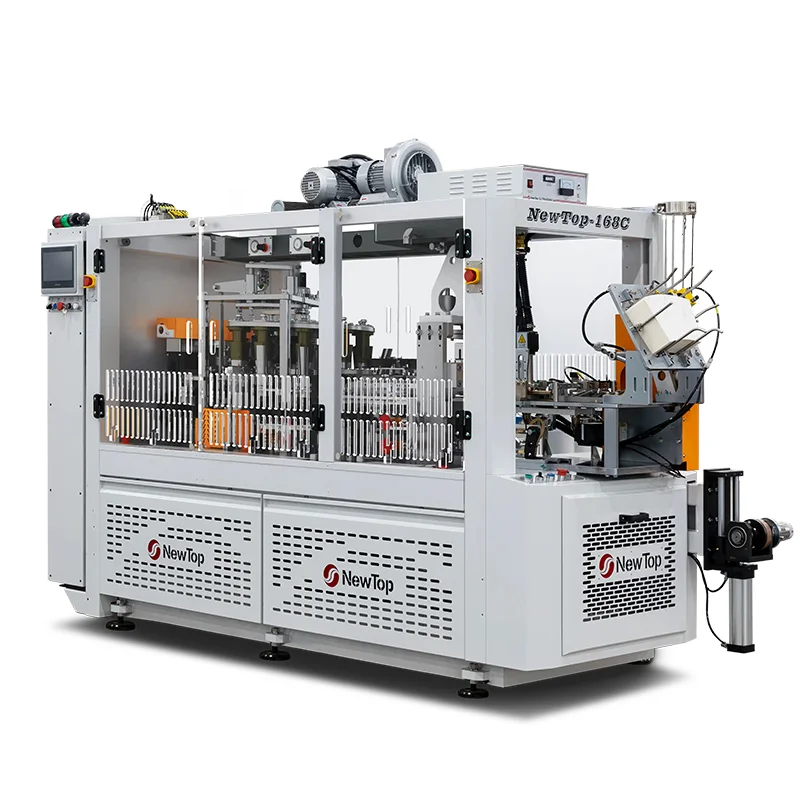
2.5oz-12oz Paper Cup Size
168-175 pcs/min Max Capacity
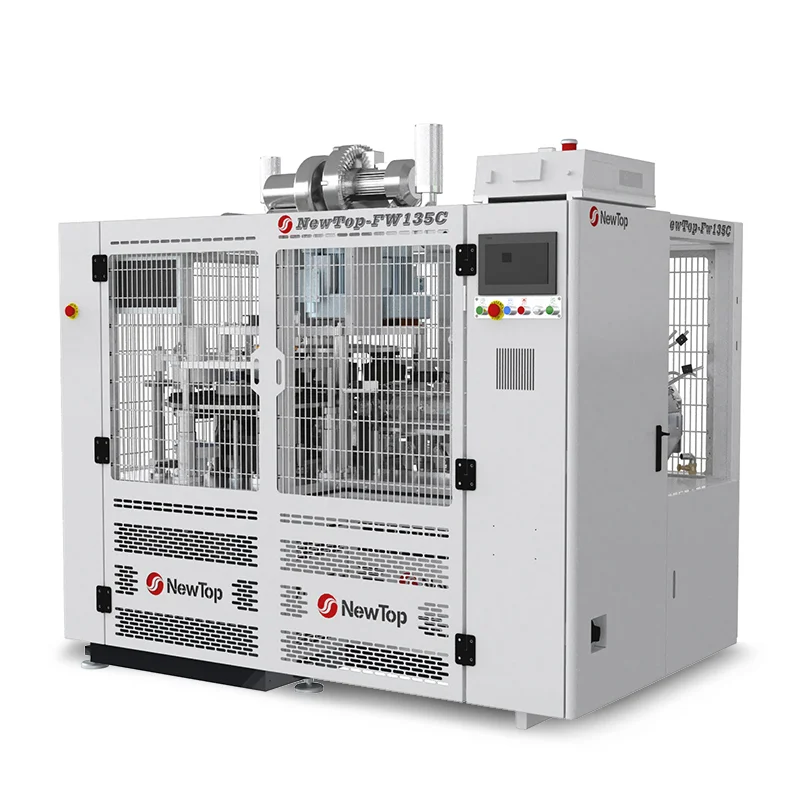
16-42oz Paper Cup Size
140 pcs/min Max Capacity
16-22oz Paper Cup Size
138 pcs/min Max Capacity


NewTop people pursue the concept of high quality and technology leading.
By changing the working mode with intelligent paper cup machine to make the operation more and more simple.
Fengzhai Natural Village,Wandu Village, Wanquan Town, Pingyang County, Zhejiang Province,China