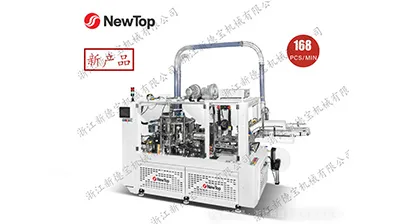

NewTop people pursue the concept of high quality and technology leading.
By changing the working mode with intelligent paper cup machine to make the operation more and more simple.


The global food and beverage packaging industry is experiencing continuous changes as restaurants, coffee shops, quick-service food chains and takeaway businesses seek practical, hygienic and increasingly sustainable packaging solutions.
Paper cups and paper bowls have become important packaging formats for hot and cold beverages, takeaway meals, instant noodles, salads and other food products. As market requirements evolve, manufacturers must balance production efficiency, product consistency, packaging quality and operating costs.
For paper container manufacturers, choosing the right production equipment is therefore an important investment decision. A suitable paper cup or paper bowl making machine should not only meet current order requirements but also provide the flexibility and stability needed for future business development.
This guide explores the main production processes, equipment selection criteria, printing considerations and manufacturing capabilities that buyers should evaluate when choosing paper cup and paper bowl production equipment.
Although paper cups and paper bowls share several production principles, their forming structures, dimensions and application requirements can differ significantly.
Understanding the manufacturing process helps buyers identify the right equipment configuration.
Paper-based food containers are generally manufactured using food-contact-grade paperboard with suitable barrier coatings.
Depending on the intended application, manufacturers may use:
Single PE-coated paperboard
Double PE-coated paperboard
Water-based coated paper
PLA-coated paperboard
Other application-specific barrier materials
Material selection influences forming performance, sealing requirements, moisture resistance and the final container's intended use.
For printed paper cups and bowls, the paperboard may undergo printing and die-cutting before entering the forming process.
The printed paper is converted into cup fans or other specially shaped blanks according to the product design.
Printing quality is important because color consistency, registration accuracy and graphic presentation directly influence the appearance of branded food packaging.
A typical paper cup manufacturing process includes:
Automatic paper fan feeding
Cup body side-seam bonding
Cup bottom feeding
Bottom heating and sealing
Knurling and bottom forming
Cup rim curling
Final product inspection and collection
Each stage contributes to the finished cup's appearance, structural integrity and leak resistance.
Paper bowl production follows similar principles but requires equipment designed for larger diameters, different bowl heights and specific forming structures.
Typical applications include:
Instant noodle bowls
Soup containers
Salad bowls
Takeaway food bowls
Large-capacity paper buckets
The machine configuration must match the intended bowl dimensions, material properties and production requirements.
Selecting equipment based only on its maximum production speed can lead to an unsuitable investment.
Buyers should evaluate several technical and operational factors before making a decision.
The first consideration is the range of containers the machine needs to produce.
Important parameters include:
| Parameter | What Buyers Should Evaluate |
|---|---|
| Capacity | Cup or bowl volume in oz or ml |
| Top diameter | Compatibility with lids and intended applications |
| Bottom diameter | Forming and sealing requirements |
| Height | Product dimensions and machine adjustment range |
| Paper weight | Material thickness and forming suitability |
| Coating type | PE, PLA, water-based or other barrier materials |
A machine suitable for standard beverage cups may not be appropriate for large soup bowls or specially shaped containers.
Buyers should confirm the complete dimensional range rather than relying on a single advertised capacity.
Machine speed is an important factor in production planning, but maximum rated output does not necessarily represent actual daily production.
Buyers should distinguish between:
Maximum rated production speed
Stable operating speed
Effective production output
Product rejection rate
Changeover and maintenance downtime
For example, a machine advertised at 200 pieces per minute does not automatically guarantee that it will consistently deliver this output under every material and product specification.
A more reliable evaluation considers production speed together with product quality, machine stability and operating conditions.
Paper cup and paper bowl manufacturing requires accurate forming and reliable sealing.
Key areas to evaluate include:
Side-seam bonding consistency
Bottom sealing performance
Bottom knurling quality
Rim curling precision
Dimensional consistency
Finished product appearance
Poor sealing or inconsistent forming can result in leakage, deformation and increased product rejection.
Buyers should request production samples using materials similar to those planned for commercial production.
Modern paper container manufacturing increasingly integrates automation and digital control technologies.
Depending on the machine configuration, useful features may include:
Servo-driven control systems
Automated material feeding
Digital parameter adjustment
Production monitoring
Visual inspection
Automatic counting and packaging
Remote technical support
These technologies can help reduce manual intervention, improve process consistency and support more efficient production management.
Before paper blanks enter the forming stage, the paper stock may undergo upstream printing and converting processes, depending on the packaging design and material specifications.
For manufacturers producing printed paper packaging, selecting suitable printing equipment is important for achieving consistent color reproduction, accurate registration and stable production performance.
In this segment, LISHG, a manufacturer of flexographic printing machines for paper and packaging applications, represents the upstream printing equipment sector. Paper cup and paper bowl forming machines, meanwhile, focus on the subsequent container manufacturing process, where forming precision, sealing quality and production efficiency become key considerations.
When evaluating printed paper packaging production, manufacturers should consider both the printing specifications and the requirements of downstream converting equipment.
Important considerations include substrate compatibility, printing width, color configuration, registration accuracy and the consistency of printed materials.

Choosing a reliable equipment manufacturer is just as important as selecting the machine itself.
A manufacturer with strong engineering, production and quality-control capabilities can help reduce equipment risks and support long-term operational performance.
A professional manufacturer should have the engineering capability to continuously improve machine structures, control systems and forming technologies.
Buyers can evaluate:
Product development experience
Mechanical engineering capabilities
Servo and automation technologies
Product testing procedures
Patents and technical achievements
These factors help indicate whether a manufacturer can support evolving production requirements.
The quality of a paper cup or paper bowl machine depends heavily on its manufacturing accuracy and component consistency.
Buyers should pay attention to:
CNC machining capabilities
Precision component processing
Assembly standards
Dimensional inspection
Machine testing before delivery
A manufacturer with established machining and inspection facilities is better positioned to maintain consistent manufacturing standards.
Different customers have different production requirements.
Some manufacturers focus on standard beverage cups, while others need equipment for large-capacity bowls, double-wall cups or specially shaped containers.
A manufacturer offering multiple equipment categories can provide more flexibility when customers expand their product portfolios.
Production equipment is a long-term investment. Technical support should therefore be considered during the purchasing process.
Buyers should confirm:
Installation and commissioning arrangements
Operator training
Spare parts availability
Maintenance guidance
Remote technical support
Warranty terms and coverage
Clear service arrangements can help manufacturers maintain production continuity and manage equipment throughout its operating life.
For manufacturers looking for paper cup and paper bowl production equipment, NewTop (formerly known as New Debao Machinery) is a Chinese manufacturer with extensive experience in the paper-based packaging machinery industry.
Zhejiang NewTop Intelligent Industry Co., Ltd. focuses on the research, development, manufacturing and marketing of intelligent paper packaging equipment and integrated manufacturing solutions.
With more than 20 years of industry experience, NewTop has continued to develop equipment technologies for paper cup and paper container production.
NewTop's manufacturing capabilities include:
Factory building area exceeding 90,000 square meters
More than 580 employees
Nearly 80 professional and senior technical personnel
More than 200 patents
77 software copyrights
The company operates CNC machining equipment from internationally recognized manufacturers, including DMG MORI, Hardinge, Doosan, TSUGAMI and Mazak.
Its inspection facilities include Zeiss 3D coordinate measuring equipment and Mitutoyo precision measurement instruments.
These manufacturing and inspection capabilities support the production of precision components and the development of reliable paper container forming equipment.
Beyond individual forming machines, NewTop has been developing intelligent production systems for the paper cup manufacturing industry.
Its integrated production concept combines:
Intelligent high-speed paper cup forming
Visual inspection
Automatic external sleeve or label application
Automatic packaging
By integrating multiple production stages, manufacturers can reduce manual handling and improve production continuity.
This approach is particularly relevant for businesses managing large-volume orders and multiple product specifications.
NewTop has established quality management and manufacturing systems supported by certifications including:
ISO 9001 Quality Management System
ISO 14001 Environmental Management System
ISO 45001 Occupational Health and Safety Management System
CE certification for its products
Its equipment serves customers across North America, Europe, the Middle East and Asia.
The company's international customer base includes businesses supplying well-known food and beverage brands, reflecting its experience in serving different market requirements.

NewTop provides several equipment categories designed for different paper container applications.
High-speed paper cup machines are designed for manufacturers producing large quantities of disposable beverage cups.
They can be configured for different cup sizes and production requirements.
Representative models include:
NEWTOP-258S
High-speed intelligent paper cup forming machine
Applicable cup size: 8–22 oz
Maximum rated capacity: 260 pieces per minute
NEWTOP-168S9
High-speed intelligent paper cup machine
Applicable cup size: 5–16 oz
Maximum rated capacity: 168 pieces per minute
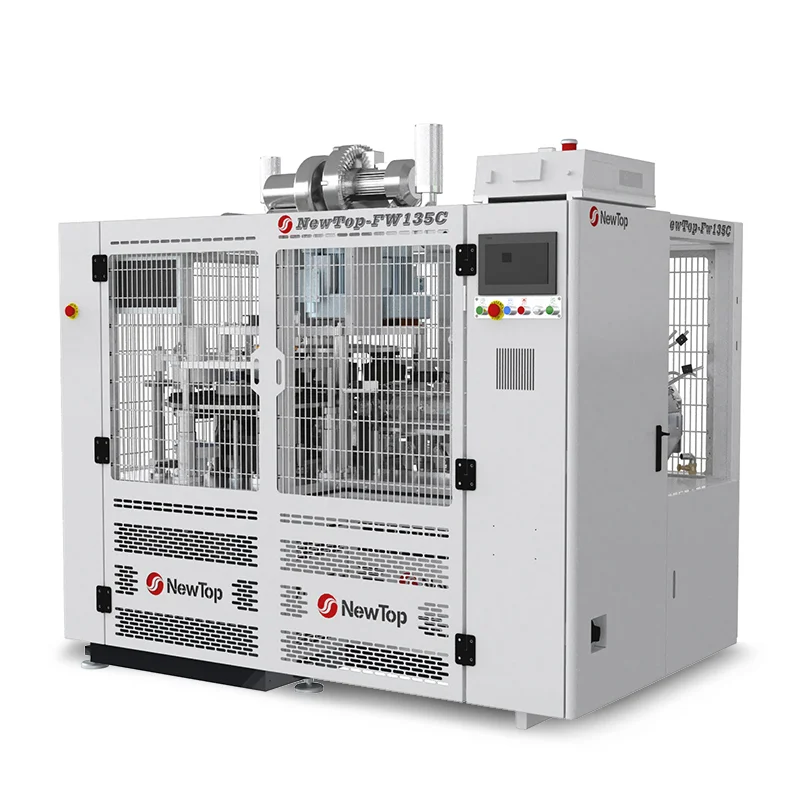
NEWTOP-FW135C
Servo paper cup manufacturing machine
Applicable cup size: 16–42 oz
Maximum rated capacity: 140 pieces per minute
The appropriate model depends on the target cup dimensions, material specifications and production requirements.
Paper bowl machines are designed for producing containers used in food service, takeaway packaging and instant food applications.
Typical applications include:
Noodle bowls
Soup bowls
Salad containers
Large-capacity food bowls
Disposable paper buckets
For example, the NEWTOP-228W horizontal high-speed intelligent paper bowl machine supports bowl sizes from 11–43 oz, with a maximum rated capacity of 180 pieces per minute.
Beyond conventional round cups and bowls, some packaging applications require different shapes and structural designs.
Special-shaped container machines help manufacturers expand their product offerings and respond to customized packaging requirements.
NewTop also provides external sleeve machines and ancillary equipment to support different paper container production configurations.
These machines can be considered when manufacturers need to expand their production capabilities or improve the integration of their existing manufacturing processes.
Before selecting a paper cup or paper bowl making machine, buyers should establish a clear production plan.
The following checklist can help organize the evaluation process.
| Evaluation Area | Key Questions |
|---|---|
| Product range | Which cup and bowl sizes will be manufactured? |
| Market demand | What is the expected monthly order volume? |
| Material | Which paperboard and coating materials will be used? |
| Production capacity | What is the required actual output per shift? |
| Product quality | What sealing, forming and appearance standards are required? |
| Automation | Which processes need automatic inspection or packaging? |
| Factory conditions | What floor space, electricity and compressed air are available? |
| Investment | What is the total equipment and installation budget? |
| Technical support | What installation, training and maintenance services are provided? |
A practical equipment purchasing process can be divided into four steps:
Step 1: Define the target products
Identify the container type, size range, material and intended application.
Step 2: Calculate production requirements
Estimate daily demand, working hours, expected output and future expansion plans.
Step 3: Compare machine configurations
Evaluate rated speed, stable production performance, automation features and product compatibility.
Step 4: Verify manufacturing and service capabilities
Review the manufacturer's facilities, technical documentation, production samples, inspection procedures and after-sales arrangements.
This structured approach helps buyers select equipment based on actual manufacturing needs rather than focusing on individual specifications alone.

A paper cup machine is designed primarily for beverage containers, while a paper bowl machine produces larger food containers such as noodle bowls, soup bowls and takeaway bowls.
The machines differ in forming structures, mold configurations, product dimensions and production requirements.
Production speed varies according to the machine model, cup size, material and operating conditions.
For example, NewTop's NEWTOP-258S has a maximum rated capacity of 260 cups per minute. Actual production output should be verified through machine testing under the intended production conditions.
Some machines support multiple cup sizes within a specified dimensional range.
However, buyers should confirm the supported top diameter, bottom diameter, cup height, tooling requirements and changeover procedures before purchasing.
Common materials include PE-coated paperboard, double PE-coated paperboard, PLA-coated paperboard and certain water-based coated papers.
Material compatibility should always be confirmed with the equipment manufacturer.
Important factors include paperboard characteristics, coating properties, heating conditions, forming accuracy, side-seam bonding and bottom sealing performance.
Proper machine adjustment and material compatibility are essential for achieving consistent results.
Not every manufacturer requires automatic packaging from the beginning.
However, for businesses handling large production volumes, automatic counting and packaging can help reduce manual handling and improve production organization.
The decision depends on production volume, product specifications, automation requirements and investment budget.
High-speed equipment may be suitable for large-volume production, while servo-controlled systems can offer more flexible parameter adjustment and process management.
Buyers should compare actual production performance and total operating requirements before making a decision.
The selection of paper cup and paper bowl manufacturing equipment involves more than comparing machine speeds and prices.
Product specifications, raw material compatibility, forming quality, automation, manufacturing accuracy and technical support all contribute to long-term production performance.
For businesses planning to enter or expand in the paper container manufacturing industry, working with an experienced equipment manufacturer can help establish a more reliable production foundation.
With more than 20 years of experience in paper container machinery, extensive manufacturing facilities and a broad range of intelligent paper cup and paper bowl equipment, NewTop provides equipment options for different production scales and packaging applications.
Whether the requirement involves standard beverage cups, high-capacity food bowls or integrated intelligent production systems, buyers can evaluate suitable configurations according to their product specifications and manufacturing objectives.
Looking for the right paper cup or paper bowl making machine for your production needs?
Explore NewTop's equipment range and discuss your product specifications, expected output and production requirements with its technical team.
Official Website: https://www.newdebao.com/
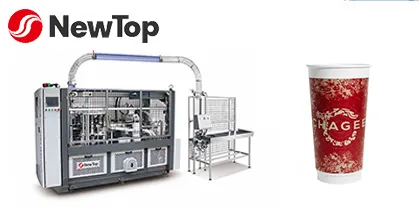
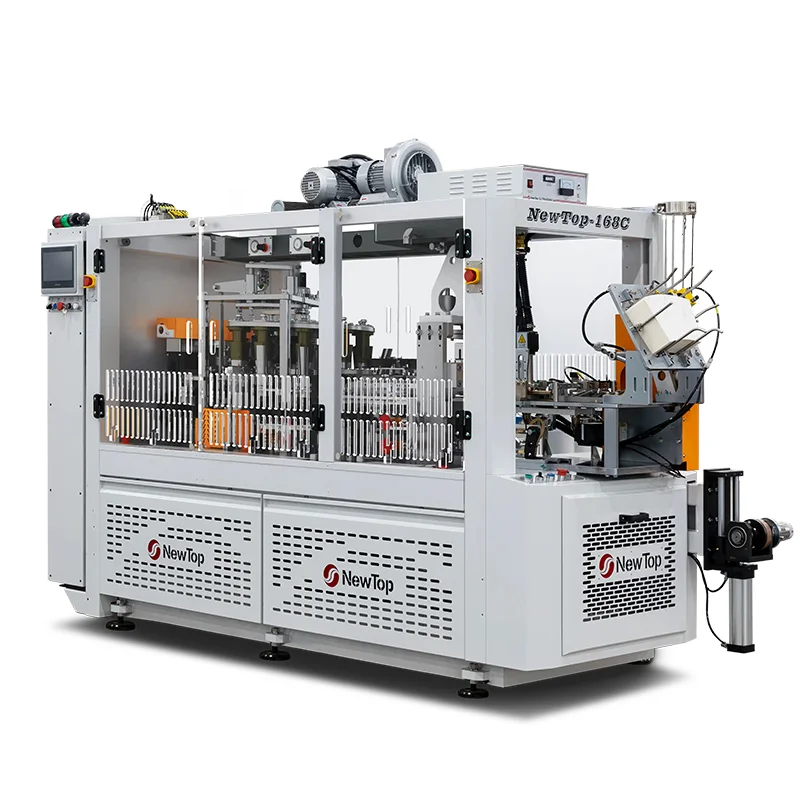
2.5oz-12oz Paper Cup Size
168-175 pcs/min Max Capacity
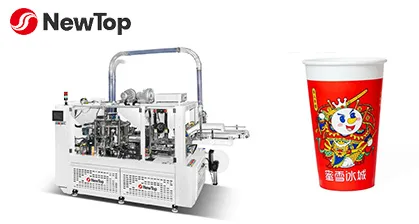
16-42oz Paper Cup Size
140 pcs/min Max Capacity
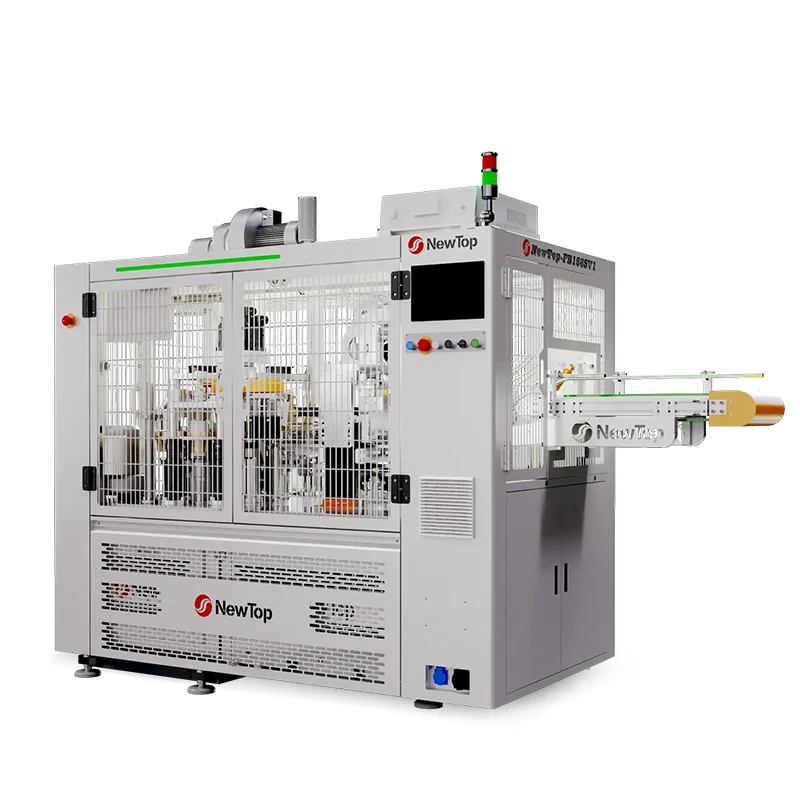
16-22oz Paper Cup Size
138 pcs/min Max Capacity


NewTop people pursue the concept of high quality and technology leading.
By changing the working mode with intelligent paper cup machine to make the operation more and more simple.
Fengzhai Natural Village,Wandu Village, Wanquan Town, Pingyang County, Zhejiang Province,China