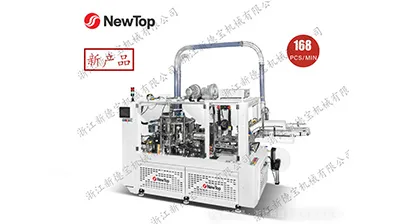

NewTop people pursue the concept of high quality and technology leading.
By changing the working mode with intelligent paper cup machine to make the operation more and more simple.

Two paper cup machines can carry nearly identical nameplate speeds and still behave completely differently on a factory floor. One changes from a 12 oz to a 22 oz format in under an hour and holds dimensional tolerance through the shift; the other requires half a day of mechanical adjustment and drifts out of tolerance after two hours of running. The difference is rarely the motor or the frame alone—it is the technology architecture underneath: how motion is transmitted, how parameters are stored, how the forming stations are controlled, and how the machine interacts with inspection and packing equipment. Buyers who compare only speed and price miss the variables that determine changeover cost, reject rate, maintenance burden, and long-term capacity. This guide compares three dominant technology routes in paper container forming—servo-driven systems, horizontal high-speed systems, and automatic/intelligent forming systems—and explains how each route affects the decisions a production planner actually faces. It does not rank specific models or reproduce full specification tables; those belong on product pages. Instead, it provides a framework for matching technology to production goals.
Machine technology is not an abstract engineering category. It determines six operational outcomes that directly affect cost and responsiveness.
Adjustment. How much mechanical work is required to change a forming parameter—sealing temperature, knurling pressure, rim curling position, or cup height? A machine with mechanical cam-driven stations requires physical adjustment of linkages and stops; a servo-driven station accepts a parameter change through the control interface. The difference is measured in minutes per adjustment and in the skill level required to perform it correctly.
Changeover. How long does it take to switch from one cup or bowl size to another? Changeover includes tooling swaps, parameter resets, first-article validation, and ramp-up to stable production. On mechanically driven machines, changeover often involves re-timing cam profiles and re-adjusting sealing jaw positions; on servo-driven platforms, the motion profile can be recalculated by the controller, and stored recipes reduce the parameter-reset portion to a recall command. Published field reports from servo-driven lines describe changeover times dropping from roughly 45 minutes to under 12 minutes for skilled operators, primarily because electronic gearing replaces mechanical re-timing.
Running stability. How consistently does the machine hold dimensional tolerance and seal quality across a shift? Stability is affected by thermal drift, mechanical vibration, tool wear, and the control system’s ability to compensate. A machine that holds temperature within ±2°C will produce more consistent seals than one that drifts within ±8°C, even if both are set to the same nominal temperature. Stability also depends on structural rigidity: a frame that flexes under forming load produces dimensional variation that no control system can eliminate.
Maintenance. What is the maintenance burden, and what skill level does it require? Mechanical cam systems have many wear points—cams, followers, linkages, bearings—that require periodic inspection and replacement. Servo systems replace some of these with electronic components, but introduce their own maintenance requirements: encoder cleanliness, servo drive cooling, and parameter backup. The total maintenance burden depends on which components are in the critical path.
Capacity. How much usable output can the machine deliver over a shift, after accounting for uptime, changeover, and reject rate? Rated speed is only the starting point. A machine rated at 180 pcs/min that jams every fifteen minutes delivers less usable output than a machine rated at 140 pcs/min that runs uninterrupted. Capacity is a function of technology architecture, not just motor size.
Product consistency. How much variation exists between the first cup of a batch and the last? Consistency is affected by temperature control, pressure control, tool wear, and the machine’s ability to reject out-of-tolerance units. A machine with inline inspection and automatic rejection produces a different consistency profile than one that relies on periodic sampling.
These six outcomes are the practical translation of technology differences. A buyer who understands them can compare machines on dimensions that matter rather than on nameplate specifications alone.
For a broader view of how forming stages determine quality outcomes, the pillar guide on the paper cup manufacturing process explains the stage-by-stage logic that applies across technology platforms.
Servo-driven systems replace mechanical linkages with individually controlled servo motors. Instead of a single main shaft driving all stations through cams and gears, each critical motion axis—paper feed, mandrel rotation, sealing jaw actuation, bottom knurling, rim curling—can be driven by its own servo motor and coordinated electronically.
Precise control. The primary advantage of servo control is that motion profiles are defined in software rather than by mechanical geometry. A sealing jaw can follow a motion curve that accelerates gently, holds pressure for a defined dwell, and retracts without shock. This matters for seal quality because the pressure profile over time affects how the coating flows and bonds. A mechanical cam produces a fixed pressure profile that cannot be adjusted without changing the cam; a servo system can adjust the profile through the controller.
Adjustment convenience. Servo systems allow parameters to be changed through the human-machine interface rather than through mechanical adjustment. Sealing temperature, dwell time, pressure setpoint, and station timing can be stored as recipes and recalled when a format changes. This reduces the skill required for routine adjustment and reduces the risk of an operator leaving a station in an incorrect state after a change.
Multi-specification switching. The most visible benefit of servo control in paper container production is fast changeover between sizes. Because the motion profile is electronic, the controller can recalculate the timing for a different cup height or diameter without mechanical re-timing. Tooling still must be changed—mandrels, curling dies, and knurling wheels are size-specific—but the parameter-reset portion of changeover is reduced. Plants that run multiple sizes per week benefit disproportionately, because the time saved per changeover accumulates across the production calendar.
Suitable scenarios. Servo-driven systems are most valuable when production requires frequent size changes, when dimensional tolerance is tight, or when the material mix includes coatings with narrow sealing windows—PLA, for example, requires a narrower temperature window than PE, and servo control makes it easier to hold that window. Servo systems are less advantageous when a plant runs a single size continuously for weeks, because the changeover benefit is rarely realized and the maintenance requirements of servo components (encoder cleanliness, drive cooling) become the dominant consideration.
The servo-driven paper cup machine platform illustrates how electronic gearing and recipe storage are implemented in practice, including how the servo turntable and side-sealing stations are coordinated.
What to verify in a servo system. Ask how many axes are servo-driven versus mechanically linked. A machine with servo feed and servo sealing but mechanical bottom knurling is only partially servo-driven; the mechanical station remains a source of wear and adjustment. Ask how recipes are stored and recalled, and whether the controller can export parameter sets for backup. Ask about encoder resolution and drive cooling, because these determine long-term reliability.
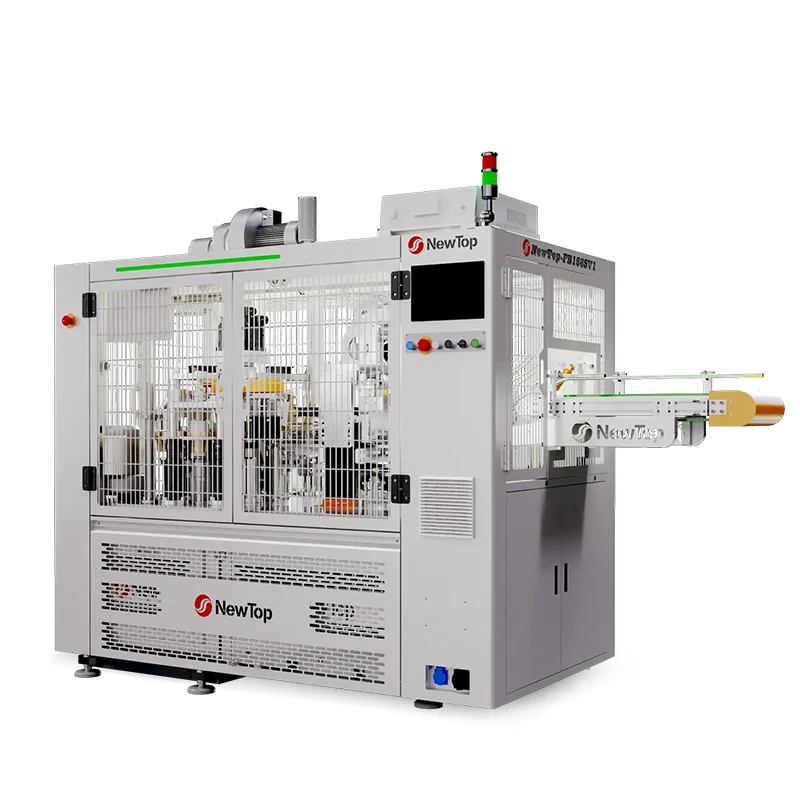
Horizontal high-speed systems prioritize throughput and structural rigidity. The forming stations are arranged horizontally rather than vertically, which allows longer dwell times at each station without increasing the machine’s footprint height, and which provides a more rigid frame for high-load forming operations.
High-speed operation. Horizontal architectures can achieve higher cycle rates than vertical architectures because the horizontal arrangement allows more stations to operate in parallel and because the transfer between stations can be shorter. Machines in this category commonly reach 150–260 pcs/min for cup formats, depending on size and material. The speed advantage is real, but it is format-dependent: a machine rated at 260 pcs/min for 8–22 oz cups will not produce 260 pcs/min at 24 oz or with heavy paperboard.
Large-batch production. The economic case for horizontal high-speed systems is strongest when a plant runs a small number of formats in large volumes. The high capital cost of the machine is amortized over long production runs, and the changeover time—which may be longer than on a servo platform because of the heavier tooling—is incurred infrequently. A plant running a single 16 oz cup format for weeks at a time realizes the full throughput benefit; a plant switching formats daily may not.
Structural rigidity. High-speed forming generates significant mechanical load, especially at the bottom knurling and rim curling stations. Horizontal architectures typically use a heavier frame and larger bearing surfaces to absorb this load without flexing. The rigidity translates into dimensional consistency at speed: a machine that flexes under load produces ovality and height variation that become more pronounced as speed increases. The trade-off is weight and floor-space requirement; a horizontal high-speed machine is typically larger and heavier than a comparable servo platform.
Stable operating conditions. High-speed operation is more sensitive to material consistency than low-speed operation. At 200+ pcs/min, the paper web is subjected to rapid acceleration and deceleration, and any variation in paper thickness, coating weight, or moisture content produces a corresponding variation in forming quality. The machine’s stability depends on the stability of its inputs. This is why high-speed lines often include inline inspection and automatic rejection: at high speed, the cost of letting a defective unit through is higher, and manual inspection cannot keep pace.
Suitable scenarios. Horizontal high-speed systems fit plants with stable, high-volume demand, consistent material supply, and the floor space and utilities to support a large machine. They are less suitable for plants that need frequent format changes or that process a wide mix of materials, because the changeover cost and the sensitivity to material variation erode the speed advantage.
For a comparison of how horizontal and vertical architectures differ in bowl production, the paper bowl machine series page describes the countertop integrated layout used in horizontal bowl platforms and how it affects accessibility and changeover.
What to verify in a high-speed system. Ask for the stable speed at the target format, not the maximum rated speed. Ask how the machine behaves when paper thickness varies within the supplier’s tolerance—does it maintain dimensional consistency, or does the reject rate climb? Ask about the frame construction and bearing specification, because these determine whether the machine holds tolerance after years of high-load operation.
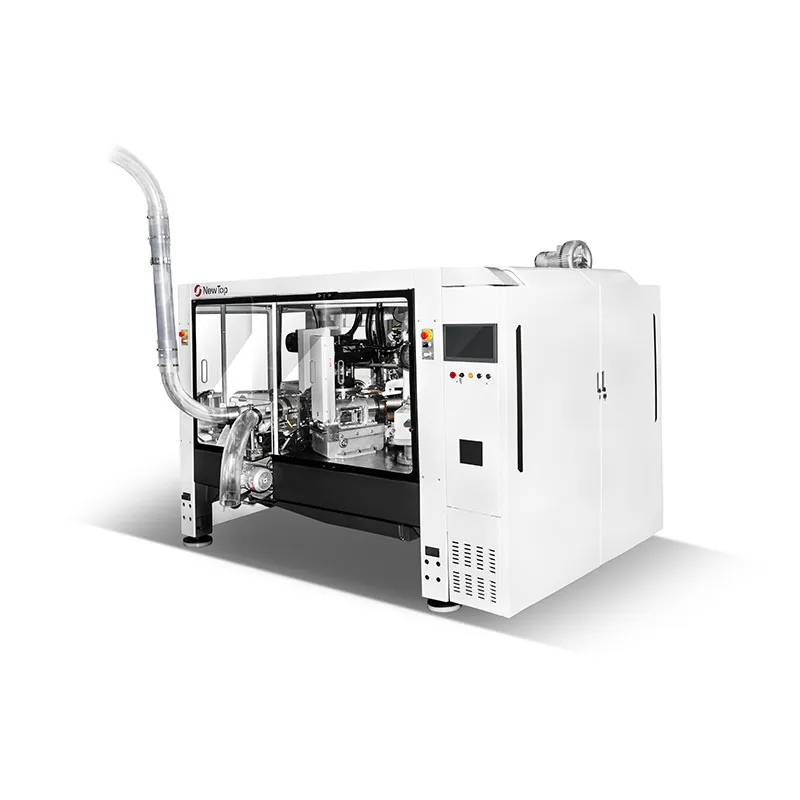
Automatic and intelligent forming systems extend beyond motion control into parameter management, production data, and integration with inspection and packing equipment. The defining characteristic is not a single technology but a system architecture: the forming machine is treated as one module in a connected production line rather than as a standalone unit.
Degree of automation. Automation in this context refers to the extent to which the machine handles material feeding, forming, inspection, rejection, counting, and transfer to packing without manual intervention. A fully automatic line may include automatic paper feeding, inline vision inspection, automatic rejection of defective units, and direct linkage to a packing machine. The benefit is reduced labor per unit of output and reduced variability introduced by manual handling. The limitation is that each additional automated module introduces another point of failure and another integration interface that must be maintained.
Operator interface. Intelligent systems typically provide a graphical operator interface with guided navigation, fault diagnosis, and parameter adjustment through touchscreen or icon-based menus. The practical value is reduced training time and faster fault recovery: when a machine stops, the interface indicates the likely cause and the corrective action, rather than requiring the operator to diagnose from symptoms. This matters most in plants with high operator turnover or with multiple machine types on the same floor.
Parameter management. Intelligent systems store forming parameters as recipes associated with specific products. When a format changes, the operator recalls the recipe rather than manually re-entering every setpoint. This reduces the risk of an incomplete parameter reset and makes it possible to reproduce a known-good setup after maintenance or a power interruption. The value is highest when a plant runs many formats or when the same format is produced on multiple machines, because recipe portability allows best-known parameters to be replicated.
Production data. Intelligent systems log production data—output count, reject count, downtime events, parameter changes—and make it available for analysis. The practical value is that capacity planning and quality improvement can be based on measured data rather than on estimates. A plant that knows its actual changeover time, actual reject rate by format, and actual downtime causes can plan capacity more accurately and target improvement where the loss is largest. The limitation is that data logging is only useful if someone reviews it; a machine that generates reports no one reads provides no benefit.
Connection to inspection and packing. The most significant integration benefit is the linkage between forming, inspection, and packing. Inline inspection can reject defective units before they reach packing, and a linked packing machine can match its speed to the forming machine’s output rather than running at a fixed rate. The practical value is reduced manual handling and reduced risk of a defective unit reaching the customer. The integration challenge is that the modules must communicate reliably; a packing machine that stops unexpectedly can force the forming machine to stop, and the overall line availability becomes the product of the individual module availabilities.
For a view of how forming, detection, and packaging modules are configured as an integrated line, the bowl machine online solution page describes the in-line architecture from forming through finished product handling. The broader sleeve & packaging solution overview covers how inspection, edge pressing, and packaging modules combine with forming equipment.
What to verify in an intelligent system. Ask what data the system logs and how it can be exported. Ask whether recipes can be backed up and transferred between machines. Ask how the system behaves when a downstream module stops—does the forming machine stop immediately, or is there a buffer? And ask about the maintenance requirements of the inspection system: cameras, lighting, and rejection mechanisms require calibration and cleaning, and a neglected inspection system provides false confidence rather than actual quality control.
The table below summarizes the three technology routes across the dimensions that matter most in production planning.
| Comparison Dimensions | Servo System | High-Speed System | Automatic/Intelligent System |
|---|---|---|---|
| Changeover | Better suited to frequent adjustment; electronic re-timing reduces changeover time | Better suited to stable batch production; changeover cost is amortized over long runs | Depends on system integration; recipe recall helps, but module coordination adds complexity |
| Control | Servo control with electronic gearing; motion profiles adjustable through software | High-speed mechanical and servo combination; fixed cam profiles with servo assistance on critical axes | Digital control with recipe management, data logging, and integration interfaces |
| Best fit | Multi-format production with frequent size changes | High-volume, single-format or few-format production | Automated production lines requiring inspection and packing linkage |
| Main concern | Configuration complexity and servo maintenance (encoder cleanliness, drive cooling) | Material consistency and structural stability at speed | System compatibility and the reliability of inter-module communication |
| Adjustment skill required | Lower for parameter changes; moderate for tooling changes | Higher for mechanical re-timing and cam adjustment | Lower for routine operation; higher for system configuration and troubleshooting |
| Data visibility | Limited unless paired with a data system | Limited; speed-focused platforms may not log detailed production data | High; production data and fault diagnosis are integral to the platform |
| Floor space and utilities | Moderate | Higher; larger frame and heavier utilities | Moderate to high depending on the number of integrated modules |
The comparison is not a ranking. A servo system is not inherently better than a high-speed system; it is better suited to a different production profile. The right choice depends on the match between technology and production goals, which is the subject of the next section.
The most reliable way to choose a technology route is to start from the production profile rather than from the machine specification. The scenarios below describe common production profiles and the technology characteristics that fit them.
Multi-format, small-batch production. A plant producing cups or bowls in several sizes for different customers, with frequent changeovers, benefits most from servo-driven systems. The ability to recall recipes and re-time electronically reduces changeover cost, and the precise control helps maintain tolerance across formats. The main risk is underutilizing the servo capability: if the plant runs one format for months at a time, the changeover benefit is not realized, and the maintenance requirements of servo components become the dominant consideration.
Single-format, high-volume production. A plant running one or two formats continuously for weeks benefits most from horizontal high-speed systems. The throughput advantage is realized fully, and the changeover cost is incurred infrequently. The main risk is material variability: at high speed, inconsistent paper stock produces inconsistent output, so the plant must have a reliable material supply and a quality inspection process for incoming paper.
Large-size paper cups. Large cups (above roughly 16 oz) require longer forming cycles and more consistent sealing pressure than small cups, because the bottom area is larger and the wall is taller. Servo control helps maintain pressure consistency across the larger sealing area, and a rigid frame helps maintain dimensional tolerance. The technology choice should prioritize control stability over raw speed, because the stable speed at large formats is lower than at small formats regardless of the platform.
Large-size paper bowls. Large bowls (above roughly 45 oz) present the most demanding forming conditions: deeper draw, larger bottom area, longer rim circumference. The technology choice should prioritize temperature uniformity across the bottom die and rim curling die, and structural rigidity to maintain tolerance at the larger format. The paper bowl manufacturing process pillar page explains the quality mechanisms that make large-format bowls more sensitive to technology differences.
Need for inline inspection and packing. A plant that wants to link forming, inspection, and packing benefits from an intelligent system with integration interfaces. The value is reduced manual handling and faster rejection of defective units. The risk is that the line availability becomes the product of module availabilities, so each module must be reliable and the integration must be tested under production conditions, not just at commissioning.
Need for digital management. A plant that wants production data for capacity planning, quality improvement, or customer reporting benefits from an intelligent system with data logging and export capability. The value depends on whether the data is actually used; a plant without a process for reviewing production data will not realize the benefit, regardless of the machine’s capability.
For a view of how different machine platforms are positioned across these production profiles, the paper cup machine and paper bowl machine series pages describe the architectures available for different scales and formats.
Technology comparison is only meaningful if the underlying data is reliable. The checklist below identifies what to verify before comparing machines on technology grounds.
Actual stable speed. Ask for the speed the machine sustains at the target format and material over a full shift, not the maximum rated speed. A machine rated at 260 pcs/min may run stably at 220 pcs/min at the target format; the stable figure is the one that matters for capacity planning.
Product size range. Verify the size range the machine can produce with the available tooling, and ask how many sizes can be run on one platform without mechanical modification. A machine that requires a new mandrel for every size has a different changeover profile than one that shares tooling across a range.
Changeover time. Ask for the measured changeover time at the target formats, including tooling swap, parameter reset, and first-article validation. A changeover time quoted for a simple size change may not reflect the time required for a change that also involves a material change.
Material requirements. Ask what paper grammage, coating type, and moisture range the machine is designed for. A machine tuned for PE-coated paper may require different parameters for PLA, and the stable speed may be lower. The material requirements determine whether the machine can run the plant’s actual material mix.
Yield rate. Ask for the reject rate at the target format and material under stable production conditions. A reject rate quoted from a commissioning trial may not reflect long-run performance after tool wear and temperature drift. The yield rate is the input that converts rated speed into effective output.
Warranty scope. Ask what the warranty covers and what it excludes. A warranty that covers mechanical parts but excludes servo drives, inspection cameras, or wear tooling has a different practical value than one that covers the full forming system. The warranty scope should be compared alongside the technology route, because different technologies have different failure modes.
Spare parts and service. Ask about spare parts availability, lead time, and local service coverage. A machine with a sophisticated control system but no local service capability may have a higher total cost of ownership than a simpler machine with reliable local support. The service page describes the support structure that accompanies equipment, including installation guidance, operator training, and after-sales coverage.
For a visual reference on how different machine architectures operate in production, the videos page includes operation footage of forming stations across platform types.
Q1: Is servo control always better?
No. Servo control offers advantages in precision, adjustment convenience, and multi-format changeover, but it introduces maintenance requirements for encoders, drives, and cooling systems, and its benefits are realized only when the production profile includes frequent changes or tight tolerance requirements. A plant running a single format continuously may get better total value from a mechanically driven high-speed platform.
Q2: What is the difference between high-speed and intelligent forming?
High-speed forming prioritizes cycle rate and structural rigidity, with the machine optimized for throughput at a stable format. Intelligent forming prioritizes control, data, and integration, with the machine optimized for parameter management and connection to inspection and packing. A machine can be both high-speed and intelligent, but the two characteristics address different production needs: speed addresses volume, intelligence addresses coordination and consistency.
Q3: Which system is better for frequent size changes?
A servo-driven system is generally better suited to frequent size changes because electronic re-timing reduces the parameter-reset portion of changeover, and recipe storage allows known-good setups to be recalled. The tooling change is still required, so the actual changeover time depends on how the tooling is designed and how accessible the stations are.
Q4: How should machine speed be compared?
Compare stable speed at the target format and material, not maximum rated speed. Ask for the speed the machine sustains over a full shift with acceptable reject rate, and ask how that speed changes when the format or material changes. A machine with a lower rated speed but a smaller gap between rated and stable speed may deliver more usable output than a machine with a higher rated speed and a larger gap.
Q5: What should be tested before placing an order?
Test the target format with the actual material, measure the reject rate over a production run long enough to include tool wear and temperature drift, measure the changeover time for a realistic format change, and verify the inspection and packing integration under production conditions rather than at commissioning. Also verify the warranty scope and the local service coverage, because these determine the long-term cost of ownership.
The most useful starting point for a technology comparison is a clear production profile: the formats you run, the frequency of changeover, the material mix, the target output, and the quality requirements. With these inputs, the technology routes can be compared on the dimensions that actually affect your operation—changeover cost, stable speed, reject rate, maintenance burden, and integration capability—rather than on nameplate specifications alone.
To explore how different architectures are configured for specific production scales and formats, the paper cup machine and paper bowl machine series pages describe the available platforms. For questions about installation, training, and after-sales support, the service page outlines the support structure. And when you are ready to discuss a specific production profile, provides a direct way to share your requirements and receive a technology recommendation.
Paper Cup Manufacturing Process: Forming, Quality Control and Packing
Paper Bowl Manufacturing Process: Forming, Capacity and Quality
Paper Cup Defects: Rim Curling, Side Seam and Bottom Knurling
How Do You Plan Capacity for Large-Format Paper Bowl Production?
Solved: Common Bottlenecks in High-Volume Paper Cup Production
This article is part of NewTop’s technical content library. No direct sales or pricing information is included. All technical discussions aim to help you make informed purchasing decisions.
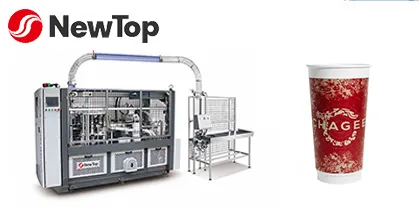
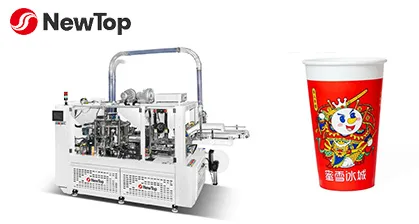

2.5oz-12oz Paper Cup Size
168-175 pcs/min Max Capacity
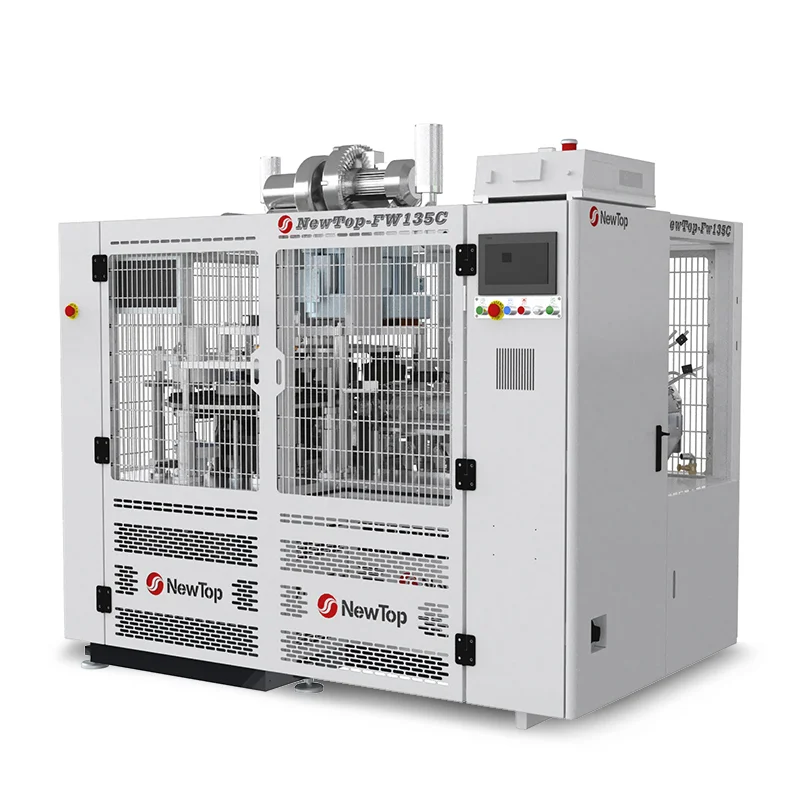
16-42oz Paper Cup Size
140 pcs/min Max Capacity
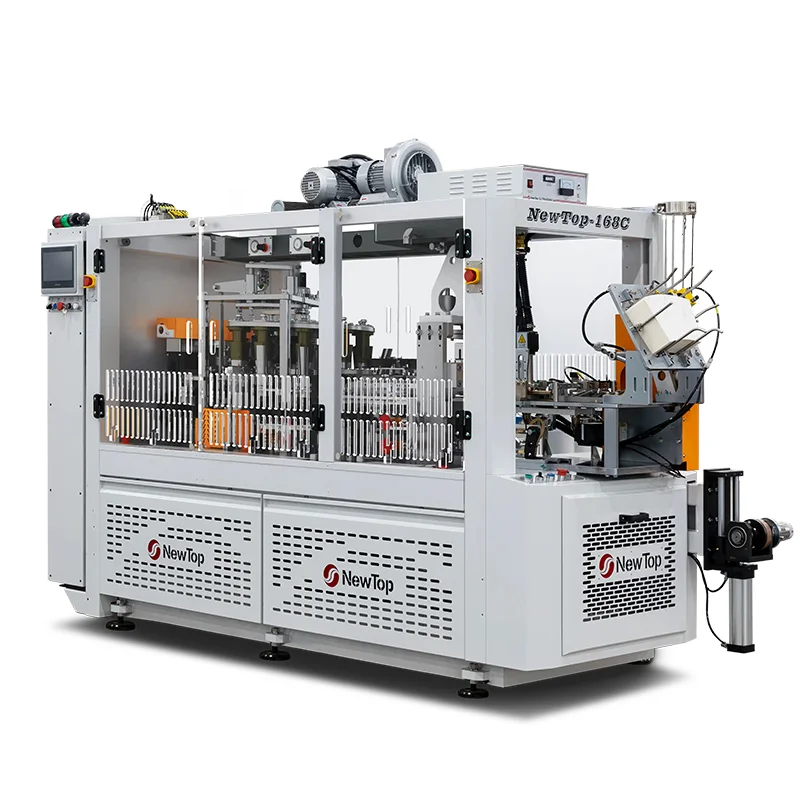
16-22oz Paper Cup Size
138 pcs/min Max Capacity


NewTop people pursue the concept of high quality and technology leading.
By changing the working mode with intelligent paper cup machine to make the operation more and more simple.
Fengzhai Natural Village,Wandu Village, Wanquan Town, Pingyang County, Zhejiang Province,China