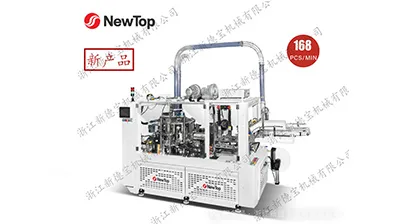

NewTop people pursue the concept of high quality and technology leading.
By changing the working mode with intelligent paper cup machine to make the operation more and more simple.

The paper cup manufacturing process is a continuous, automated sequence that transforms printed paper board into leak-proof, food-safe drinking cups. It combines precise mechanical forming, thermal sealing, bottom knurling, rim curling, inline inspection, and final packing. Each stage solves a specific problem: side-wall forming creates the cup body, bottom insertion prevents leakage, rim curling ensures a comfortable and safe drinking edge, and inspection removes defective units before they reach the customer. This pillar page explains the complete process from paper preparation to packed cartons, identifies the critical quality checkpoints, and shows where paper cup machines and ancillary equipment fit into the production line. It does not compare machine prices or recommend specific models; those topics are covered on product pages and solution pages.
The paper cup manufacturing process is the end-to-end method of converting flat paper board into finished paper cups at high speed. It begins with cup blank preparation, where printed and coated paper is cut into fan-shaped side-wall blanks and circular bottom blanks. These blanks are then fed into a paper cup forming machine, which performs side-wall forming, side-seam sealing, bottom insertion, bottom knurling, and rim curling in a synchronized sequence. After forming, cups pass through inspection systems that detect leakage, dimensional deviation, surface defects, and contamination. Finally, counting, stacking, and packing equipment prepare the cups for shipment.
The process is designed to solve several problems simultaneously:
Leak-proofing: Heat-sealed side seams and knurled bottoms prevent liquid from escaping.
Structural integrity: Precise forming and curling give the cup rigidity and a stable shape.
Food safety: Material selection, clean handling, and inspection reduce contamination risks.
Production efficiency: High-speed automation allows thousands of cups per hour with consistent quality.
Traceability: Digital management systems record production data, defects, and machine parameters.
Paper cup machines are the core of this process. They integrate mechanical, pneumatic, and servo-driven stations to perform multiple operations in one cycle. Ancillary equipment—such as packing machines, stackers, and vision inspection systems—extends the process beyond forming to ensure that only good cups are packed and shipped.
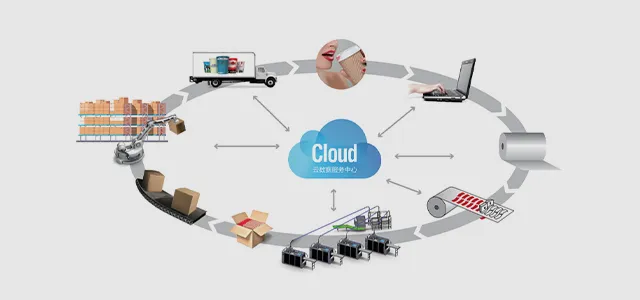
The manufacturing process can be divided into six main stages. Each stage has its own equipment, parameters, and quality requirements.
Purpose: Prepare the raw material so that it can be formed into a cup with consistent dimensions and reliable sealing.
Paper cups are made from food-grade paper board coated with a thin layer of polyethylene (PE), polylactic acid (PLA), or other barrier materials. The paper is supplied in large rolls, usually with pre-printed designs. The first step is to cut the paper into two types of blanks:
Side-wall blanks: Fan-shaped pieces that will be rolled into the cup body. The arc length determines the top and bottom diameters of the cup.
Bottom blanks: Circular pieces that will be inserted into the bottom of the cup body.
The cutting process is typically done by a die-cutting machine or an inline cutting station integrated with the cup forming machine. The paper thickness, coating weight, and moisture content must be controlled because they affect formability, sealing strength, and cup rigidity.
Key parameters:
Paper grammage: usually 150–350 gsm for standard cups, higher for heavy-duty cups.
Coating type: single PE, double PE, PLA, or water-based coatings.
Blank dimensions: tolerance typically within ±0.1 mm.
Printing registration: must align with the cup’s final shape.
Quality checkpoints:
Paper roll inspection for contamination, wrinkles, and coating defects.
Die-cutting accuracy: fan angle, radius, and bottom diameter.
Moisture content: too dry causes cracking, too wet causes poor sealing.
Equipment involved:
Paper roll unwinder.
Die-cutting machine or inline blank cutter.
Printing press (pre-printing).
Material handling and feeding systems.
In high-speed production, the blank preparation stage must keep pace with the forming machine. Any interruption in blank supply causes the entire line to stop, reducing overall equipment effectiveness (OEE). Therefore, automated splicing and buffer systems are often used.
Purpose: Roll the fan-shaped side-wall blank into a cylinder and seal the overlapping edges to create a leak-proof side seam.
Once the side-wall blank enters the paper cup machine, it is wrapped around a forming mandrel. The two edges of the blank overlap, and heat is applied to melt the PE coating. Pressure is then applied to bond the layers together. This is called the side-seam sealing process. The result is a conical or cylindrical tube that will become the cup body.
The side seam is the most critical seal in a paper cup because it runs the full height of the cup. If the seal is incomplete, liquid will leak. The sealing process must control three variables:
Temperature: Enough to melt the coating but not so high that it burns the paper.
Pressure: Uniform pressure ensures complete contact between the overlapping layers.
Time: The dwell time must be sufficient for the melted coating to flow and bond.
Modern machines use servo-driven sealing jaws that maintain consistent pressure and temperature. Some machines also use ultrasonic sealing, which generates heat through high-frequency vibration and is suitable for certain coatings.
Key parameters:
Sealing temperature: typically 180–250°C depending on coating type.
Sealing pressure: 0.2–0.6 MPa.
Dwell time: 0.1–0.5 seconds.
Overlap width: usually 4–8 mm.
Quality checkpoints:
Side seam strength: tested by pulling the seam apart or by inflation.
Seam appearance: no wrinkles, burns, or gaps.
Cup roundness: the formed tube must be circular, not oval.
Equipment involved:
Side-wall forming mandrel.
Heat sealing station (hot air, contact, or ultrasonic).
Servo-driven sealing jaws.
Cooling station to set the seal.
After sealing, the cup body is transferred to the bottom insertion station. The side seam must be strong enough to withstand the subsequent bottom knurling and rim curling operations, which apply additional mechanical stress.
Purpose: Insert the circular bottom blank into the cup body and seal it to prevent leakage.
The bottom of a paper cup is a separate circular piece that is inserted into the open end of the cup body. The edge of the cup body is then folded inward and pressed against the bottom blank. This process is called knurling or bottom curling. The heat and pressure melt the PE coating on both the bottom blank and the cup body, creating a continuous seal.
The bottom seal is subjected to the full hydrostatic pressure of the liquid inside the cup. Therefore, it must be strong and uniform. The knurling process creates a series of small ridges or knurls that mechanically interlock the paper layers and ensure a tight seal. The depth and pitch of the knurls are critical: too shallow, and the seal may leak; too deep, and the paper may crack.
Key parameters:
Bottom heating temperature: 150–220°C.
Knurling pressure: 0.3–0.8 MPa.
Knurling depth: 0.2–0.5 mm.
Knurling pitch: 1–3 mm.
Bottom blank diameter: matched to the cup body diameter.
Quality checkpoints:
Bottom leakage: tested by filling the cup with water or air.
Bottom deformation: no bulging or wrinkling.
Knurling uniformity: consistent pattern around the circumference.
Cup height: must match specification.
Equipment involved:
Bottom blank feeder.
Bottom insertion station.
Bottom heating system (hot air or contact).
Knurling tool (rotary or reciprocating).
Bottom cooling station.
In high-speed machines, the bottom insertion and knurling stations operate in synchronization with the side-wall forming station. Any misalignment causes defects such as bottom leakage or cup deformation. Regular maintenance of the knurling tools and heating elements is essential.
Purpose: Curl the top edge of the cup to create a smooth, rigid rim that is safe to drink from and compatible with lids.
After the bottom is sealed, the cup is transferred to the rim curling station. Here, the top edge of the cup body is heated and then rolled outward and downward to form a rounded rim. The rim serves several functions:
Safety: Eliminates sharp edges that could cut the user’s lips.
Rigidity: Increases the stiffness of the cup, preventing it from collapsing when held.
Sealing surface: Provides a smooth surface for lid attachment.
Aesthetics: Gives the cup a finished, professional appearance.
The rim curling process is delicate. If the rim is curled too tightly, the paper may crack. If it is curled too loosely, the rim may be uneven or weak. The temperature, speed, and geometry of the curling die must be precisely controlled.
Key parameters:
Rim curling temperature: 100–180°C.
Curling die geometry: radius and angle.
Curling speed: matched to the machine cycle.
Rim diameter: must be consistent within ±0.3 mm.
Quality checkpoints:
Rim roundness: no flat spots or ovality.
Rim smoothness: no cracks or rough edges.
Rim strength: must withstand normal handling and lid application.
Rim diameter: critical for lid fit.
Equipment involved:
Rim heating system (hot air or infrared).
Curling die and mandrel.
Servo-driven curling mechanism.
Cooling station.
Modern paper cup machines often use a three-stage curling process to ensure a smooth, uniform rim. The rim is first pre-curled, then fully curled, and finally sized. This reduces the risk of cracking and improves dimensional accuracy.
Purpose: Detect and remove defective cups before they are packed, ensuring that only high-quality products reach the customer.
Inspection is a critical part of the paper cup manufacturing process. Defects can occur at any stage, and some—such as pinholes in the bottom or weak side seams—may not be visible to the naked eye. Therefore, automated inspection systems are used to check every cup at high speed.
There are several types of inspection:
Visual inspection: Cameras check for surface defects, printing errors, contamination, and shape deviation.
Leak detection: Air pressure or water tests detect leaks in the side seam or bottom.
Dimensional inspection: Sensors measure cup height, top diameter, bottom diameter, and rim diameter.
Rim inspection: Checks for cracks, uneven curling, or sharp edges.
Bottom inspection: Checks for proper knurling and bottom alignment.
When a defect is detected, a rejection mechanism—usually a pneumatic blast or mechanical arm—removes the cup from the production line. The rejected cups are collected in a waste bin. Some systems also record the defect type and location, providing data for process improvement.
Key parameters:
Inspection speed: must match the forming speed (up to 260 cups/min).
Detection sensitivity: able to detect pinholes as small as 0.1 mm.
False rejection rate: should be low to minimize waste.
Data logging: records defects for traceability.
Quality checkpoints:
All cups must pass inspection before packing.
Defect rates should be monitored and trended.
Inspection equipment must be calibrated regularly.
Equipment involved:
Vision inspection system (e.g., INOVANCE VISION).
Leak tester.
Dimensional measurement sensors.
Rejection mechanism.
Data acquisition and reporting system.
Inspection is not a substitute for process control. It is a safety net. The goal is to prevent defects from occurring in the first place by maintaining proper machine settings and material quality.
Purpose: Count the good cups, stack them, and pack them into bags or cartons for shipment.
After inspection, the cups are counted and stacked. Counting is usually done by an electronic counter that tracks the number of cups passing a sensor. The cups are then stacked in a nested configuration to save space. Stacking can be done manually or automatically.
Packing is the final stage. Cups are packed into plastic bags or cardboard cartons. The packing process must be efficient and gentle to avoid damaging the cups. Modern packing machines, such as the NEWTOP-DXD110/150, can be linked directly to the paper cup machine for fully automatic production. These machines use plastic film (HDPE/LDPE) to bag the cups, and they can adjust the film feeding length automatically.
Key parameters:
Counting accuracy: 100% accurate.
Stacking height: 250–650 mm (depending on cup size).
Packing speed: up to 15 bags/min.
Film thickness: 15–50 μm.
Carton dimensions: matched to cup size.
Quality checkpoints:
Cup count per bag/carton: must match specification.
Stack alignment: cups should be nested neatly.
Packing integrity: bags must be sealed, cartons must be closed.
Labeling: product information, batch number, and date codes.
Equipment involved:
Counter.
Stacker.
Bagging machine (e.g., NEWTOP-DXD110/150).
Carton erector and sealer.
Labeling machine (optional).
Coding machine (optional).
Packing is often the bottleneck in a paper cup production line. Therefore, it is important to match the packing speed with the forming speed. If the packing machine is too slow, cups accumulate and may cause jams. If it is too fast, it may run empty. Proper line balancing is essential.
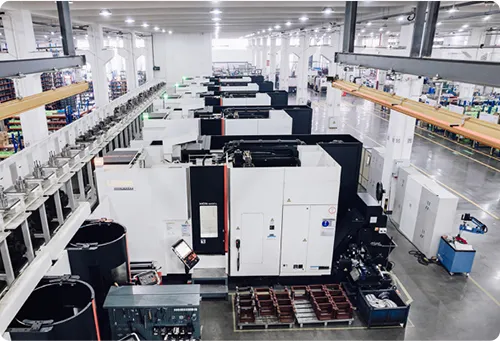
The following table summarizes the key quality checkpoints in paper cup manufacturing. Each checkpoint addresses a specific potential problem and requires attention to certain equipment or parameters.
| Check Item | Potential Problem | Equipment or Parameters to Monitor |
|---|---|---|
| Side seam | Leakage, opening | Sealing temperature, pressure, dwell time; sealing jaw alignment |
| Bottom | Leakage, deformation | Bottom heating temperature, knurling pressure, knurling depth; bottom blank alignment |
| Rim | Uneven curling, sharp edge | Rim curling temperature, die geometry, curling speed; rim diameter |
| Shape | Ovality, size deviation | Forming mandrel precision, side-wall blank dimensions, machine synchronization |
| Surface | Scratches, contamination | Material handling, cleaning systems, machine covers, air filtration |
| Coating | Pinholes, bare spots | Coating weight, coating uniformity, base paper quality |
| Printing | Misregistration, smearing | Printing press settings, ink drying, paper tension |
| Dimensions | Height, diameter variation | Forming tools, curling die, bottom insertion depth |
| Leak test | Undetected leaks | Leak tester sensitivity, calibration, test pressure |
| Packing | Count errors, damage | Counter accuracy, stacker alignment, bag sealing temperature |
Explanation of key checkpoints:
Side seam: The side seam must be continuous and strong. A weak seam can open under pressure, causing leakage. The sealing temperature and pressure must be checked regularly. The sealing jaws must be clean and aligned.
Bottom: The bottom seal is critical for leak-proofing. The knurling pattern must be uniform, and the bottom must be centered. Any deformation can cause the cup to wobble or leak.
Rim: The rim must be smooth and round. An uneven rim can cause lid fit issues and may cut the user’s lips. The curling die must be inspected for wear.
Shape: The cup must be round and have the correct dimensions. Ovality can cause problems in packing and lid application. Forming mandrels and dies must be maintained.
Surface: The cup surface must be free of scratches, dirt, and contamination. This is especially important for food safety. Machine covers and cleaning systems help prevent contamination.
Coating: The PE or PLA coating must be continuous. Pinholes or bare spots can lead to leakage and moisture absorption.
Printing: Printing must be aligned and dry. Misregistration affects appearance; smearing can transfer ink to the user’s hands.
Dimensions: Cup height and diameter must be within tolerance. Variations can cause problems in filling and lid application.
Leak test: Every cup should be tested for leaks. The leak tester must be sensitive enough to detect small defects.
Packing: The correct number of cups must be packed, and the packing must protect the cups from damage.
Defects in paper cups can be categorized by the stage at which they occur. Understanding the causes helps operators correct the process and reduce waste. For a full list of solutions, please refer to our Solutions page.
1. Side seam leakage
Causes: Insufficient sealing temperature, low pressure, short dwell time, contaminated sealing area, worn sealing jaws, poor paper coating.
Solution: Adjust temperature and pressure, clean jaws, replace worn parts, check paper quality.
2. Bottom leakage
Causes: Insufficient bottom heating, low knurling pressure, wrong knurling depth, misaligned bottom blank, damaged knurling tool.
Solution: Calibrate heating, adjust knurling pressure and depth, align bottom feeder, replace knurling tool.
3. Bottom deformation
Causes: Excessive knurling pressure, too high bottom heating, misaligned bottom, warped bottom blank.
Solution: Reduce pressure and temperature, check alignment, inspect bottom blanks.
4. Rim cracking
Causes: Too low rim curling temperature, too fast curling speed, worn curling die, paper too dry.
Solution: Increase temperature, reduce speed, replace die, condition paper.
5. Uneven rim
Causes: Misaligned curling die, inconsistent heating, variation in cup height.
Solution: Align die, check heating elements, inspect cup height.
6. Ovality
Causes: Worn forming mandrel, incorrect side-wall blank dimensions, insufficient cooling after sealing.
Solution: Replace mandrel, check blank dimensions, improve cooling.
7. Surface scratches
Causes: Rough handling, dirty machine parts, abrasive materials.
Solution: Clean machine, use soft handling components, inspect paper.
8. Contamination
Causes: Dust, oil, or other foreign matter on paper or machine.
Solution: Enclose machine, use air filtration, clean regularly.
9. Printing defects
Causes: Printing press misalignment, ink drying issues, paper tension variations.
Solution: Adjust press settings, check ink, control tension.
10. Dimensional deviation
Causes: Worn tools, thermal expansion, machine vibration.
Solution: Replace tools, maintain temperature, reduce vibration.
By monitoring these defects and their causes, manufacturers can improve yield and reduce downtime. Statistical process control (SPC) is often used to track defect rates and identify trends.
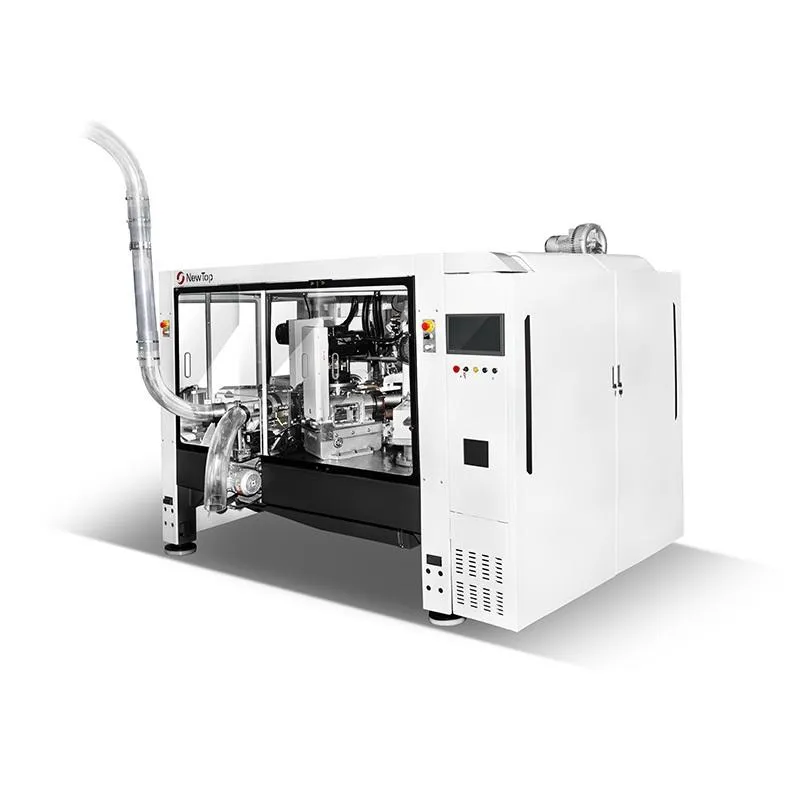
Paper cup machines are the central equipment in the manufacturing process. They integrate several stations to perform the core forming operations. The table below shows the correspondence between process stages and machine stations.
| Process Stage | Machine Station | Function |
|---|---|---|
| Cup blank preparation | Inline cutter or separate die-cutter | Cuts paper into side-wall and bottom blanks |
| Side-wall forming | Forming mandrel | Wraps blank into cylinder |
| Side-wall sealing | Sealing station | Heat and pressure bond the side seam |
| Bottom insertion | Bottom feeder and insertion station | Inserts bottom blank into cup body |
| Bottom sealing | Bottom heating and knurling station | Seals bottom with heat and knurling |
| Rim curling | Rim curling station | Curls top edge into a smooth rim |
| Inspection | Inline vision and leak test | Detects and rejects defects |
| Packing | Ancillary packing machine | Counts, stacks, and bags cups |
For more details on specific machine categories, please visit:
Paper Cup Machine – overview of paper cup forming machines.
NEWTOP-258S Horizontal High Speed Intelligent Paper Cup Machine – example of a high-speed machine (260 pcs/min, 8–22 oz).
NEWTOP-FW135C Servo Paper Cup Machine – servo-controlled machine for 16–42 oz cups.
NEWTOP-168C Intelligent Paper Cup Machine – 138 pcs/min, 16–22 oz.
NEWTOP-168S9 High Speed Paper Cup Machine – 168 pcs/min, 5–16 oz.
NEWTOP-DXD110/150 High Speed Intelligent Paper Cup Packing Machine – packing at 15 bags/min.
NEWTOP-5000D Eco-Friendly Packaging Paper Bowl Forming Machine – for special-shaped containers.
Ancillary equipment—such as packing machines, stackers, and inspection systems—also plays a vital role. They ensure that the output of the paper cup machine is properly handled and packed. For a complete overview of solutions, visit Solutions and Solutions of Paper Cup Craft.
Production speed is a double-edged sword. Higher speed increases output but can also introduce quality problems if the process is not properly controlled. The following factors must be balanced:
1. Material stability
At high speed, the paper web is subjected to rapid acceleration and deceleration. If the paper tension is not consistent, the blank may misalign, causing side seam or bottom defects. Paper with inconsistent thickness or coating may also behave differently at high speed.
2. Heat sealing time
Sealing requires a certain dwell time to melt the coating and form a bond. At higher speeds, the dwell time is shorter. To compensate, the sealing temperature must be increased. However, too high a temperature can burn the paper or cause the coating to degrade. Therefore, the sealing system must be precisely controlled.
3. Mechanical vibration
High-speed machines generate more vibration. This can cause misalignment of tools, loose fasteners, and premature wear. Regular maintenance and rigid machine construction are essential.
4. Cooling time
After sealing and curling, the cup needs time to cool and set. At high speed, the cooling time is reduced. If the cup is handled before it is fully set, it may deform. Cooling stations must be designed to provide adequate cooling even at maximum speed.
5. Inspection challenges
High-speed inspection requires fast cameras and sensors. The inspection system must be able to keep up with the production rate without missing defects. False rejections can also increase waste.
6. Changeover time
When changing from one cup size to another, the machine must be adjusted. This takes time and can affect quality during the transition. Quick-change tooling and preset parameters help reduce changeover time and ensure consistent quality.
7. Downtime
Unplanned downtime—caused by jams, material breaks, or maintenance—can lead to inconsistent quality when the machine restarts. Proper training and preventive maintenance reduce downtime.
8. Yield rate
The yield rate is the percentage of good cups produced. At high speed, yield may drop if the process is not optimized. Manufacturers must find the optimal speed that maximizes output while maintaining acceptable quality. This is often determined through trial runs and statistical analysis.
In summary, production speed should not be increased at the expense of quality. The machine must be designed to handle high speeds, and the process parameters must be adjusted accordingly. Regular monitoring of quality checkpoints is essential.
This checklist can be used by buyers or factory personnel to ensure that the paper cup manufacturing process is properly controlled.
A. Incoming Material Inspection
B. Blank Preparation
C. Machine Setup
D. Production Monitoring
E. Inspection and Rejection
F. Packing
G. Maintenance
H. Documentation
Q1: How are paper cups formed?
A: Paper cups are formed by wrapping a fan-shaped paper blank around a mandrel to create a cylinder. The side seam is heat-sealed, a circular bottom blank is inserted and sealed with heat and knurling, and the top edge is curled to form a rim. The process is fully automated in a paper cup machine.
Q2: What causes leakage at the bottom of a paper cup?
A: Bottom leakage is usually caused by insufficient heating, low knurling pressure, incorrect knurling depth, misalignment of the bottom blank, or a worn knurling tool. It can also result from poor paper coating or contamination in the sealing area.
Q3: Why is rim curling important?
A: Rim curling creates a smooth, safe edge for drinking, adds rigidity to the cup, and provides a precise surface for lid application. An improperly curled rim can be sharp, weak, or cause lid fit problems.
Q4: What affects paper cup quality?
A: Paper cup quality is affected by paper material (grammage, coating, moisture), machine settings (temperature, pressure, speed), tooling condition (mandrels, dies, sealing jaws), and environmental conditions (dust, humidity). Regular maintenance and inspection are essential.
Q5: Is inspection required after forming?
A: Yes. Inspection is critical to detect leaks, dimensional deviations, surface defects, and contamination. Automated vision and leak testing systems are commonly used to inspect every cup at high speed. Cups that fail inspection are rejected.
Q6: Can paper cups be recycled?
A: Paper cups with PE coating are recyclable in some regions, but the coating must be separated. PLA-coated cups are compostable in industrial facilities. Recycling and composting options depend on local infrastructure.
Q7: How long does it take to change a paper cup machine from one size to another?
A: Changeover time depends on the machine and the size difference. Modern machines with quick-change tooling can complete a changeover in 30–60 minutes. Older machines may take several hours. Proper training and preset parameters reduce changeover time.
Q8: What is the maximum speed of a paper cup machine?
A: High-speed paper cup machines can produce up to 260 cups per minute, depending on cup size and material. However, the optimal speed for quality may be lower. The machine must be properly maintained and the process parameters adjusted.
Q9: How do you test for leaks in paper cups?
A: Leak testing can be done by filling the cup with water and observing for drips, or by using air pressure and a pressure decay sensor. Automated leak testers are used in high-speed production lines.
Q10: What is the difference between single PE and double PE paper cups?
A: Single PE cups have one layer of polyethylene coating on the inside. Double PE cups have coating on both sides, which provides better moisture resistance and is often used for cold drinks. The choice depends on the application.
Send Your Cup Specifications for a Process Recommendation
Do you need help optimizing your paper cup manufacturing process? Share your cup specifications—size, material, coating, speed, and quality requirements—and our engineers will recommend the right process parameters and equipment configuration. Whether you are setting up a new line or improving an existing one, we can help you achieve consistent quality and high efficiency.
Contact us or email us at contact@debaochina.com to get started.
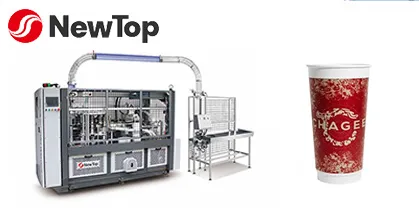
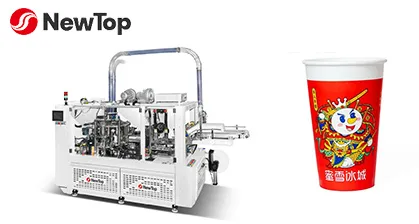
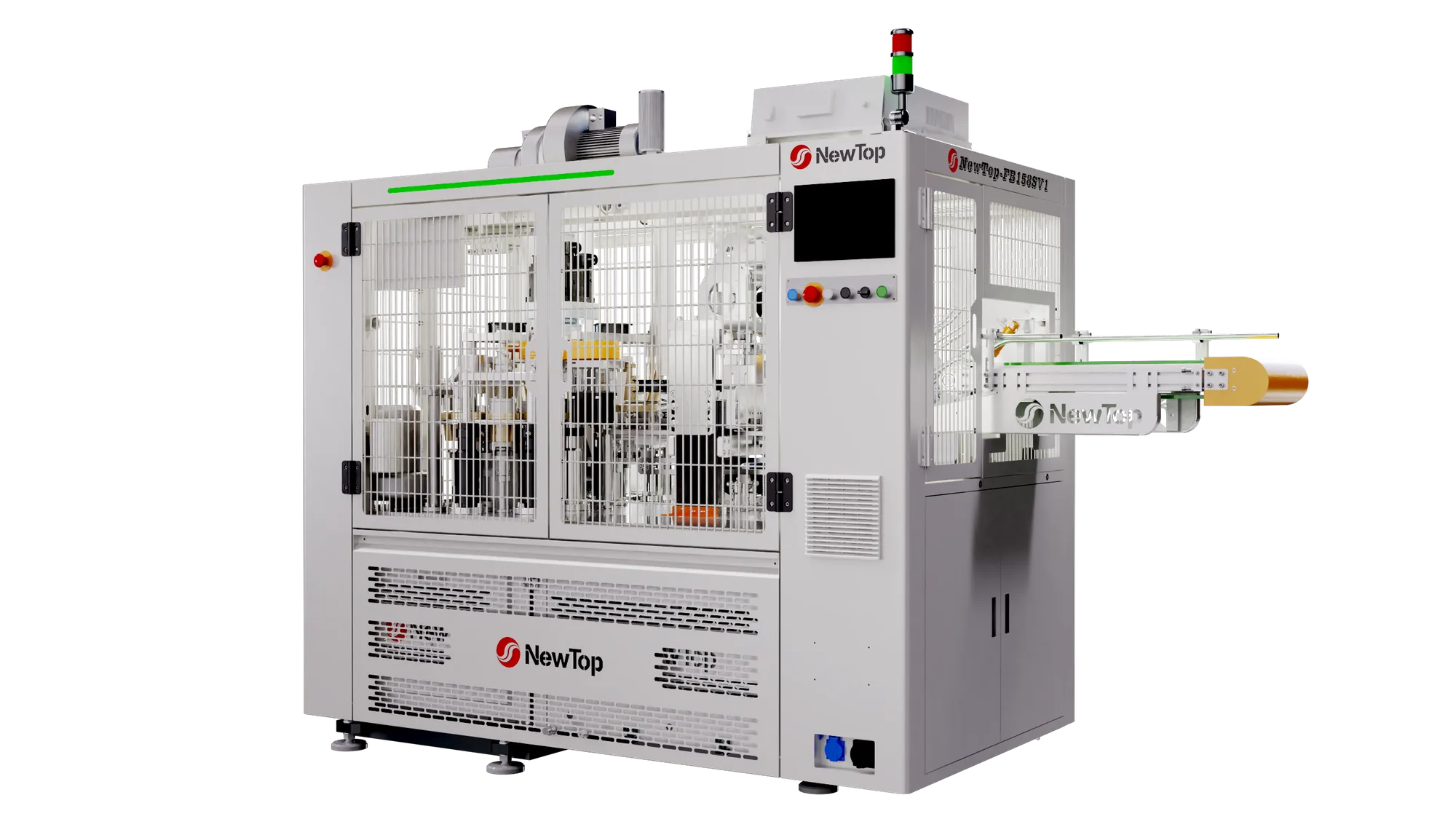
2.5oz-12oz Paper Cup Size
168-175 pcs/min Max Capacity
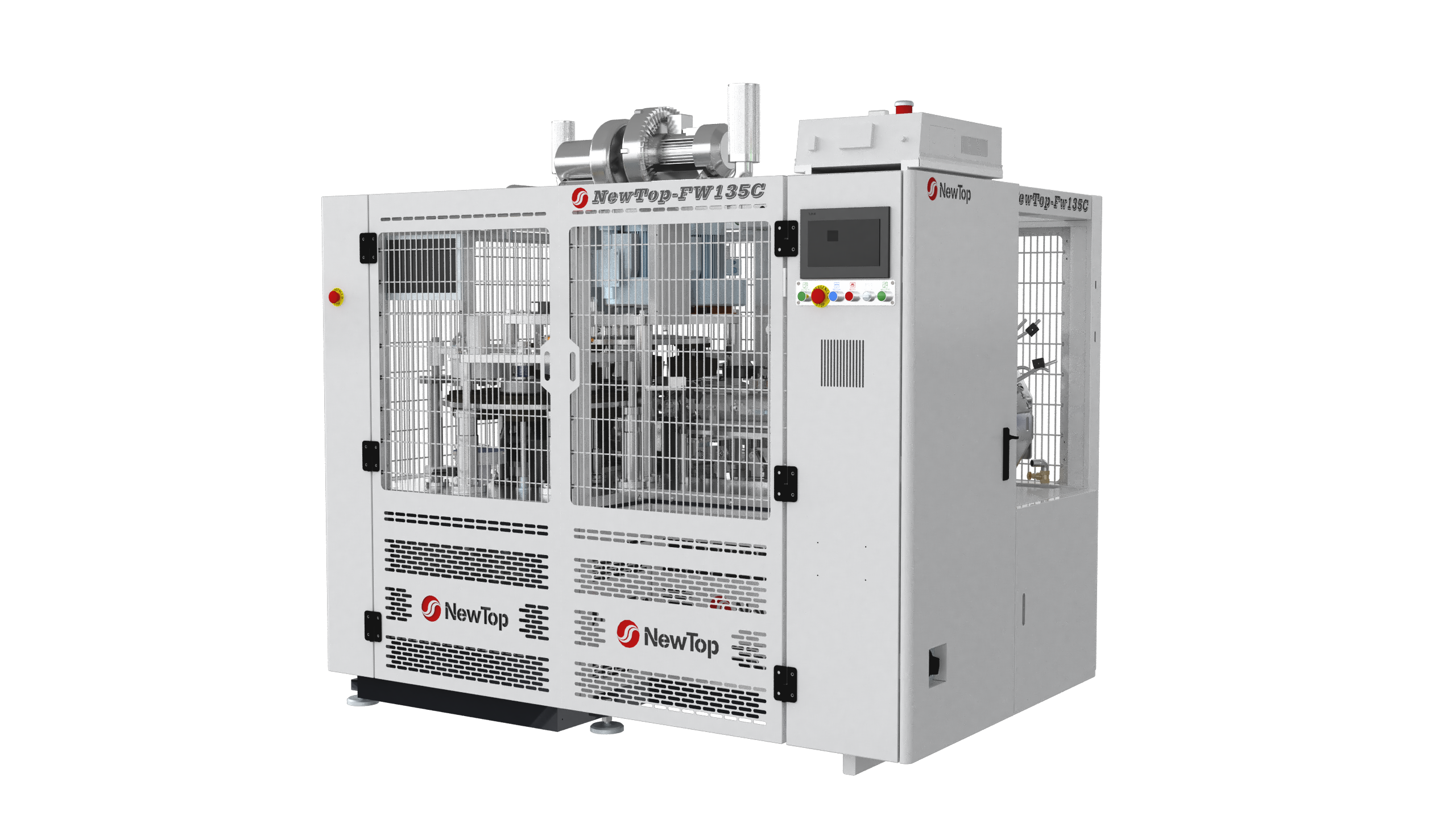
16-42oz Paper Cup Size
140 pcs/min Max Capacity
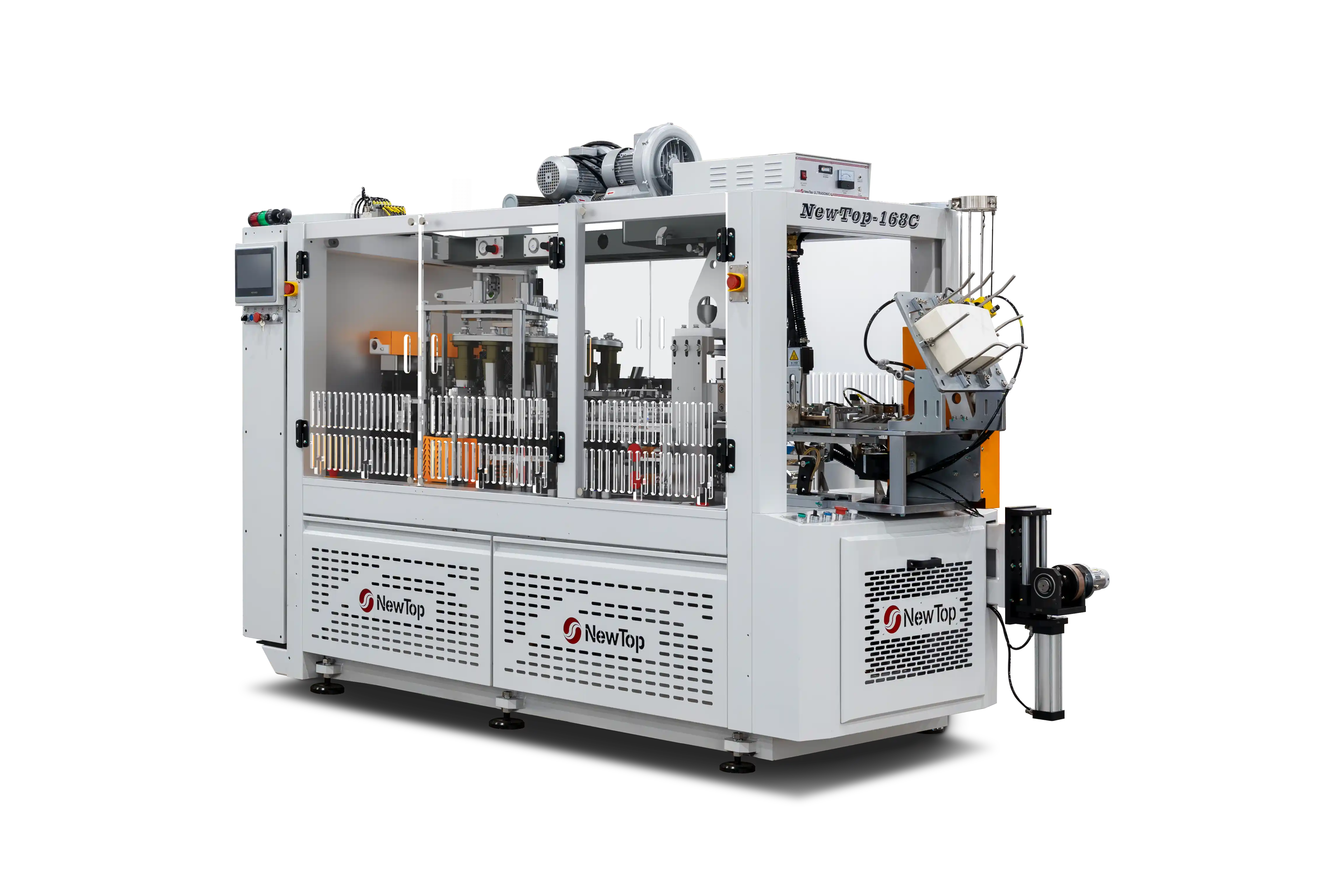
16-22oz Paper Cup Size
138 pcs/min Max Capacity


NewTop people pursue the concept of high quality and technology leading.
By changing the working mode with intelligent paper cup machine to make the operation more and more simple.
Fengzhai Natural Village,Wandu Village, Wanquan Town, Pingyang County, Zhejiang Province,China