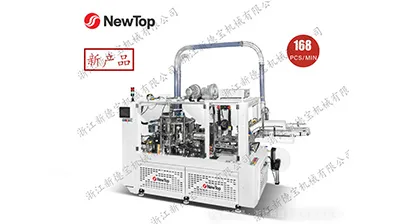

NewTop people pursue the concept of high quality and technology leading.
By changing the working mode with intelligent paper cup machine to make the operation more and more simple.

Paper bowls fail differently from paper cups. A cup that leaks usually announces itself early—a damp seam, a soft bottom, a rim that splits during lid application. A bowl can look perfect in the stack and still fail after ten minutes under a hot soup load, because the bowl’s larger bottom area, deeper draw, and heavier fill weight amplify every sealing inconsistency. Whether you are evaluating bowl-making capability, troubleshooting bottom leaks, or planning output for large-format containers, the starting point is the same: understand how a paper bowl is actually formed, where quality is determined, and what limits production speed. This guide covers the complete paper bowl manufacturing process—from blank preparation through forming, sealing, rim rolling, inspection, and packing—and explains the quality factors and capacity constraints that separate stable production from intermittent failure. For a parallel treatment of cup forming, the Paper Cup Manufacturing Process guide covers the same logic applied to cylindrical containers.

The paper bowl manufacturing process converts coated paperboard into a three-dimensional container through a sequence of blank preparation, side-wall forming, bottom insertion and sealing, rim formation, inspection, and packing. It shares the same fundamental logic as paper cup production, but the geometry and load conditions are different, and those differences drive most of the process and quality decisions.
A paper cup is a relatively tall, narrow container with a small bottom disc. A paper bowl is shallower and wider, with a bottom diameter that is much closer to the rim diameter. That single geometric difference changes everything downstream: the bottom seal is no longer a small circular joint but a broad annular bond that must be heated and pressed evenly around its entire circumference; the side wall is shorter but more heavily loaded; and the rim has a longer circumference to keep uniform.
How paper bowls differ from paper cups:
| Dimension | Paper Cup | Paper Bowl | Process Consequence |
|---|---|---|---|
| Side-wall geometry | Steeper, near-cylindrical | Shallower, wider flare | Requires different mandrel and forming die profiles |
| Bottom diameter | Smaller relative to rim | Larger, closer to rim diameter | Bottom sealing area is larger; heat and pressure distribution become more critical |
| Fill load | Moderate | Higher for soup and hot-food applications | Bottom seal and side seam must withstand greater hydrostatic pressure |
| Rim circumference | Smaller | Larger, especially in large-format bowls | Rim rolling must maintain uniformity over a longer edge |
| Size span | Typically 2.5–24 oz | 10–170 oz across formats | Forming difficulty increases non-linearly with size |
The bowl’s larger bottom means the sealing joint is more sensitive to heat distribution. In a cup, the bottom heating ring is small enough that a single heater band can keep temperature uniform across the joint. In a bowl, the heating area is wider, and any temperature gradient across the die translates directly into a gradient in seal strength—one side of the bottom may be fully bonded while another side is only tacked. This is why bottom seal failures in bowls are often asymmetric: the bowl leaks from one sector of the joint, not from the entire circumference.
The BioResources research on cup forming found that side seam buckling near the bottom fold occurs when bottom forming tools do not fit correctly, because the tool pushes up on the container while the side seam seal is still hot. That mechanism applies with greater force in bowls, where the bottom joint carries more load and the side wall is shallower and therefore less able to absorb the mechanical stress of knurling. The same research documented that a single production run could produce defect rates ranging from near zero to 40% depending on material and machine settings—a reminder that bowl quality is a function of parameter control, not simply of machine capability.
The range of bowl formats in production today is also much wider than the range of cup formats. A standard takeaway bowl may be 16 oz, while a catering bowl can exceed 150 oz. The machine architecture that produces a 16 oz bowl efficiently is not necessarily the architecture that produces a 150 oz bowl stably, which is why bowl production is usually discussed in format tiers rather than as a single process.
The bowl manufacturing sequence has six stages. Each stage solves a specific problem, and each has its own failure modes and quality checkpoints.
Bowl production begins with paperboard preparation. The side-wall blank is cut to a fan shape whose arc length and height determine the bowl’s rim diameter, bottom diameter, and depth. The bottom blank is a circular disc cut to match the bottom diameter of the formed side wall.
For bowls, blank preparation is more sensitive to size than for cups. A large-format bowl requires a longer side-wall blank and a larger bottom disc, which increases the effect of any dimensional deviation. A 0.1 mm error in the bottom disc diameter is a small fraction of a cup bottom but a larger fraction of a small bowl bottom—and for large-format bowls, the blank area is large enough that paper tension during cutting becomes a variable in its own right.
Paper grammage, coating type, and moisture content must be matched to the bowl’s application. Soup bowls require a heavier coating and often a heavier paperboard to resist sustained heat and liquid load. Cold-food bowls may use a lighter specification, but they still need enough coating integrity to resist condensation. The BioResources study noted that paper moisture content within an acceptable range is still enough to cause rim defects if other factors—material composition, die temperature—are not controlled, which means blank preparation cannot be treated as a purely dimensional operation.
Key checkpoints: die-cutting dimensions within tolerance; side-wall blank arc and bottom disc diameter matched to the target bowl; moisture content within the range that supports forming without cracking or delamination; paper roll inspection for edge damage, wrinkles, and coating defects.
The fan-shaped blank is wrapped around a forming mandrel and the overlapping edges are joined into a side seam. In bowl production, the side seam runs the full height of the bowl wall, and its integrity is critical because the bowl’s wider profile means the seam is subjected to both hoop stress from the fill and bending stress from handling.
Modern bowl machines use different sealing methods for the side seam. Ultrasonic sealing is widely used for the bowl body: a transducer generates high-frequency mechanical vibrations, typically between 20 and 40 kHz, which create localized frictional heat at the interface of the paper layers and soften the thermoplastic coating to form a bond without applying external heat to the surrounding material. Ultrasonic side sealing is reported to produce a seam that is approximately 30% stronger than traditional thermal sealing, and it avoids the scorching risk associated with direct-contact hot sealing.
Some machines combine hot air side sealing with ultrasonic sealing depending on the material and bowl format. Hot air sealing blows pre-heated air onto the polymer coating to soften it before the material is compressed; it is common and robust, but airflow temperature, nozzle positioning, and dwell time must be controlled precisely, and the method is sensitive to ambient humidity because moisture changes fibre dimensions and coating behaviour.
The forming mandrel itself is a variable. A worn mandrel produces an out-of-round bowl body, which then causes downstream problems: the bottom disc does not seat squarely, the rim rolling die cannot grip evenly, and the side seam is subjected to uneven stress. Bowl machines that isolate the transmission from the forming mould reduce this risk, because the forming stations are not exposed to the vibration and thermal load of the drive system.
Key checkpoints: side seam strength and continuity; seam appearance (no white, stressed, or cracked areas); overlap width; bowl roundness after forming; mandrel wear.
For a visual reference on how forming stations operate in sequence, the machine operation videos on the videos page show the transfer of a bowl body from the side-wall station through bottom sealing and rim rolling.
The bottom stage is the most quality-critical step in bowl production. A circular bottom blank is fed into the open end of the formed bowl body, and the edge of the bowl wall is folded inward and pressed against the bottom disc to create a sealed joint.
There are two dominant bottom sealing approaches. Hot air sealing blows pre-heated air onto the polymer coating to soften it before the material is compressed; it is common and robust, but airflow temperature, nozzle positioning, and dwell time must be controlled precisely. Ultrasonic bottom sealing can also be used, though many bowl platforms use hot air for the bottom and ultrasonic for the side seam, combining the strengths of both methods.
The bottom seal on a bowl is a mechanical weak point because the rolled bottom joint carries the full hydrostatic load of the contents. Insufficient heat, incorrect air pressure, or incompatible paper stock are the most common reasons for poor bottom sealing; a drop of even 5–10°C can create a weak seal that fails under hot liquid. Air pressure below approximately 0.6 MPa often produces wrinkled or incomplete bottom seals, while pressure above about 0.8 MPa can tear the paper. Mould precision also matters: if the bottom mould and body mould are misaligned by as little as 0.1 mm, the joint can develop gaps that are invisible at the time of forming but open under load.
The BioResources study on cup forming identified a related failure mechanism that is even more relevant to bowls: side seam buckling near the bottom fold occurs when the fit on the bottom forming tools is incorrect. The combination of high friction coefficient and low hot tack strength causes the tools to push up on the container, subjecting the side seam seal to shear while it is still hot. In bowl production, where the side wall is shallower and the bottom area is larger, this shear effect is distributed over a shorter seam length, which concentrates the stress.
Key checkpoints: bottom seal leak test (water soak or air pressure decay); bottom heating temperature across the die; air pressure at the machine inlet; paper GSM and coating uniformity; bottom blank centring; mould alignment.
For an overview of how bottom sealing stations integrate with upstream and downstream equipment in a complete bowl line, the Bowl Machine Online Solution page describes the in-line configuration from forming through inspection and packing.
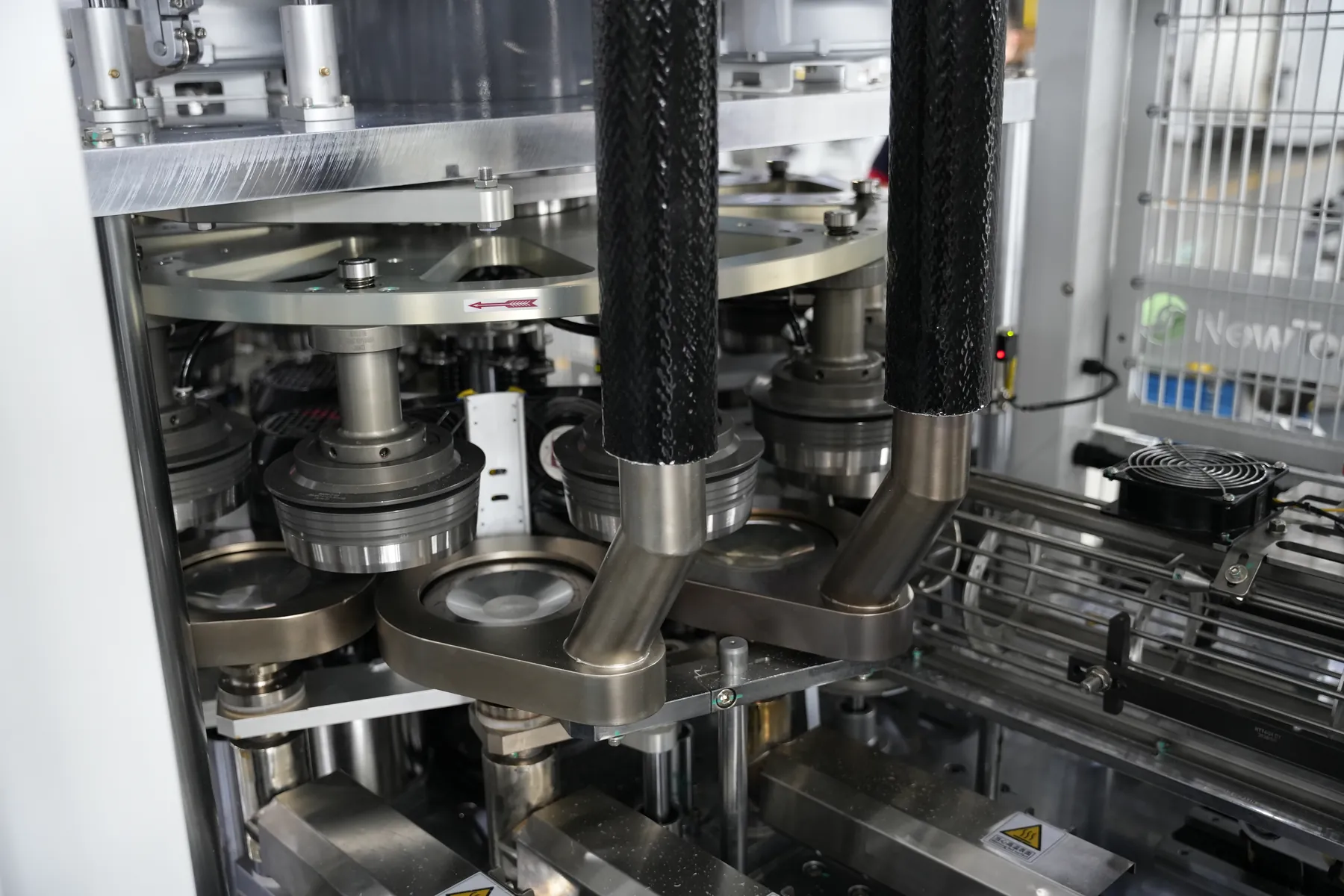
After the bottom is sealed, the top edge of the bowl wall is heated and rolled outward to form a rounded rim. The rim serves four functions: it creates a safe drinking or eating edge, adds rigidity to the bowl wall, provides a surface for lid or film sealing, and gives the bowl its finished appearance.
Bowl rims are more difficult to control than cup rims because the circumference is larger and the bowl wall is shallower. Split rim rolls are most often caused by low moisture content in the paperboard: dryness makes the board stiffer, causing the rim to split while being tucked. Non-uniform rim rolling can also occur when the sidewall adjacent to the open edge is unsupported during rimming, causing the wall to wrinkle or misshapen and producing an uneven rim.
In large-format bowls, the longer edge amplifies any temperature variation around the curling die. A curling die that produces acceptable rims on a 16 oz bowl may produce visible variation on a 64 oz bowl because the edge travels a longer path through the heated zone, and the dwell time at each point on the circumference becomes more sensitive to speed fluctuation. Rim rolling on large-format bowls therefore requires tighter temperature control and more consistent transfer speed than small-format production.
The rim also interacts with the bottom seal. Research has shown that a failure in the curling and knurling step can increase the height of the container, causing the rim forming steps to force too much material into the rim, leading to splitting or cracking. In other words, a bottom problem can present itself as a rim problem—which is why defect diagnosis in bowl production requires tracing symptoms upstream rather than treating each station in isolation.
Key checkpoints: rim roundness and diameter consistency; rim smoothness (no cracks, splits, or rough edges); rim strength under lid application; paper moisture content before forming; curling die temperature uniformity.
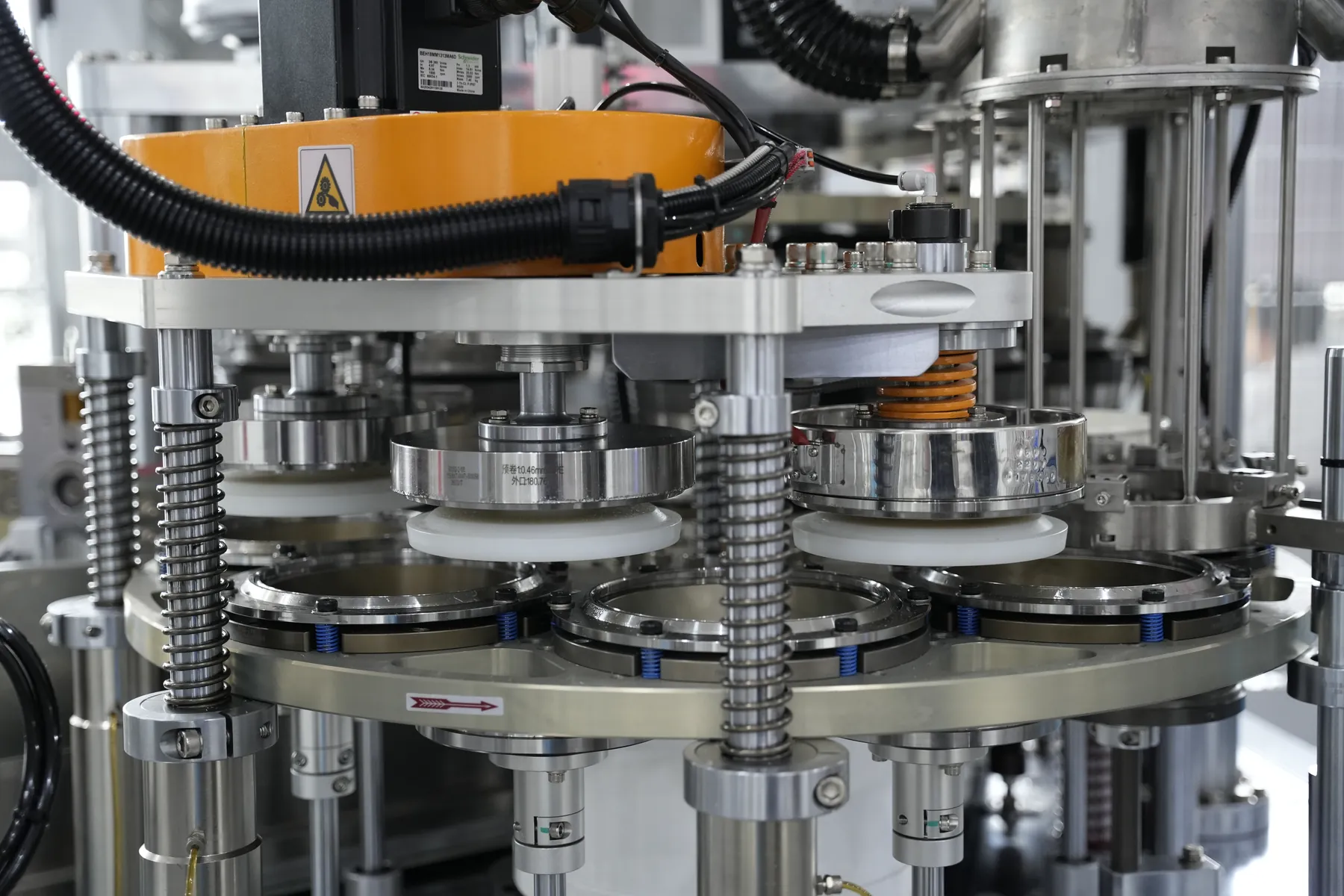
Ultrasonic sealing is not universal across all bowl machines, and it should only be described where the platform actually supports it. Where it is used, the technology offers several practical advantages over pure thermal sealing: it produces a glue-free seam, reduces scorching risk, allows sealing through light contamination, and uses less energy than conventional heat sealing.
The mechanism is straightforward. A transducer converts electrical energy into high-frequency mechanical vibration, typically in the 20–40 kHz range. That vibration is transferred through a horn to the interface between the two paper layers. The friction between the layers generates localized heat, which melts the thermoplastic coating and forms a bond under pressure. Because the heat is generated at the interface rather than applied from outside, the surrounding paper is not exposed to high temperature, which reduces the risk of scorching and preserves the printed surface.
Some bowl machines use ultrasonic welding for the side wall and hot air bonding for the bottom, while others apply ultrasonic sealing to both the body seam and selected bottom configurations. The choice depends on the material, the bowl format, and the required production speed.
The limitation is that ultrasonic sealing requires consistent contact between the horn and the anvil. A dirty or worn ultrasonic horn reduces vibration transfer, leading to inconsistent weld strength across a production run; the seam may appear white or stressed, or separate when the bowl is flexed. This is why ultrasonic seam inspection includes a flex test in addition to visual inspection—a seam that looks acceptable at rest may fail when the bowl is squeezed, which is exactly what happens during filling and handling.
Key checkpoints: horn cleanliness and wear; contact consistency; seam appearance after flexing; weld strength sampling.
After forming, bowls pass through inspection to detect leaks, dimensional deviation, surface defects, and incomplete sealing. Visual inspection checks for printing clarity, forming completeness, and firm adhesion. Leak testing focuses on the side seam and bottom seal; compression and edge-crush checks verify structural behaviour, and dimensional gauging confirms fit. Photoelectric sensors and vision systems can monitor bowls for defects or irregularities at production speed.
After inspection, bowls are counted, stacked, and packed. Because bowls are bulkier than cups, stacking and packing are often the throughput bottleneck: a packing line matched to a cup line may not keep pace with a high-output bowl machine, especially for large-format bowls. A bowl machine running at 180 bowls per minute produces three bowls per second, and a packing system that cannot handle that rate will force the forming machine to slow down or accumulate bowls in a buffer—neither of which is efficient.
The stacking configuration also matters for large-format bowls. Cups nest deeply and stack compactly; bowls nest less deeply because their side walls are shallower, so a given stack height holds fewer bowls. This affects both packing density and the mechanical load on the bottom bowl in the stack, which must support the weight of the bowls above it without deforming.
Key checkpoints: leak test pass rate; dimensional gauging; compression and edge-crush results; count accuracy; stack alignment; packing integrity.
Bowl quality is determined by six interacting factors. Each can be traced to a specific process stage and a specific set of parameters.
1. Bowl bottom seal
The bottom seal is the most common source of bowl failure. Weak bottom seals typically result from inconsistent heating across the die, insufficient air pressure, or paper with uneven PE coating; a leak often appears as a small gap or weak bond at the bottom edge. For hot-fill applications, the seal must be tested under the actual service temperature, not at ambient conditions. A bowl that holds cold water for an hour without leaking may fail within minutes under hot soup, because the coating softens and the internal pressure increases. This is why field failures often surprise operators who rely on room-temperature leak tests.
2. Bowl rim flatness and uniformity
Rim defects are usually visible but are sometimes dismissed as cosmetic. They are not. An uneven or split rim weakens the bowl’s structural rigidity, causes lid fit failures, and can create a sharp edge. Split rims most often trace to low paper moisture content, while non-uniform rims can result from insufficient sidewall support during rolling. In large-format bowls, rim defects also affect stackability: a bowl with an uneven rim does not nest properly with the bowl above it, which can cause jams in automated handling systems.
3. Large-format stability
Large-format bowls are more difficult to keep dimensionally stable because the forming draw is deeper and the wall is longer. The same tooling precision that produces acceptable 16 oz bowls may produce ovality or rim variation at 64 oz or above. Large-format stability depends on die clearance, blank positioning, and cooling uniformity after forming. It also depends on the machine’s structural rigidity: a frame that flexes under forming load will produce dimensional variation that no amount of parameter adjustment can eliminate.
4. Hot-food and cold-food suitability
Bowl application determines material and process requirements. Hot soups and saucy foods demand a stronger bottom seal, a heavier coating, and often a heavier paperboard; cold foods may tolerate a lighter specification but require condensation resistance. Using a bowl validated for cold service in a hot-fill application is a common cause of field failures that do not appear in factory leak testing at room temperature.
The practical implication is that bowl specification should be application-driven, not format-driven. Two bowls of the same size may require different paper, coating, and sealing parameters if one is intended for salad and the other for hot noodles.
5. Dimensional consistency
Bowl height, top diameter, bottom diameter, and rim diameter must stay within tolerance across the production run. Dimensional drift often originates in blank preparation or tool wear, not in the forming station itself. Dimensional gauging at regular intervals catches drift before it reaches packing. In automated filling lines, dimensional consistency is not a cosmetic requirement: a bowl that is slightly out of tolerance may not fit the filling head, the lid applicator, or the case packer.
6. Surface cleanliness
Bowls are food-contact packaging. Surface contamination—dust, oil, paper dust from cutting, or residue from sealing components—compromises food safety and may violate market requirements. Enclosing critical forming zones and maintaining air filtration reduce contamination risk. In markets with strict food-contact regulations, documentation of material compliance and process control is as important as the physical cleanliness of the bowl.
For a broader view of how inspection and quality control systems integrate with forming equipment, the Solutions overview describes the inspection, edge pressing, and packaging modules that can be combined with bowl forming lines.
Bowl production difficulty is not linear with size. The application and the format determine which process parameters become dominant, and which quality risks increase.
| Format tier | Typical size range | Application | Dominant process challenge |
|---|---|---|---|
| Small and medium takeaway bowls | ~10–32 oz | Salads, sides, small portions | Throughput and changeover flexibility |
| Soup and hot-food bowls | ~16–45 oz | Soups, noodles, saucy foods | Bottom seal integrity under heat and load |
| Large-format bowls | ~45–120 oz | Family meals, bulk takeaway, catering | Dimensional stability, rim uniformity, forming draw |
| Special-shaped bowls | Custom rectangular or oval | Pre-prepared meals, bakery, specialty takeaway | Non-uniform strain, asymmetric rim rolling, blank alignment |
Small and medium takeaway bowls are the highest-volume tier. The process challenge is not usually sealing difficulty but production economics: changeover between sizes, packing speed, and reject rate at rated speed determine whether the line is profitable. Machines designed for this tier often prioritise quick-change tooling and compact footprints. A countertop integrated layout, for example, reduces floor space requirements and allows the forming stations to be reached from a single operating position, which shortens changeover time.
Soup and hot-food bowls shift the quality focus to the bottom seal. The same bowl that passes a room-temperature leak test may fail under hot liquid because the coating softens and the internal pressure increases. Bottom heating uniformity, air pressure stability, and paper coating consistency become the controlling variables. Bowl machines used for this tier often use a dual-turntable forming architecture or full servo drive to maintain consistent pressure and dwell time across the bottom joint, because even small variations in the knurling force translate into measurable differences in seal strength.
Large-format bowls introduce forming challenges that are not present in smaller formats. The deeper draw requires tighter control of die clearance and blank positioning. The longer rim increases the effect of temperature variation in the curling die. And the larger bottom area makes heat distribution across the sealing die more difficult to keep uniform. This is why large-format production typically runs at lower rated speeds than small-format production on the same machine platform. A machine that produces 180 bowls per minute at 11–43 oz may produce only 80–115 bowls per minute at 30–170 oz, not because the machine is less capable but because the physics of forming a larger container requires more time per cycle.
For a closer look at how large-format bowl production is supported in practice, the high-speed large-format bowl forming machine page describes the architecture used for 30–170 oz formats, including the forming stations and capacity range.
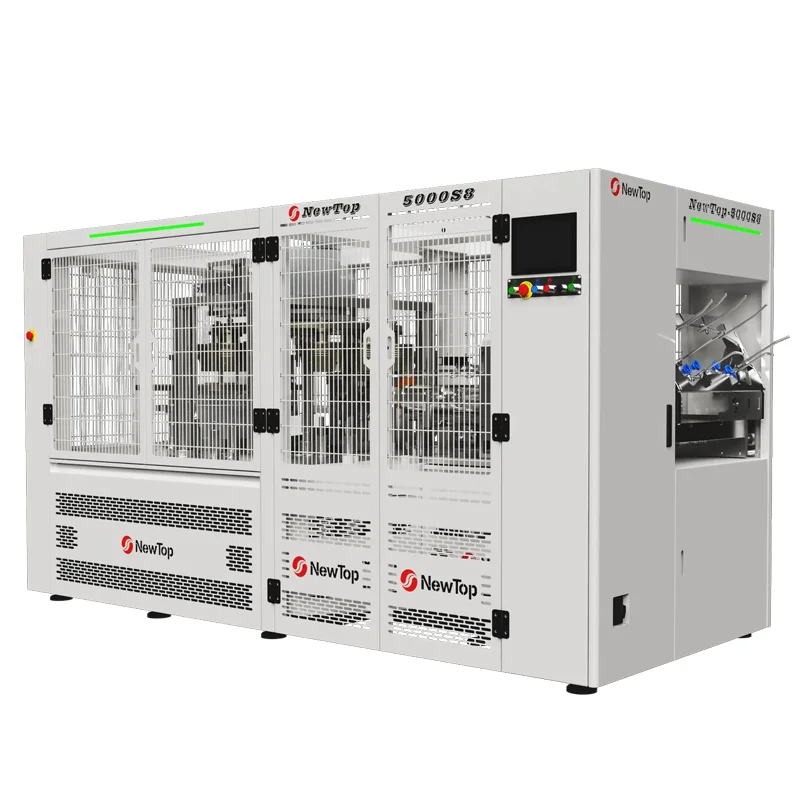
Special-shaped bowls—rectangular, oval, or custom profiles—add non-uniform geometry to the process. An oval bowl requires managing uneven mechanical strain across the blank, and asymmetric rim rolling can cause sealing failures if blank tension is not dynamically adjusted. The tooling for special-shaped bowls is typically customised, and the process window is narrower than for round bowls because the material must flow into a non-symmetric shape without wrinkling or tearing.
Bowl production problems cluster around three areas: bottom sealing, side seam integrity, and rim formation. This section provides a diagnostic overview;
Bottom seal leaks. Insufficient heat, incorrect air pressure, or incompatible paper stock are the leading causes. Check the hot air heating system temperature first, then verify air supply settings, then inspect paper GSM and PE coating uniformity. Even small temperature drops—5–10°C—can weaken the seal enough to fail under hot liquid. Mould precision also matters: if the bottom mould and body mould are misaligned by as little as 0.1 mm, the joint can develop gaps.
Side seam failure. The bowl body seam is a structural weak point. Ultrasonic seam failure often traces to a dirty or worn horn, or inconsistent contact between horn and anvil. Hot-air side sealing is sensitive to airflow temperature, nozzle positioning, and dwell time, and humidity changes can make seals less reliable. The BioResources study found that side seam buckling near the bottom fold can occur when the fit on the bottom forming tools is incorrect, producing a gap between the sealed portions that may not be visible until the bowl is filled.
Rim splits and uneven rims. Split rim rolls are most often caused by low paper moisture content; dryness makes the board stiffer and causes the rim to split during tucking. Uneven rims can also result from insufficient sidewall support during rolling, or from a prior forming defect that changes bowl height and forces too much material into the rim.
Wrinkled sidewalls. Wrinkled bowl walls are structural weak points where leaks begin. The four most common causes are die gap mismatch, paper moisture extremes, insufficient vacuum, and uneven feeding tension; die clearance is usually the first thing an experienced technician checks. Wrinkles are more problematic in bowls than in cups because the shorter wall has less material to distribute the strain, so a wrinkle that would be cosmetic in a tall cup can create a leak path in a shallow bowl.
Bowl production capacity is not simply rated speed multiplied by available hours. Several factors reduce effective output, and planning without accounting for them produces unrealistic schedules and capacity shortfalls.
Bowl size. Size is the most direct speed limiter. Larger bowls require longer forming cycles, more heating and cooling time, and slower transfer between stations. A machine rated at 180 bowls/min for 11–43 oz will not produce 180 large-format bowls per minute at 120 oz or above. Industry data illustrates the range: small and medium bowl machines commonly run 35–80 pcs/min, while high-speed platforms can reach 100–120 pcs/min on appropriate formats.
Forming complexity. Special-shaped bowls, deep-draw formats, and heavier paperboard increase cycle time because they require more precise material flow control and longer sealing dwell. Ultrasonic sealing can reduce cycle time compared with thermal sealing, but only when the tooling and material are properly matched.
Rated speed versus stable speed. Rated speed is the maximum the machine can achieve under ideal conditions. Stable production speed is the rate at which the line maintains acceptable reject rates over a full shift. The gap between the two is where capacity planning goes wrong. A line that runs at rated speed for the first hour and then drifts to 80% of rated speed because of tool wear or temperature drift will not deliver the output implied by the rated figure.
Changeover time. Switching between bowl sizes or formats requires tooling changes, parameter resets, and first-article validation. Machines with recipe storage and quick-change tooling reduce this loss; manual changeover on older platforms can consume hours per shift. If a plant runs three bowl sizes per week, changeover time can account for a meaningful fraction of total available production time.
Reject rate. Reject rate directly reduces effective output. A line running at 150 bowls/min with a 5% reject rate delivers 142.5 acceptable bowls per minute, not 150. Reject rate also affects packing efficiency, because rejected bowls must be removed and waste handled.
For the detailed capacity formula and calculation method, the guide on common bottlenecks in high-volume container production covers the calculation approach and the operational factors that reduce effective output.
Q1: How are paper bowls formed?
Paper bowls are formed by wrapping a fan-shaped side-wall blank around a mandrel and sealing the overlapping edges into a side seam. A circular bottom blank is inserted and sealed with heat and pressure—or ultrasonically, depending on the machine—and the top edge is rolled into a rim. After inspection, bowls are counted, stacked, and packed.
Q2: Why does large-format bowl production run slower?
Large-format bowls require a deeper forming draw, longer heating and cooling times, and more precise material flow control. The larger bottom area makes uniform sealing more difficult, and the longer rim increases sensitivity to temperature variation in the curling die. These factors reduce the stable production speed compared with small and medium formats.
Q3: What affects paper bowl rim quality?
Rim quality is primarily affected by paper moisture content, curling die temperature and geometry, and sidewall support during rolling. Dry paperboard is the most common cause of split rims; insufficient sidewall support causes uneven or wrinkled rims.
Q4: How does bottom heating affect bowl production?
Bottom heating determines whether the coating melts sufficiently to form a continuous seal. Insufficient heat produces weak bonds that leak under load; excessive heat can burn or degrade the paper and coating. Temperature uniformity across the die is as important as the absolute temperature setting.
Q5: What information is needed for a bowl production assessment?
A useful assessment starts with the bowl format (top diameter, bottom diameter, height, capacity), the application (hot or cold fill, expected holding time), the paper specification (GSM, coating type), the target output range, and the available floor space and utilities. These inputs determine which forming architecture and sealing method are appropriate.
If you are evaluating bowl production for a specific format or application, the most useful starting point is a clear specification: bowl dimensions, target capacity, fill type (hot or cold), paper and coating requirements, and expected output range. Sharing these inputs allows the forming stages, sealing method, and capacity plan to be matched to the actual production scenario rather than a generic machine rating.
For questions about installation, operator training, and after-sales support for bowl lines, the service page describes the support structure that accompanies bowl production equipment. And when you are ready to discuss a specific application, the contact page provides a direct way to share your bowl specification and receive a process recommendation.
Paper Cup Manufacturing Process: Forming, Quality Control and Packing
Paper Container Machine Output Planning: Rated Speed, Yield and Shift Capacity
Solved: Common Bottlenecks in High-Volume Paper Cup Production
Customers in Asia | Paper Bowl Line Upgrade with NEWTOP-FW135S & DXD110
This article is part of NewTop’s technical content library. No direct sales or pricing information is included. All technical discussions aim to help you make informed purchasing decisions.
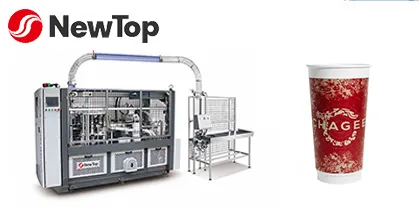
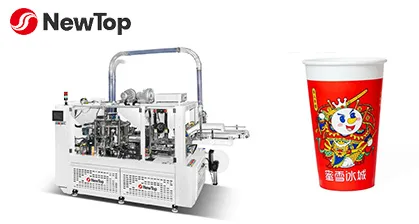
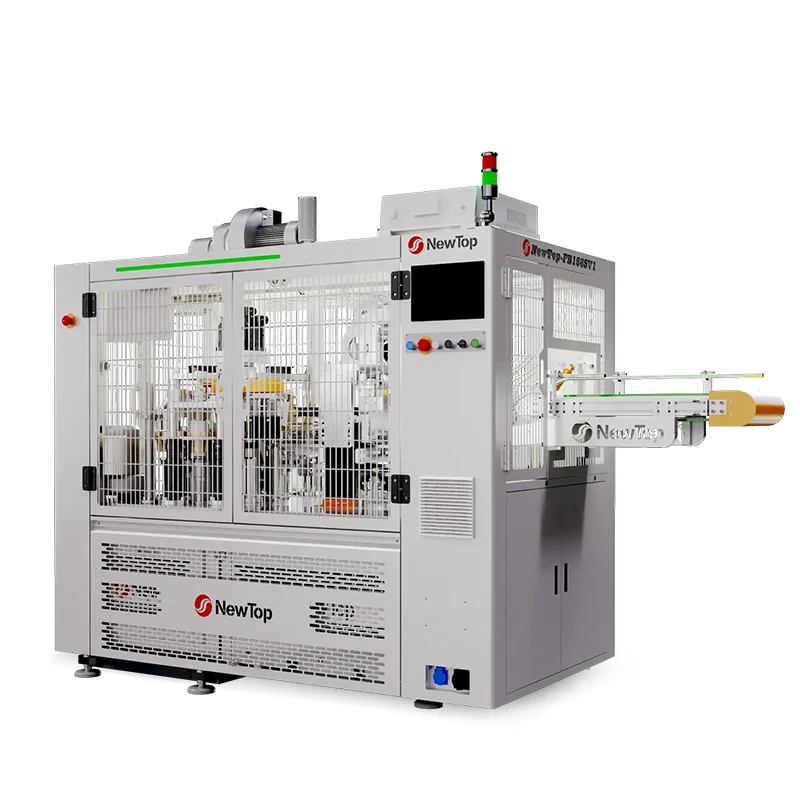
2.5oz-12oz Paper Cup Size
168-175 pcs/min Max Capacity
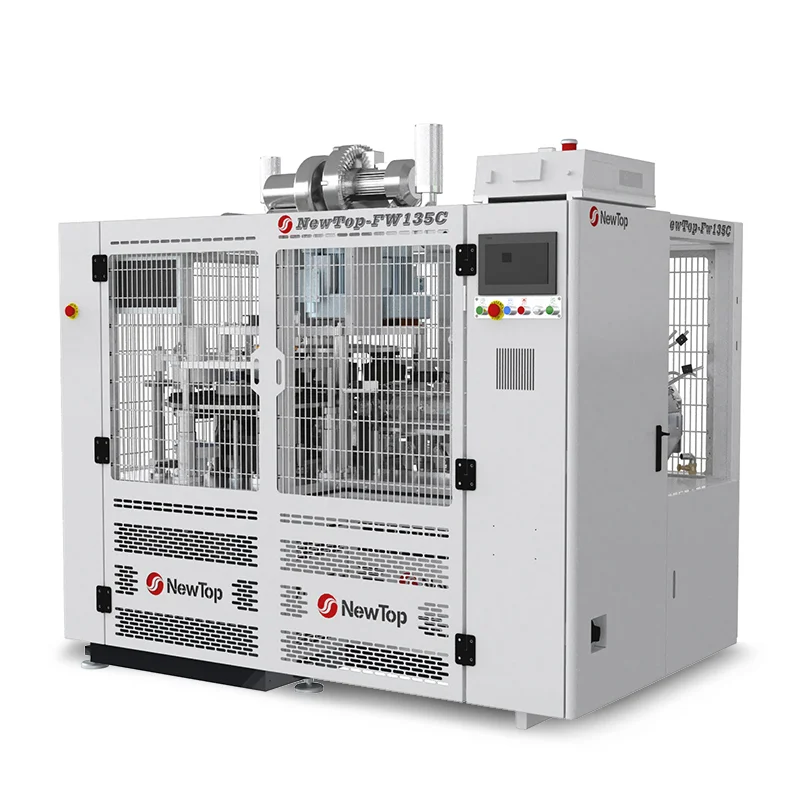
16-42oz Paper Cup Size
140 pcs/min Max Capacity
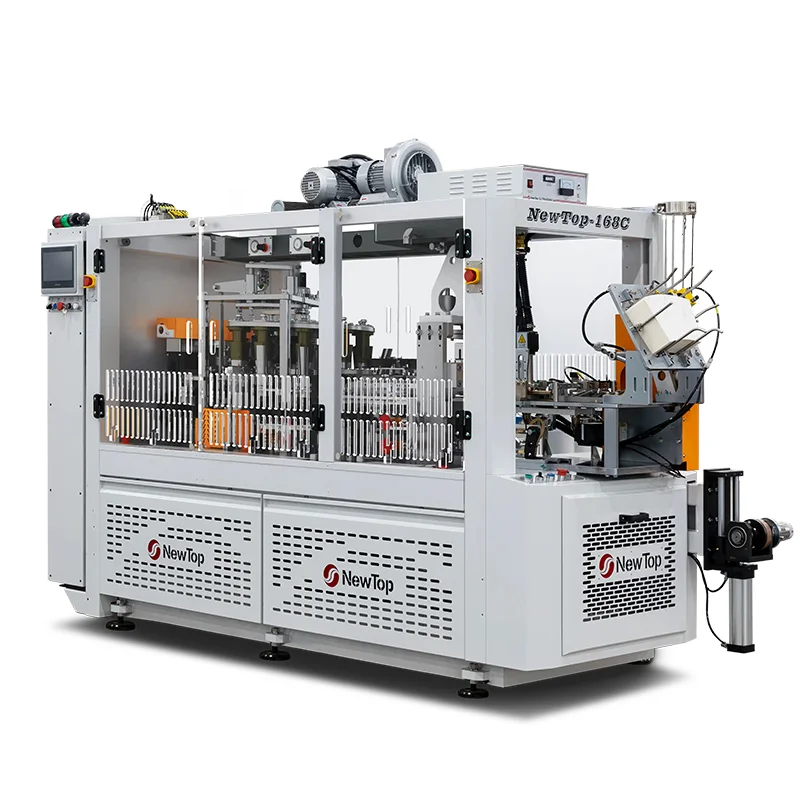
16-22oz Paper Cup Size
138 pcs/min Max Capacity


NewTop people pursue the concept of high quality and technology leading.
By changing the working mode with intelligent paper cup machine to make the operation more and more simple.
Fengzhai Natural Village,Wandu Village, Wanquan Town, Pingyang County, Zhejiang Province,China