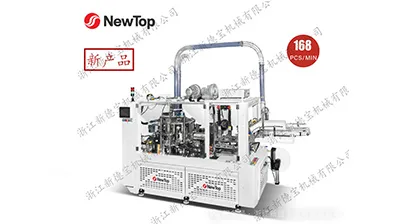

NewTop people pursue the concept of high quality and technology leading.
By changing the working mode with intelligent paper cup machine to make the operation more and more simple.

A leaking cup that passes leak testing at the start of a shift but fails two hours later. A rim that looks perfectly round during sampling but develops cracks after stacking. A side seam that holds cold liquids without issue but opens under hot coffee. These are not random failures—they trace back to one of three critical forming zones: the rim, the side seam, or the bottom knurl. Understanding what each zone controls and which parameters determine its integrity is the first step toward consistent quality. This guide examines all three zones, explains how defects originate, and identifies the checkpoints that catch problems before they reach the customer. For a broader view of the complete manufacturing sequence, see the pillar guide on the Paper Cup Manufacturing Process.
Every paper cup passes through three sealing and forming operations that determine whether it will hold liquid and maintain its shape. Each zone solves a different problem, and each has its own failure modes.
| Zone | Function | Primary Defect Risk | Key Parameters |
|---|---|---|---|
| Rim curl | Creates a smooth, safe drinking edge and adds rigidity | Cracking, uneven curling, sharp edges | Curling temperature, die geometry, paper moisture content |
| Side seam | Bonds the overlapping wall edges into a leak-proof tube | Leakage, opening under pressure, buckling | Sealing temperature, pressure, dwell time, overlap width |
| Bottom knurl | Seals the bottom disc against hydrostatic pressure | Leakage, deformation, incomplete seal | Knurling depth, knurling pressure, bottom heating temperature |
Research published in BioResources documented that a single production run produced cups with defect rates ranging from near zero to 40% depending on the material and machine settings—with most defects concentrated in the rim and bottom zones. The study also found that even at the same nominal settings, temperature variations between the side seam and bottom forming stations indicated difficulties in preserving structural integrity across different materials.
Each zone demands its own attention. A machine that produces perfect rims may still generate bottom leaks, and a side seam that passes cold-liquid testing may fail under thermal stress. The most reliable production lines are those where all three zones are monitored as separate, controllable systems rather than a single "forming" operation.
The rim is the most visible part of the cup and the most sensitive to material variability. The rim curling station heats the top edge of the formed cup body and rolls it outward to create a smooth, rounded edge. When this process is properly controlled, the rim is uniform, strong, and compatible with standard lids. When it is not, the cup fails visually—and sometimes functionally.
How rim defects originate:
The rim's integrity depends on three factors working together: the temperature of the curling die, the geometry of the die itself, and the tensile properties of the paper. Research from BioResources attributed rim roll defects to low tensile strength of the material combined with its tendency to form smaller rim rolls compared to other materials. The same study found that a failure in the curling and knurling step can increase the height of the cup, causing the rim forming steps to force too much material into the rim, leading to splitting or cracking.
Paper moisture content plays a decisive role. If the paperboard is too dry, the rim rolls can split during curling. The BioResources study confirmed that low moisture content is a primary cause of split rim rolls, though the materials tested in that particular study were within acceptable moisture levels—suggesting that other factors, such as die temperature and material composition, also contribute.
Key checkpoints for rim quality:
Rim roundness: Verify with a go/no-go gauge or vision system. Ovality beyond ±0.3 mm causes lid fit failures.
Rim smoothness: Inspect for cracks under magnification. Visible cracks on the outside of the brim are a moderate defect; cracks that propagate to the inside are severe.
Rim strength: The rim must withstand normal handling and lid application without deformation.
For a closer look at how specific machine platforms handle rim curling across different cup formats and materials, see the Paper Cup Machine series overview.
Unlike rim defects, which are often visible during inspection, side seam and bottom knurl failures are frequently latent. A cup may pass visual inspection but leak after several minutes of holding liquid. These are the defects that generate customer complaints and returns.
Side seam: the full-height seal
The side seam runs the entire height of the cup and is formed by overlapping the two edges of the side-wall blank and bonding them with heat and pressure. The seal must withstand not only the hydrostatic pressure of the liquid but also the mechanical stress of subsequent forming operations—bottom knurling and rim curling—which occur while the seam is still warm.
Research documented in BioResources identified several side seam failure modes. Major buckling of the side seam area occurs when the wall material adjacent to the seam collapses inward during side seaming, reducing the overlapping area and affecting roundness. Minor buckling can result from a bad rim roll tuck that reduces cup roundness, which in turn causes the side seam to collapse slightly.
The most critical side seam defect is the open bottom seam, where the side seam seal fails during curling or knurling, creating a gap between the sealed portions. The BioResources study attributed this to a spring-back effect of the reheated seam during curling—the detached part of the seam pushes against the knurling tool, opening the seam. In their testing, 2 out of 5 cups with this defect leaked coffee.
Bottom knurl: the pressure-bearing seal
The bottom knurl is formed when the edge of the cup body is folded inward and pressed against the inserted bottom disc with a knurling wheel. The process creates a diamond pattern that mechanically interlocks the paper layers and ensures a liquid-tight seal.
Industry calibration guidance specifies that the bottom knurling wheel should leave a clear diamond pattern 0.15–0.25 mm deep into the paper and coating. Too shallow and the seal is weak; too deep and the paper may crack or the coating may delaminate. A worn knurling wheel does not apply even pressure, creating weak spots that leak after a few minutes of use.
Research also found that side seam buckling near the bottom fold occurs when the fit on the bottom forming tools is incorrect. The combination of high friction coefficient and low hot tack strength causes the tools to push up on the cup, subjecting the side seam seal to shear while it is still hot. This defect affected liquid tightness near the bottom—4 out of 5 cups with this condition leaked coffee.
Key checkpoints for side seam and bottom knurl:
Side seam overlap width: Should be 4–6 mm. Less than 4 mm risks opening; more than 6 mm wastes paper.
Sealing pressure: Use a pressure gauge on the pneumatic cylinder. Typical range is 3–5 bar for PE coating, 2.5–4 bar for PLA.
Bottom knurling depth: 0.15–0.25 mm. Inspect the diamond pattern under magnification every 500 operating hours.
Leak test after forming: Fill sample cups with water or use air pressure decay testing. Do not rely on visual inspection alone.
For a complete overview of how forming, sealing, and inspection stations work together as an integrated line, visit the Solutions Of Paper Cup Craft page.

This checklist can be used by production teams to systematically prevent the three defect categories discussed above.
Step 1: Verify incoming material
Check paperboard grammage and coating type against machine specifications.
Measure moisture content. Research indicates that excessive temperature variation between side seam and bottom stations is a primary cause of inconsistent sealing. Paper outside the 4–8% moisture range causes wrinkling or poor seam sealing.
Inspect paper rolls for edge damage, wrinkles, and coating defects.
Step 2: Calibrate forming tools before each production run
Inspect the rim curling die for cracks or uneven wear.
Check side seam sealing jaw alignment and overlap width.
Examine the bottom knurling wheel for wear. Replace if the diamond pattern is no longer visible.
Step 3: Set and monitor temperatures
Side seam sealing: typically 180–250°C depending on coating type.
Bottom heating: 150–220°C. Consistent bottom temperature is essential to avoid burn marks or insufficient sealing.
Rim curling: 100–180°C. Too low causes cracking; too high causes material degradation.
Step 4: Run a first-article inspection
Produce 5–10 cups at the target speed.
Perform leak testing on every cup.
Tear open side seams to evaluate fibre tear—a good seal separates the fibre layers of the paperboard rather than the coating layers.
Measure rim diameter and roundness.
Step 5: Monitor during production
Check cup dimensions at 30-minute intervals.
Perform leak tests on random samples every hour.
Watch for temperature drift. Heater band resistance can drift by up to 22% over 3,000 operating hours, causing sealing quality to change without warning.
Scenario 1: Switching between PE and PLA-coated paper
A manufacturer producing cold drink cups with PE coating decides to add compostable PLA cups for a new customer. The side seam sealing parameters that work for PE—250–300°C—will damage PLA, which requires a narrower window of 180–220°C. The bottom knurling pressure must also be adjusted. The key consideration is whether the machine platform supports recipe storage for different materials, allowing the PLC to switch temperature and pressure profiles without manual recalibration. Without this capability, changeover from PE to PLA can take hours of trial-and-error adjustment, with a high scrap rate during the transition.
Scenario 2: High-speed production with variable paper quality
A plant running at 180 cups per minute receives a shipment of paperboard with slightly higher friction coefficient than the previous batch. The increased friction between the heated cup surface and the curling tool causes bottom forming defects—the same mechanism documented in the BioResources study where high COF material produced the largest share of disqualified cups at 40%. The critical parameters in this scenario are the pre-heating plate temperature and the bottom knurling pressure. If the machine has inline leak detection, defective cups are automatically rejected before they reach packing—but the root cause still requires adjusting the forming parameters for the new material.
Once you understand how each forming zone contributes to defect risk—and which parameters control the outcome—the next logical step is to evaluate equipment platforms that provide the control and monitoring capability your production requires. You can review the Paper Cup Machine series for an overview of platforms designed for different production scales
Paper Cup Manufacturing Process: Forming, Quality Control and Packing
Solved: Common Bottlenecks in High-Volume Paper Cup Production
How Are Paper Cups Made? A Step-by-Step Manufacturing Process
This article is part of NewTop’s technical content library. No direct sales or pricing information is included. All technical discussions aim to help you make informed purchasing decisions.
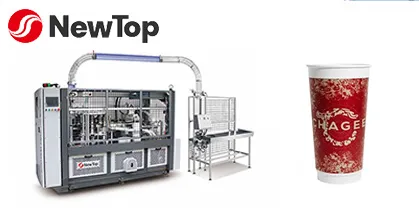
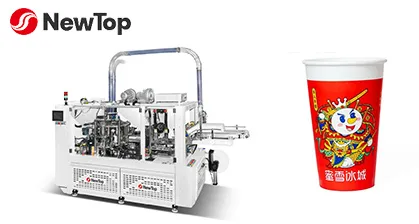
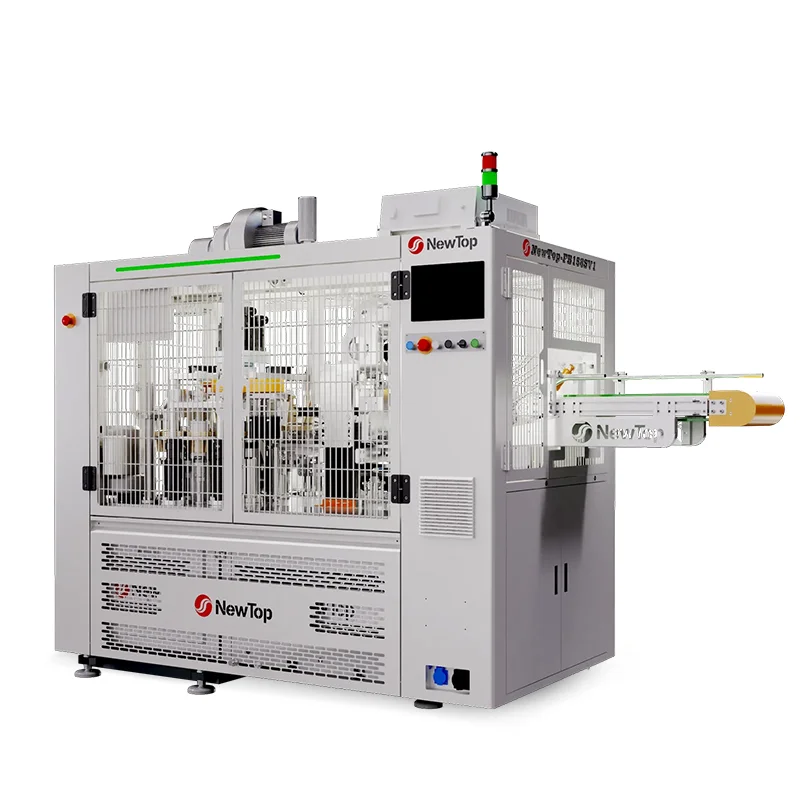
2.5oz-12oz Paper Cup Size
168-175 pcs/min Max Capacity
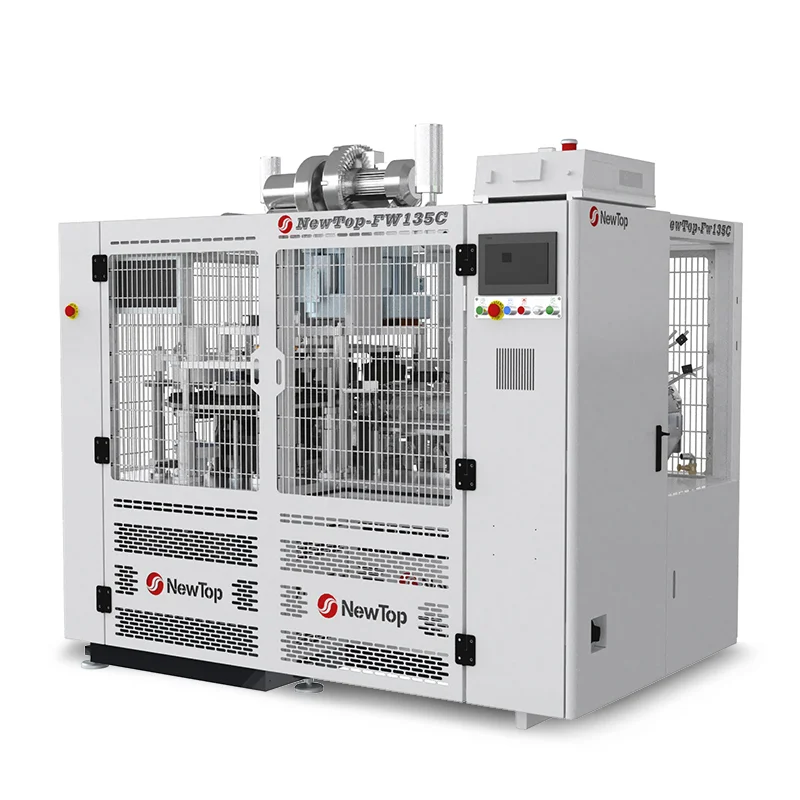
16-42oz Paper Cup Size
140 pcs/min Max Capacity
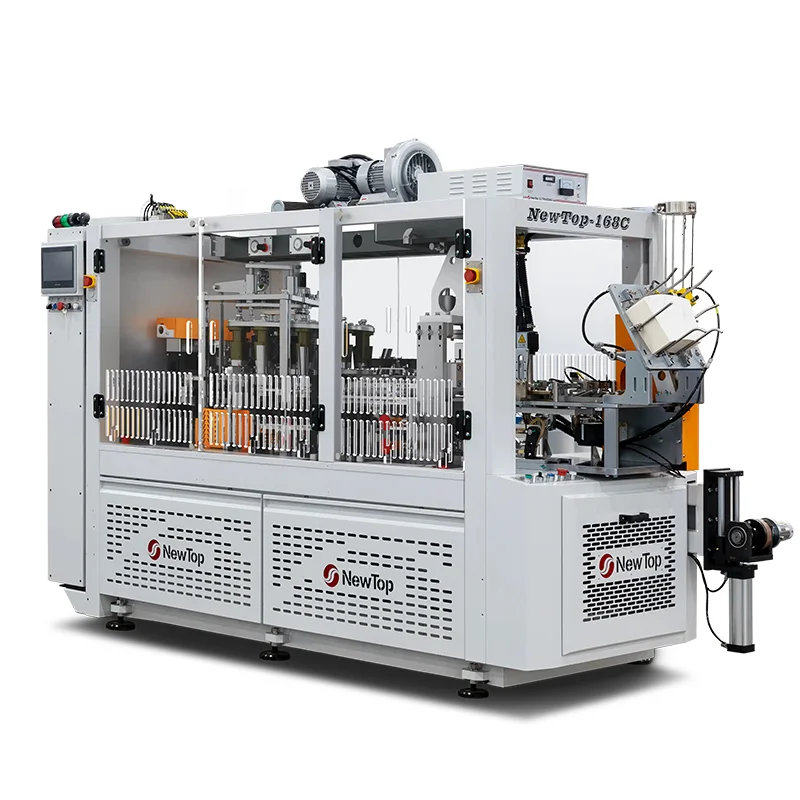
16-22oz Paper Cup Size
138 pcs/min Max Capacity



NewTop people pursue the concept of high quality and technology leading.
By changing the working mode with intelligent paper cup machine to make the operation more and more simple.
Fengzhai Natural Village,Wandu Village, Wanquan Town, Pingyang County, Zhejiang Province,China