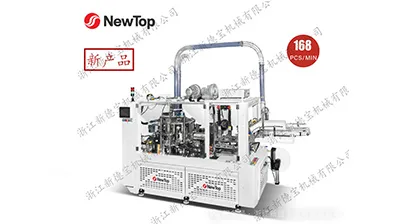

NewTop people pursue the concept of high quality and technology leading.
By changing the working mode with intelligent paper cup machine to make the operation more and more simple.

For entrepreneurs looking to enter the disposable tableware market, or existing manufacturers aiming to upgrade their lines, the question isn't just about buying a machine. It's about choosing the right technology for your business goals. The two dominant forming technologies—corrugated and appressed—offer distinct advantages, but they also come with very different cost structures and operational demands.
So, which one delivers a better return on your investment? The answer isn't a simple "one-size-fits-all." It depends entirely on your target market, production volume, and quality expectations.

First, let's quantify the real cost of making the wrong choice. Imagine you invest in a basic machine focused on speed, only to find your cups are too flimsy for hot coffee or your reject rate is 5% due to poor sealing. That's thousands of dollars in wasted raw material and lost production time every month. Conversely, over-investing in a high-end system when your primary orders are for simple, single-wall cold cups can tie up capital you could have used elsewhere.
This guide breaks down the core differences, operational costs, and long-term value of each machine type, helping you match the technology to your specific business model. For a detailed look at the full range of configurations available, you can explore various high-speed paper cup forming solutions for different production scales.
Understanding the mechanics is key to grasping the investment implications.
Corrugated Cup Machines: These use a specialized die and roller system to create a series of small, vertical waves or ridges on the cup’s sidewall. This process provides structural rigidity without increasing the thickness of the paperboard. The resulting cup has a distinctive textured feel and superior insulation, often eliminating the need for a double cup or a cardboard sleeve for hot beverages.
Appressed Cup Machines: This is the standard "smooth" cup you see everywhere. The machine smoothly seals the sidewall with a simple overlap. The cup's strength comes entirely from the gauge of the paperboard. To get a strong, rigid cup, you need to use heavier, more expensive paper. These machines are generally simpler, faster, and have lower upfront costs.
Let’s put these two types of equipment side-by-side across the factors that impact your bottom line.
| Feature | Corrugated Cup Machine | Appressed Cup Machine |
|---|---|---|
| Investment | Higher upfront cost, but higher per-cup profit margin, especially for hot drinks. | Lower upfront cost, ideal for high-volume, low-margin commodity cups. |
| Output Speed | Moderate. The corrugating step adds cycle time. | Very High. Simpler action allows for faster cycling. |
| Material Cost | Uses lighter, less expensive paperboard to achieve the same rigidity. | Requires heavier, more expensive paperboard to prevent the cup from being flimsy. |
| Cup Quality | Excellent: rigid, insulated, premium feel. Perfect for specialty coffee. | Adequate to Good: reliable, standard feel. Prone to heat transfer. |
| Maintenance | More complex. The corrugating rollers require precise alignment and regular wear checks. | Simpler. Fewer complex moving parts mean lower maintenance costs and less downtime. |
| Target Market | Artisan coffee shops, events, and premium takeout. | Large-scale events, fast food, water coolers, and general retail. |
When deciding, think about your customer's end-user. A boutique coffee roaster showcasing a $6 latte will want a cup that feels premium and doesn't burn the customer's hand. That's the corrugated machine's market. A high school cafeteria going through 5,000 cold cups a day just needs a cup that holds soda. The appressed machine is the clear economic choice for that volume.
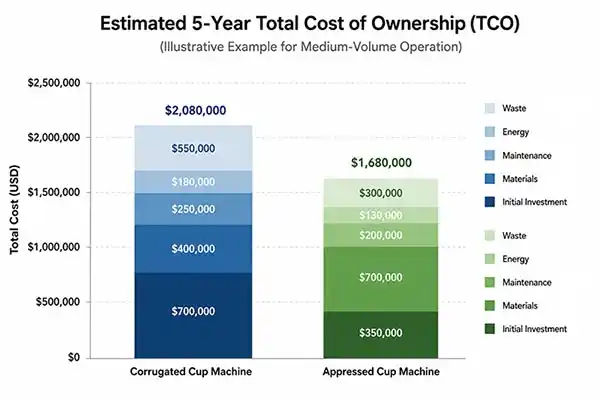
The price tag on the equipment is just the starting point. Here’s where the two paths diverge significantly over a 3-5 year period.
Waste: Reject rates can be higher (3-5% during setup) as getting the corrugation depth perfect is tricky. Modern units with servo-driven controls have largely solved this.
Energy: Slightly higher power consumption per cup due to the mechanical force required for corrugation.
The Gain: You capture the premium packaging market. You can charge more per cup and build a loyal customer base among businesses that care about brand presentation. If you plan to produce double-wall cups, a corrugated machine can often do it in one pass, while an appressed machine would require a second line.
Waste: Very low, typically under 1-2% after warm-up. The process is mature and highly reliable.
Energy: Highly efficient. You're simply cutting, sealing, and bottoming.
The Gain: You win on volume and simplicity. You can operate with less skilled technicians. Your production planning is straightforward, and your machine uptime will likely be higher. If your primary clients are distributors who just need "a standard 12oz cup," this is your workhorse.
Don't ask "Which machine is better?" Ask "Which machine is better for my order book?"
Choose the corrugated route if:
You are targeting the specialty coffee or premium beverage niche.
Your clients complain about cups feeling "cheap" or requiring sleeves.
You want to maximize profit per cup, even at lower volumes.
You have a technician who can manage a slightly more complex machine.
Choose the appressed route if:
You need to produce millions of cups per month to meet demand.
Your customers prioritize low cost over feel or insulation.
You are just starting and have limited capital.
Your production team's strength is high-speed, high-volume manufacturing.
The market trend is clearly moving toward sustainability and enhanced user experience, which gives corrugated technology an edge for hot cup applications. However, the sheer volume of cold cups and basic hot cups ensures the appressed machine will remain a staple for years to come.
Ultimately, the most profitable choice is the one that aligns with your specific market niche. Don't just buy a machine; buy a manufacturing capability that solves a real problem for your customers.
If you're looking to explore a range of equipment that balances reliability, speed, and the flexibility to produce both styles effectively, you can view the detailed specifications and configurations here to see what fits your production floor. Making an informed decision today prevents expensive regrets tomorrow. For a final step, you can also request a personalized ROI calculation based on your material costs directly from our team.
Note: The images in this article are for reference only.
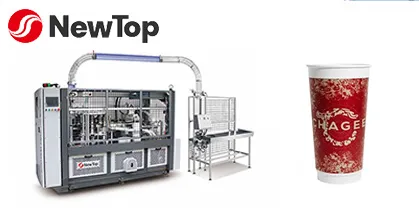
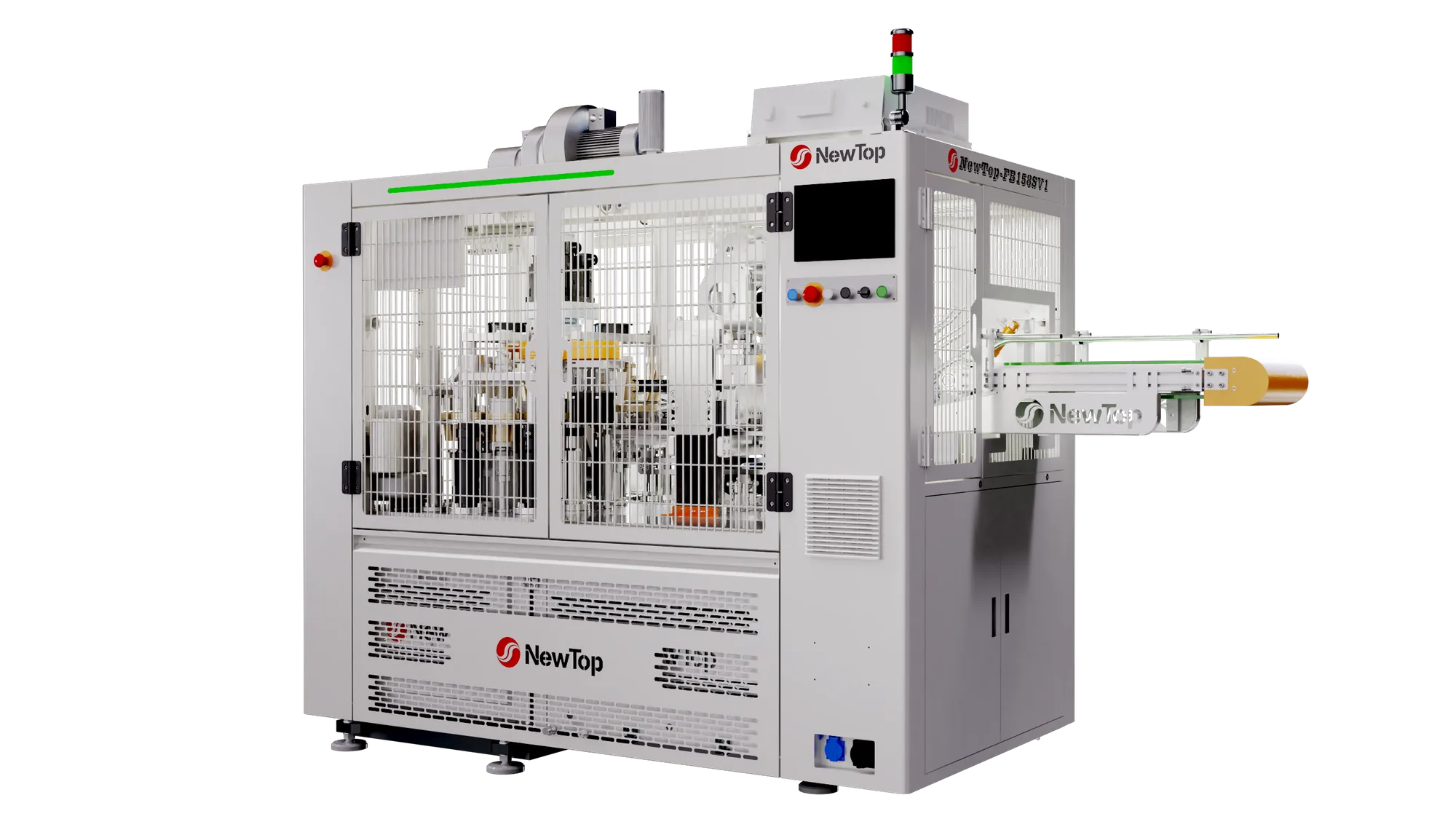
2.5oz-12oz Paper Cup Size
168-175 pcs/min Max Capacity
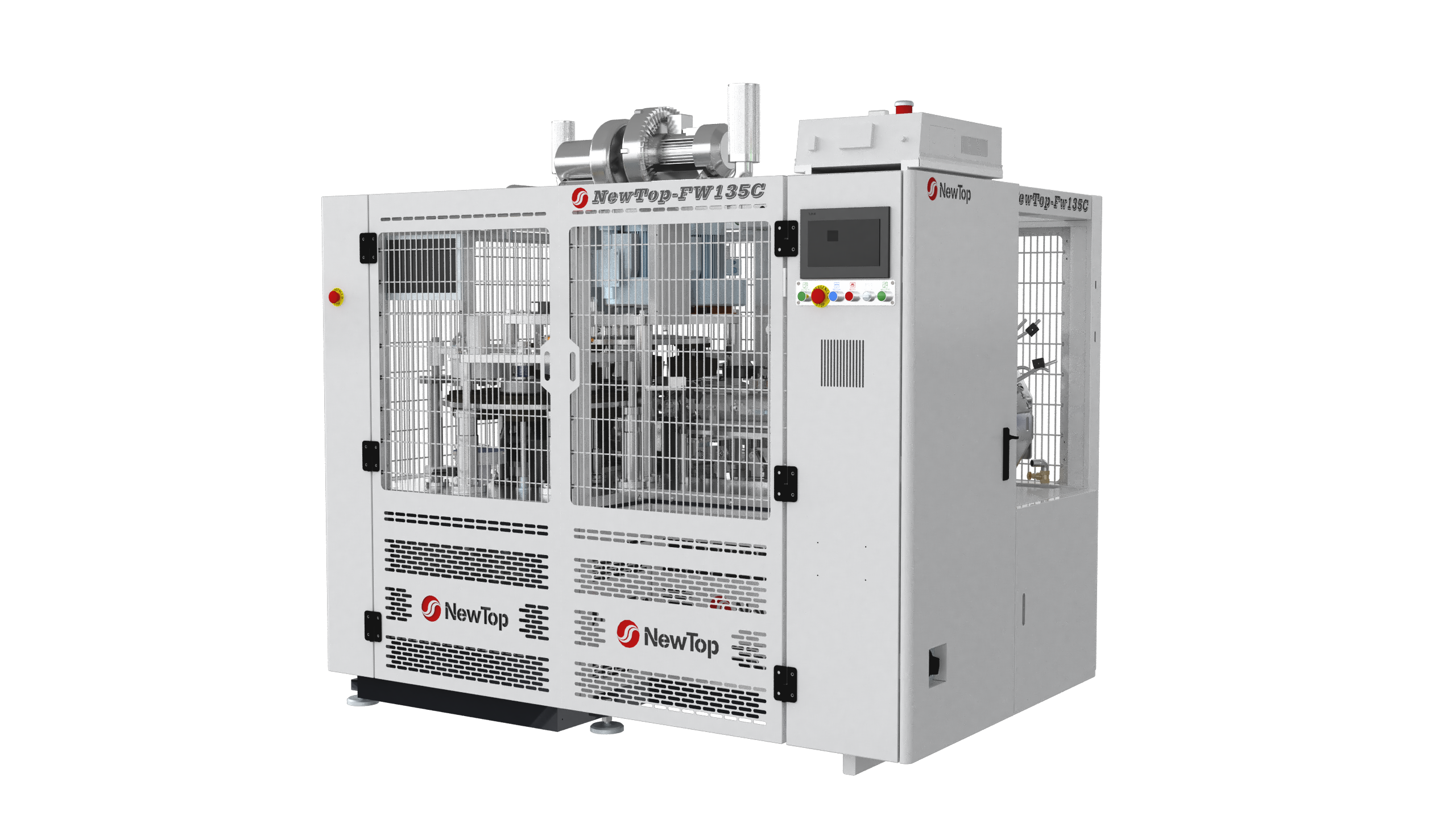
16-42oz Paper Cup Size
140 pcs/min Max Capacity
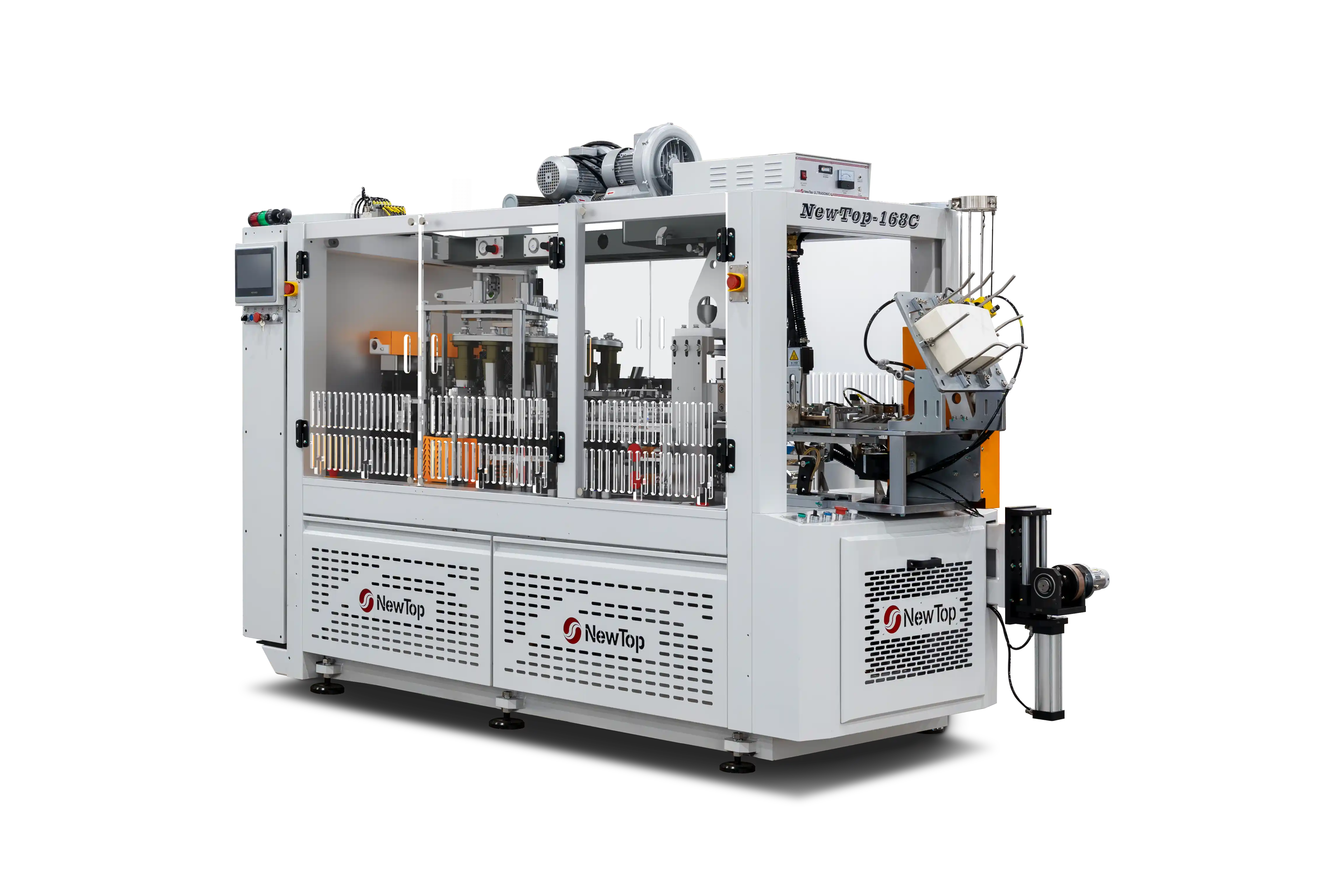
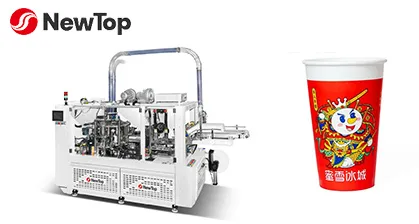
16-22oz Paper Cup Size
138 pcs/min Max Capacity


NewTop people pursue the concept of high quality and technology leading.
By changing the working mode with intelligent paper cup machine to make the operation more and more simple.
Fengzhai Natural Village,Wandu Village, Wanquan Town, Pingyang County, Zhejiang Province,China