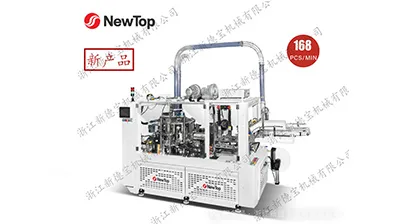

NewTop people pursue the concept of high quality and technology leading.
By changing the working mode with intelligent paper cup machine to make the operation more and more simple.

Article Overview: This buyer-side comparison helps CTOs, technical architects, procurement teams, and evaluation committees decide between a paper cup machine vs paper bowl machine. The core question is which configuration fits their demand profile. No category wins outright; fit depends on product geometry, volume, changeover, and site constraints. This article is bounded by general equipment-selection logic and the publicly documented NewTop context, not by machine-specific performance datasheets.
Article Overview
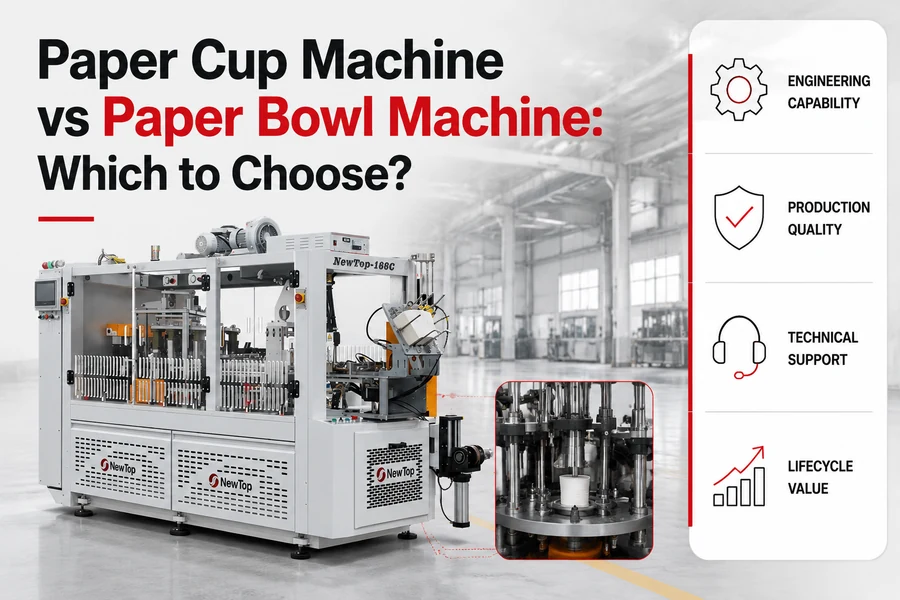
Buyers should compare dedicated cup lines, dedicated bowl lines, and flexible cup-bowl configurations across container geometry, forming stations, tooling sets, output rate, changeover time, and floor-space needs. Those dimensions determine fit before brand-level preferences.
When evaluation teams frame the decision as 'cup machine versus bowl machine', they often collapse several distinct options into two labels. In practice, you are choosing among dedicated cup lines, dedicated bowl lines, and flexible configurations that can switch between formats. Each option changes the operating model, not only the price line.
Define the comparison dimensions before contacting suppliers and keep them identical for every candidate:
The labels 'cup machine' and 'bowl machine' should not be treated as fixed categories. A wide, shallow cup and a narrow bowl can overlap in geometry. The real question is where your portfolio sits on the diameter-to-depth spectrum and whether one frame can span that range without excessive changeover loss.
These are generic configuration descriptions for comparison, not performance promises for any specific machine model.
Dedicated cup line: Optimized for tall, narrow containers with relatively small blank diameters and tight rim specifications.
Dedicated bowl line: Optimized for shallow, large-diameter containers that need wider blank handling and larger heating or mould surfaces.
Flexible cup-bowl line: Can run both families, but the buyer must verify tooling change time, changeover waste, and the throughput penalty paid when switching formats.
Buyer note: Compare every candidate on one representative product from your portfolio, not on the supplier's showcase size.
Sourcing risk (hypothetical example): A supplier might label a machine as a cup machine while its tooling actually suits only a narrow range of cup sizes. Ask for the minimum and maximum container dimensions the frame can handle in the same configuration, and require a written confirmation that your target size is within that envelope.
The main trade-offs are product-geometry fit, tooling and changeover costs, output efficiency at a given diameter, material handling, packaging integration, and floor-space allocation. A line optimized for cups is unlikely to produce bowls efficiently without significant tooling and station changes.
The first trade-off is geometry. Cups have a high depth-to-diameter ratio, so the sidewall must be drawn, curled, and sealed around a relatively narrow mandrel. Bowls have a low depth-to-diameter ratio, which changes the flat blank size, the heating distribution, and the forming force across a wider area. A frame designed for one geometry family may lack the blank width, platen area, or heating capacity for the other.
The second trade-off is tooling and changeover. Every diameter and depth change requires moulds, heaters, curling tools, and often a different blank profile. Tooling cost is not a one-time expense if you switch catalog items frequently. A flexible line can amortize tooling only when changeover frequency is low enough for setup losses to remain acceptable.
The third trade-off is effective output. At a given container size, a dedicated line can be tuned for one format and run continuously. A line that alternates between cups and bowls spends part of its planned production time in changeover, so effective capacity is a weighted average across your product mix, not the rated speed printed on the datasheet.
The fourth trade-off is site integration. Larger bowl blanks and forming areas can require a longer frame, more heating capacity, and different compressed-air or vacuum demand. Floor space, electrical capacity, and ventilation may eliminate a candidate before purchase price becomes the deciding factor.
Manufacturers seeking both formats without owning two frames often evaluate flexible architectures. One publicly documented example is the NewTop effort to promote the research and development and industrialization of a paper cup flexible production line, which shows how suppliers are moving toward changeover-friendly cup production. Treat such a line as a candidate only after the supplier commits to changeover times and waste rates for your specific format pairs.
Decision checkpoint: Before comparing quotes, define an effective-capacity formula for your review committee: planned production time minus changeover time minus estimated rejects, expressed across a representative month. Apply the same formula to every candidate.
Dedicated cup machines fit producers with stable, high-volume cup demand; dedicated bowl machines fit bowl-focused foodservice lines. Flexible configurations fit mixed portfolios and seasonal orders, provided changeover losses are quantified. There is no universal winner, only condition-specific fit.
The fit decision should be modelled with a 24-month demand plan, not a one-week order sample. The three scenarios below are hypothetical examples that illustrate the evaluation logic; replace them with your actual product mix and ask suppliers to quote on your real data.
Fit: In this hypothetical scenario, a dedicated paper cup machine is the fit. The line runs one geometry family, operators master the tooling, and packaging can be automated around a constant rim size.
Constraint: If the order book later becomes mixed, the dedicated line either runs uneconomically on other formats or requires new tooling.
Buyer note: Choose the dedicated route when demand concentration is high and future format expansion is unlikely.
Fit: In this hypothetical scenario, a dedicated paper bowl machine is the fit. Wide blanks and shallow forming are handled by a frame designed for that product class.
Constraint: Producing cups on the same line usually means long changeover and a reduced speed band.
Buyer note: Confirm that the bowl machine's width envelope also covers smaller portion bowls if your range includes multiple diameters.
Fit: In this hypothetical scenario, a flexible cup-bowl configuration fits when changeover frequency is low and volume per run is high, or two dedicated lines when cup and bowl volumes are both high enough to keep each line busy.
Constraint: Flexible lines can sacrifice some peak throughput and add tooling complexity.
Buyer note: Model the year as one schedule, not as two independent demand forecasts, so the changeover penalty is visible.
Installation evidence helps confirm whether a machine behaves as promised under continuous operation. Regional deployment records, such as Middle East paper cup machine customers documented by NewTop, can indicate how the supplier supports machines in similar operating environments. For beverage-focused production, a documented example is the NEWTOP machine running in a Chinese milk tea factory's paper cup production line, which shows the machine class under a food-service demand pattern. Use these references to validate service response, spare parts availability, and operator training expectations, not to infer output numbers.
Evaluation teams should define the target product spec, demand concentration, changeover cadence, and site constraints, then send every shortlisted supplier an identical RFQ with a representative test product. This makes paper cup and bowl machine proposals comparable and audit-ready.
Use the same product specification for every supplier. For example, if one quote is based on a beverage cup and another on a wider bowl, the output and tooling data cannot be compared directly. The sequence below is a practical evaluation workflow for procurement and technical teams.
List every container you plan to produce in the next 24 months, including diameters, depths, materials, print requirements, and acceptable tolerances. Outcome: a stable specification set that all suppliers must quote against.
Choose the container that sits closest to the middle of your portfolio by diameter and depth. Action: require each supplier to run that test product during a factory acceptance test or a paid material trial. Outcome: comparable output data on the same product.
Weight geometry fit, tooling-change time, reject rate, maintenance access, energy demand, and packaging integration according to your operating priorities. Outcome: a shortlist based on operational fit, not on nominal speed.
Review reference installations that match your geography and product type. Action: ask for the supplier's report on changeover frequency, downtime, and spare parts consumption at those sites. Outcome: a documented basis for service risk, not a marketing claim.
The requested data should be part of the RFQ, not collected after ordering. If a supplier will not provide changeover times, reject-rate targets, or acceptance-test terms at your test product, treat the proposal as incomplete and request a written explanation before scheduling a site visit.
It depends on the machine architecture and tooling. Some flexible lines can handle both families, but the container geometry range is bounded by frame size, blank width, heating capacity, and tooling changeover. Ask the supplier to document the minimum and maximum diameters, depths, and material grammage for the same frame before assuming dual capability.
Buy two dedicated lines when both cup and bowl volumes are high and run continuously. Buy a flexible line when the combined volume is moderate, changeover frequency is low, and capital budget or floor space is constrained. Model effective output including changeover time and waste, not the rated speed of either machine.
Request a technical datasheet at your test product, a tooling list with changeover times, a factory acceptance test protocol, installation references, and a spare-parts policy. Avoid comparing quotes that use different container specs or different output definitions, because the comparison will be invalid.
Neither a paper cup machine nor a paper bowl machine is inherently superior. Dedicated lines serve stable, high-volume production; flexible lines serve mixed portfolios when changeover losses are acceptable. Define your product geometry, demand concentration, and changeover cadence first, then compare suppliers on an identical RFQ. Use installation references to verify real-world behaviour, and treat any supplier claim that lacks a demonstrated run as an open risk.
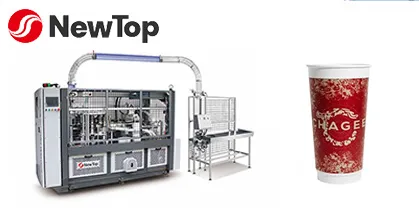
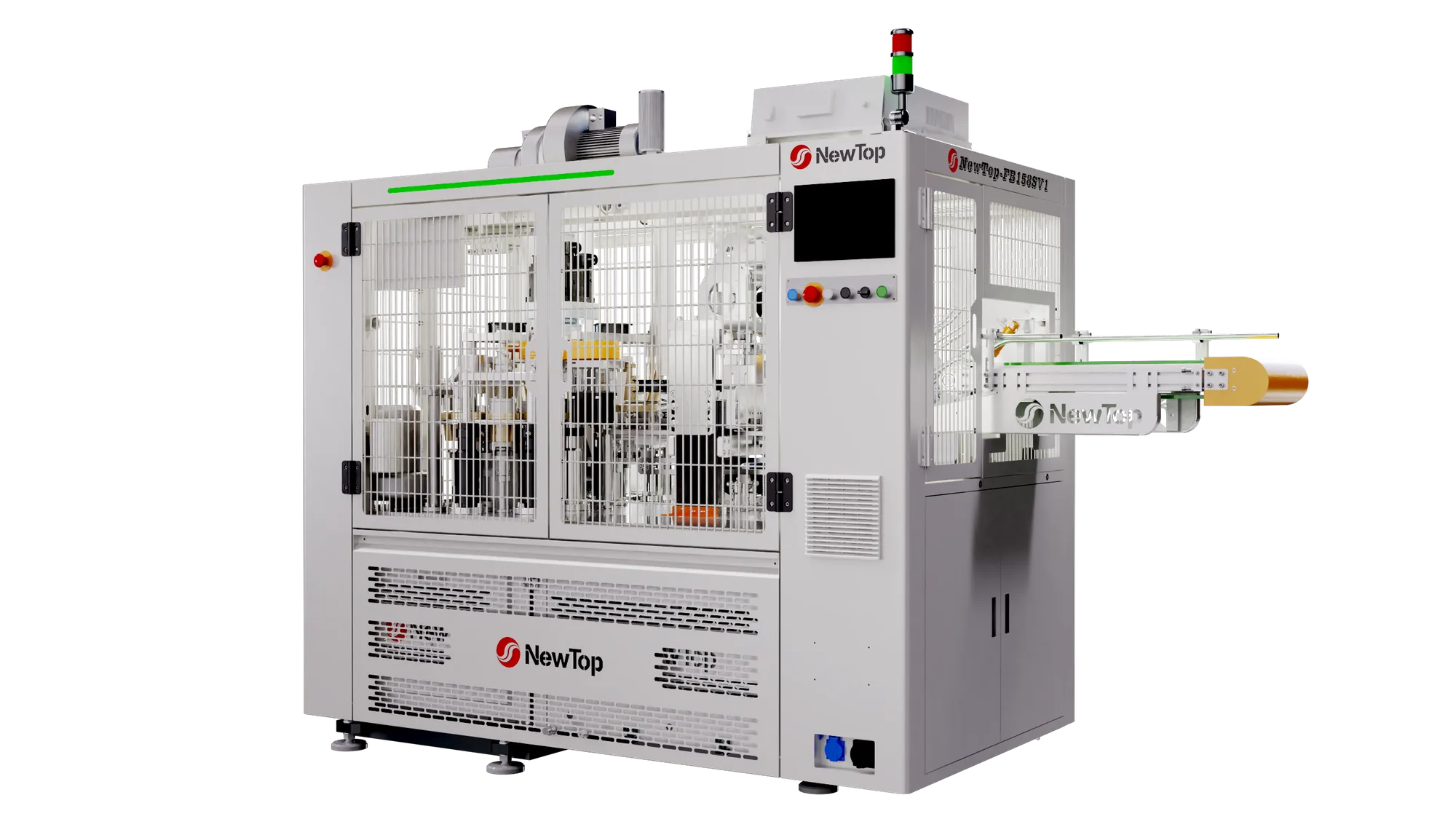
2.5oz-12oz Paper Cup Size
168-175 pcs/min Max Capacity
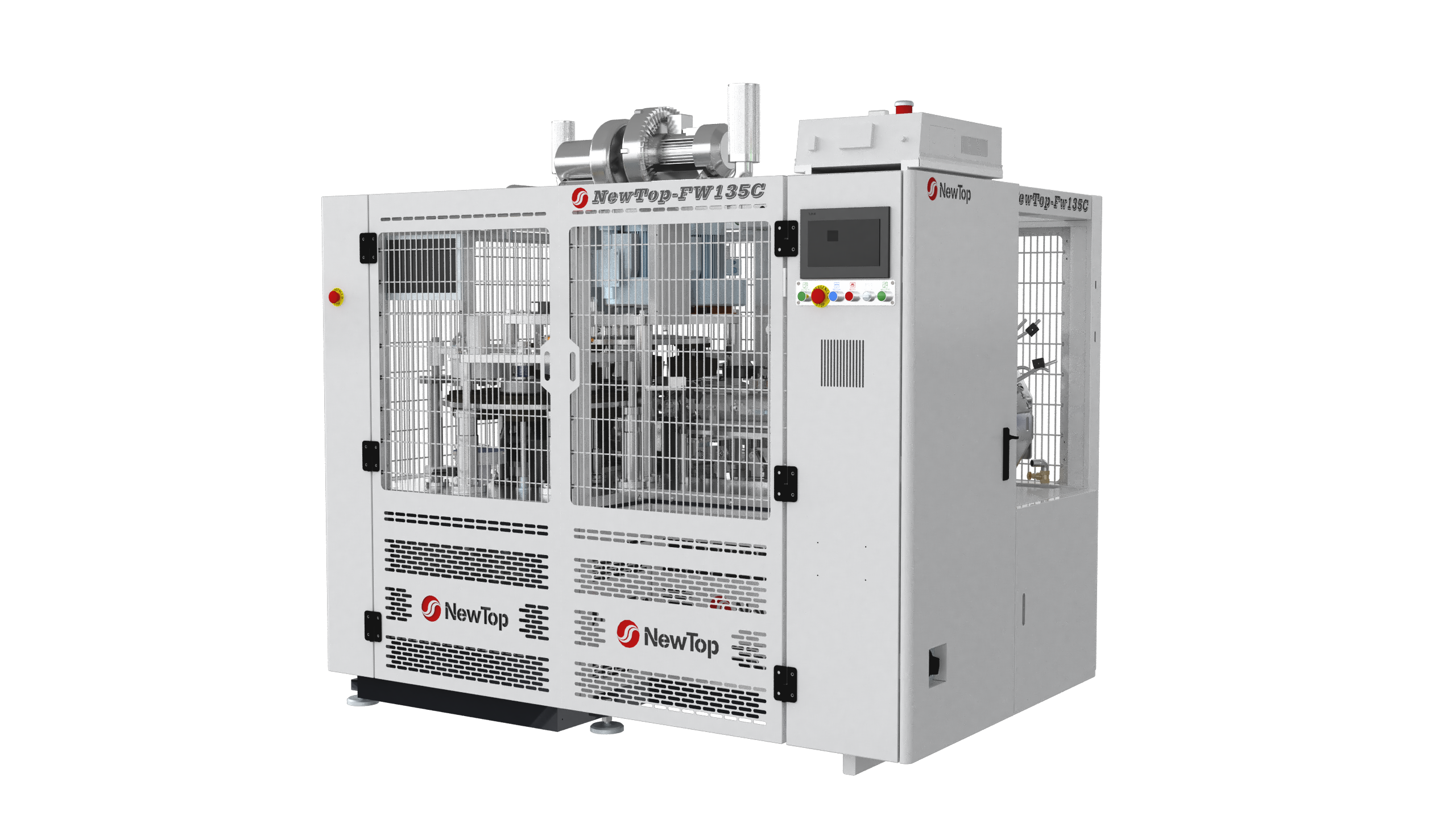
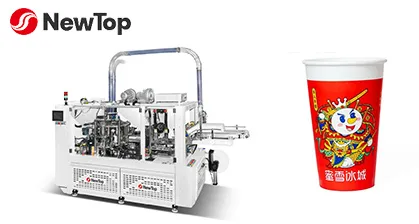
16-42oz Paper Cup Size
140 pcs/min Max Capacity
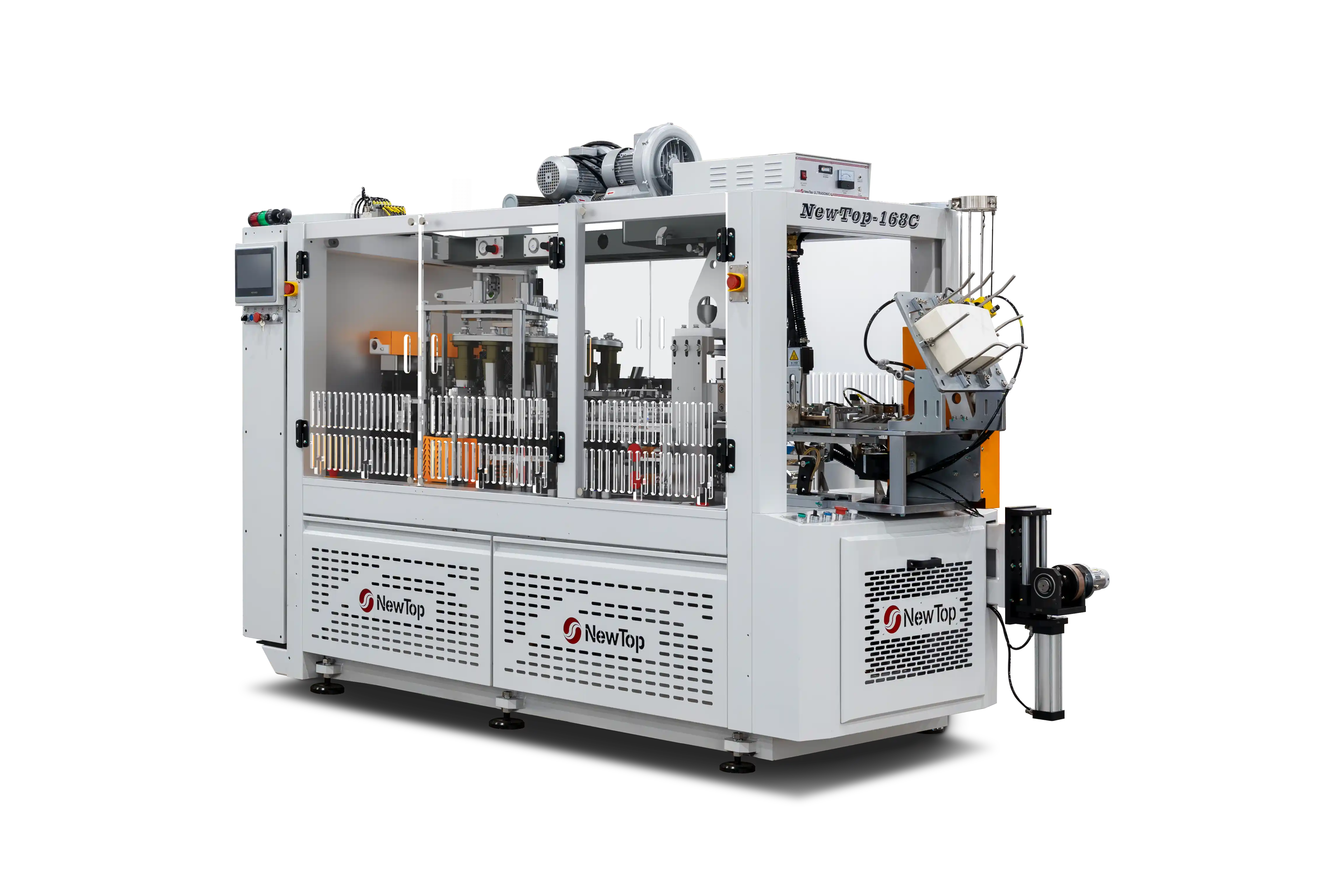
16-22oz Paper Cup Size
138 pcs/min Max Capacity


NewTop people pursue the concept of high quality and technology leading.
By changing the working mode with intelligent paper cup machine to make the operation more and more simple.
Fengzhai Natural Village,Wandu Village, Wanquan Town, Pingyang County, Zhejiang Province,China