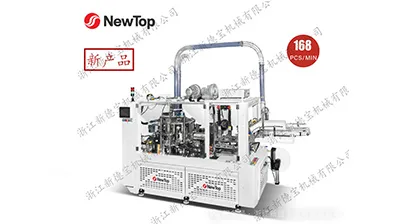

New Debao people pursue the concept of high quality and technology leading.
By changing the working mode with intelligent paper cup machine to make the operation more and more simple.

At a packaging conference in late 2024, an equipment supplier made a provocative statement: "In three years, you won't buy a forming line based on cups per minute anymore. You'll buy it based on data points per cup."
The audience chuckled uncomfortably. But six months later, several major manufacturers quietly started adding sensor packages to their specifications.
2026 isn't science fiction. The technologies arriving now are practical, proven, and already deployed in early-adopter plants. Let's examine five trends that will define intelligent cup production in the coming year — and what they mean for your business.
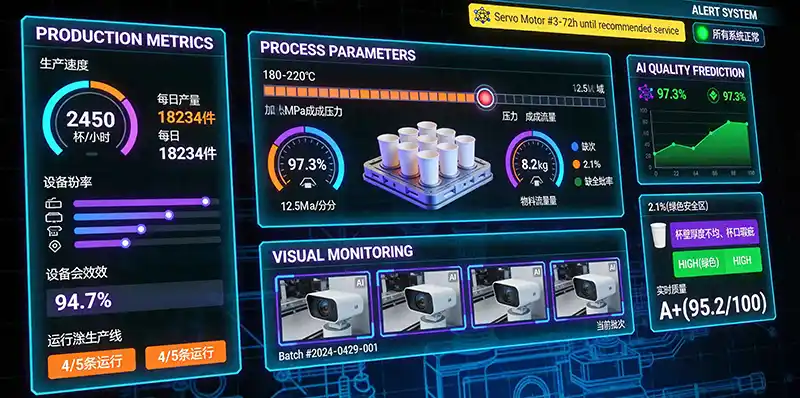
Traditional quality checks rely on periodic sampling — an operator pulls a cup every 15 minutes, checks rim diameter and side seam, and hopes the previous 1,500 cups were fine. Statistical process control works, but it misses defects between samples.
What's changing: High-speed cameras (300+ frames per second) combined with on-device machine vision processors. These systems inspect every single cup at full production speed — 150, 200, even 250 cups per minute.
Real-world performance: A German packaging company installed such a system in late 2024. Within three months, they detected 17 rim curl defects that would have reached customers. The system learned to recognize the specific vibration pattern preceding a misforming event, allowing predictive stops before scrap was produced.
Key metrics to watch:
Defect detection accuracy: 99.7% (false positive rate under 0.5%)
Processing latency: under 30 milliseconds per cup
Typical payback: 8-14 months from reduced claims and rework
Source: Field data from a European contract packer, November 2024 installation (company name redacted).
If you currently rely on manual or periodic inspection, AI vision systems will quickly become a competitive differentiator — not just for quality, but for customer confidence. Large buyers (Starbucks, McDonald's, regional chains) are already asking suppliers about their inspection capabilities.
Implementation reality: These systems don't require replacing your entire line. Retrofit camera modules can be added to existing forming stations, with output feeding to a dedicated monitor or integrated into your existing PLC.
A digital twin is a virtual replica of your physical forming line. But the 2026 version goes beyond 3D visualization.
| Approach | Cost Range | Timeline | Best For |
|---|---|---|---|
| Basic 3D model + manual parameter input | $5,000-15,000 | 2-4 weeks | Simple visual planning, training |
| Full FEA simulation package | $25,000-60,000 | 2-3 months | Complex cup geometries, R&D focus |
| Integrated twin with PLC upload | $50,000-100,000+ | 4-6 months | High-mix, rapid changeover environments |
Note: The premium option typically pays for itself within 9 months for plants running more than 10 different cup designs monthly.
Energy costs for cup production typically represent 5-8% of total operating expenses — but that number has been climbing. In Germany, industrial electricity prices increased 35% between 2021 and 2024. Similar trends exist across Europe and parts of Asia.
The 2026 solution: Real-time energy management systems that don't just monitor — they actively optimize.
How it works:
Sensors track current draw on every motor and heater
The control system models the energy cost of each production decision
When energy prices peak (via API connection to utility pricing), the system automatically suggests or executes adjustments: slightly slower line speed, pre-heating scheduling, or shifting production to off-peak windows
Documented results from a pilot installation (Netherlands, Q1 2025):
18% reduction in energy consumption per thousand cups
11% peak demand reduction through intelligent motor scheduling
9-month payback on the energy management retrofit
The EU's Energy Efficiency Directive (EED) requires large companies (over 250 employees or €50M turnover) to conduct energy audits every four years. Starting in 2026, some member states are expected to mandate real-time energy monitoring for industrial processes.
If your customers are in regulated markets, expect requests for energy-per-cup data in RFQs.
The compostable packaging wave keeps building. But PLA-coated paper behaves differently from traditional PE. Different thermal profiles. Different friction coefficients. Different moisture sensitivity.
The trend: Forming systems designed from the ground up for material flexibility — not as an afterthought.
Key developments for 2026:
Modular heating zones – Independent temperature control for bottom heater, sidewall heater, and rim curl station. PLA might need 190°C on the bottom but 210°C on the sidewall. PE might run uniformly at 260°C.
Variable forming pressure – Servo-driven forming stations that adjust tonnage on the fly based on material stiffness feedback from the paper feeding track.
Coating-aware changeover presets – The system remembers: "12oz, 250gsm board, PE coating → 260°C, 8 bar forming pressure, 120ms dwell. Same cup, PLA coating → 205°C, 6 bar, 160ms dwell."
Multiple jurisdictions have announced single-use plastic bans with paper cup exemptions that require compostable certification. The EU's Packaging and Packaging Waste Regulation (PPWR) is phasing in requirements. California's Plastic Pollution Prevention Act has similar provisions.
Manufacturers locked into PE-only lines will face customer pressure — and possibly regulatory risk — starting 2026-2027.
Servo feedback and vibration monitoring have been available for years. The 2026 evolution is cross-fleet learning.
The new capability: Your forming line's control system uploads anonymized performance data to the cloud. The manufacturer's AI compares your equipment behavior against thousands of other installations — identifying patterns that predict failure weeks before traditional threshold alerts.
Real example: A subtle increase in main bearing current draw over 15 days. Traditional alert triggers at +15% above baseline. But the cloud system noticed that nine other similar lines failed at +12% draw. It generated a maintenance recommendation at +9%, saving a catastrophic bearing seizure.
Adoption status: Major servo and PLC manufacturers (Siemens, Rockwell, B&R) have launched cloud analytics platforms. Integration requires a gateway device (typically 2,000−5,000) and a subscription (2,000−5,000), and a subscription (500-2,000 monthly, depending on data volume).
*According to a 2024 industry survey by Packaging World, 34% of large cup manufacturers plan to implement cloud-based predictive maintenance by the end of 2025.*
What does a trend-aware installation look like?
Vision inspection at the cup exit (rejects bad cups before packaging)
Digital twin on a local workstation (new product setup in hours, not weeks)
Energy optimization dashboard (real-time cost-per-cup tracking)
Multi-material presets (PE on Monday morning, PLA after lunch)
Cloud predictive maintenance (alerts on your phone before the line stops)
Not every plant needs all five. But every plant should evaluate which two or three deliver immediate ROI.
| If your primary pain point is... | Prioritize this trend | Expected payback |
|---|---|---|
| Customer quality complaints or returns | AI vision inspection | 8-12 months |
| Long new cup development cycles | Digital twin | 6-14 months |
| Rising energy costs | Energy optimization | 9-18 months |
| Regulatory or customer pressure for compostables | Multi-material compatibility | 12-24 months |
| Unexpected downtime from failures | Cloud predictive maintenance | 10-16 months |
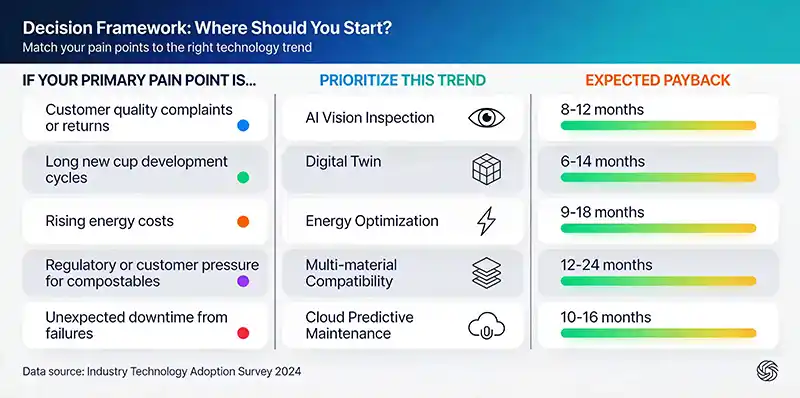
No single trend will transform your production overnight. But collectively, these five represent the industry's direction of travel. Manufacturers who adopt them systematically will widen their competitive moat. Those who wait risk playing catch-up when customers start asking — and they will start asking.
The forming line that arrives in 2026 won't just make cups faster. It will make them smarter, with less waste, less energy, and more data than anything on the market today.
If you're planning your next production line upgrade and want to understand how these intelligent features integrate into practical, proven equipment, Newdebao builds modular systems that support AI vision readiness, digital twin interfaces, and multi-material flexibility.
Explore how current systems can be configured with trend-ready options: [View Newdebao's intelligent cup forming system specifications]
EU Energy Efficiency Directive (EED) – Directive (EU) 2023/1791
EU Packaging and Packaging Waste Regulation (PPWR) – Proposal COM/2022/677
Packaging World 2024 Industry Survey on Predictive Maintenance (n=312 manufacturing professionals)
Field data from German and Taiwanese early adopters (anonymized by request)
Siemens Industrial AI and Cloud Analytics platform documentation (2024)
All images are for illustrative purposes only
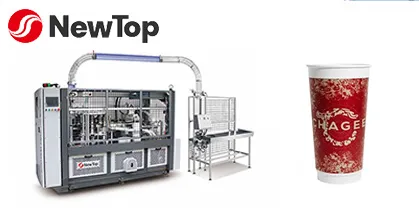
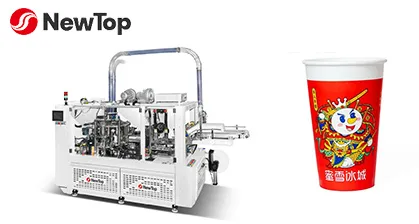
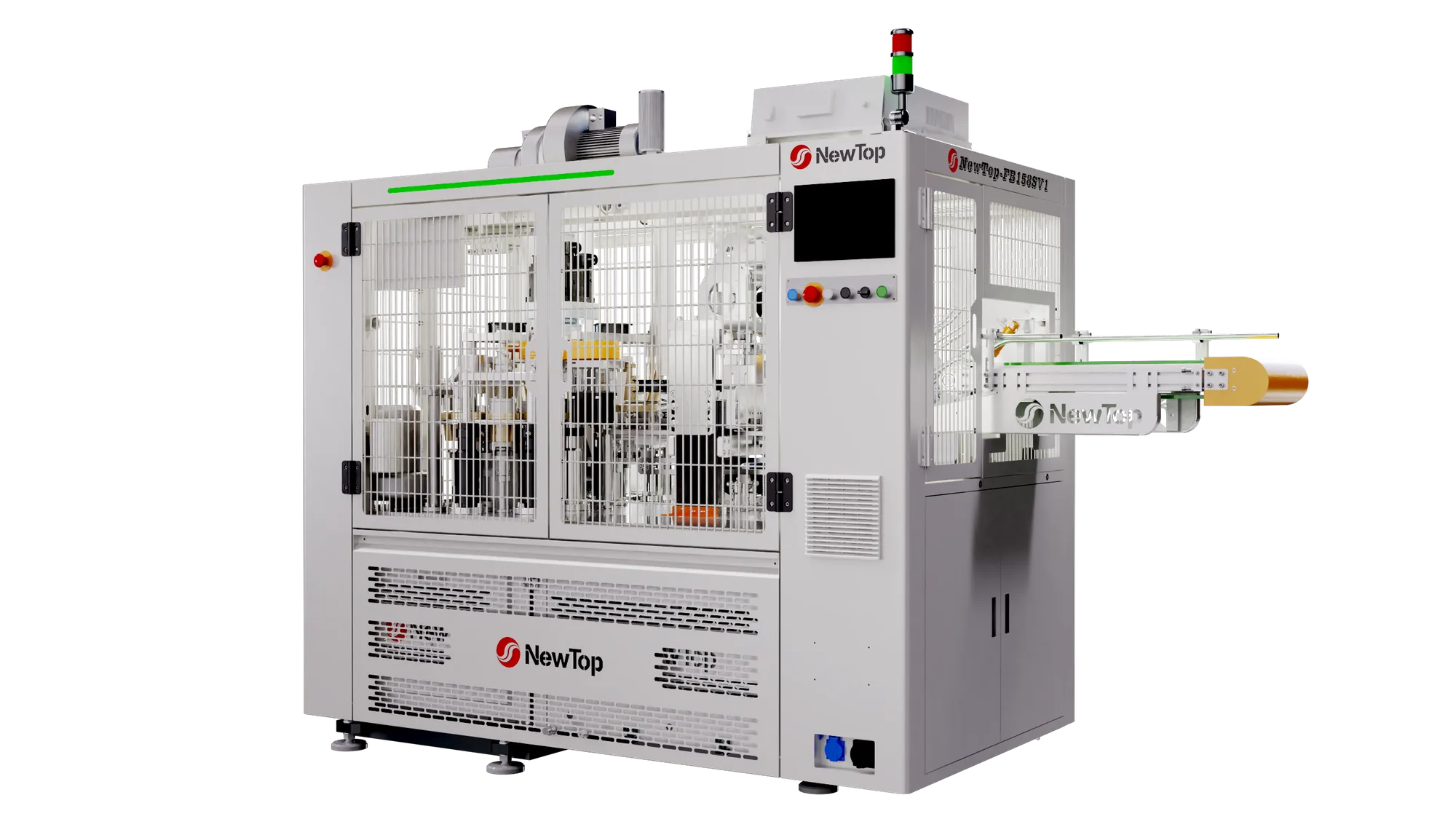
2.5oz-12oz Paper Cup Size
168-175 pcs/min Max Capacity
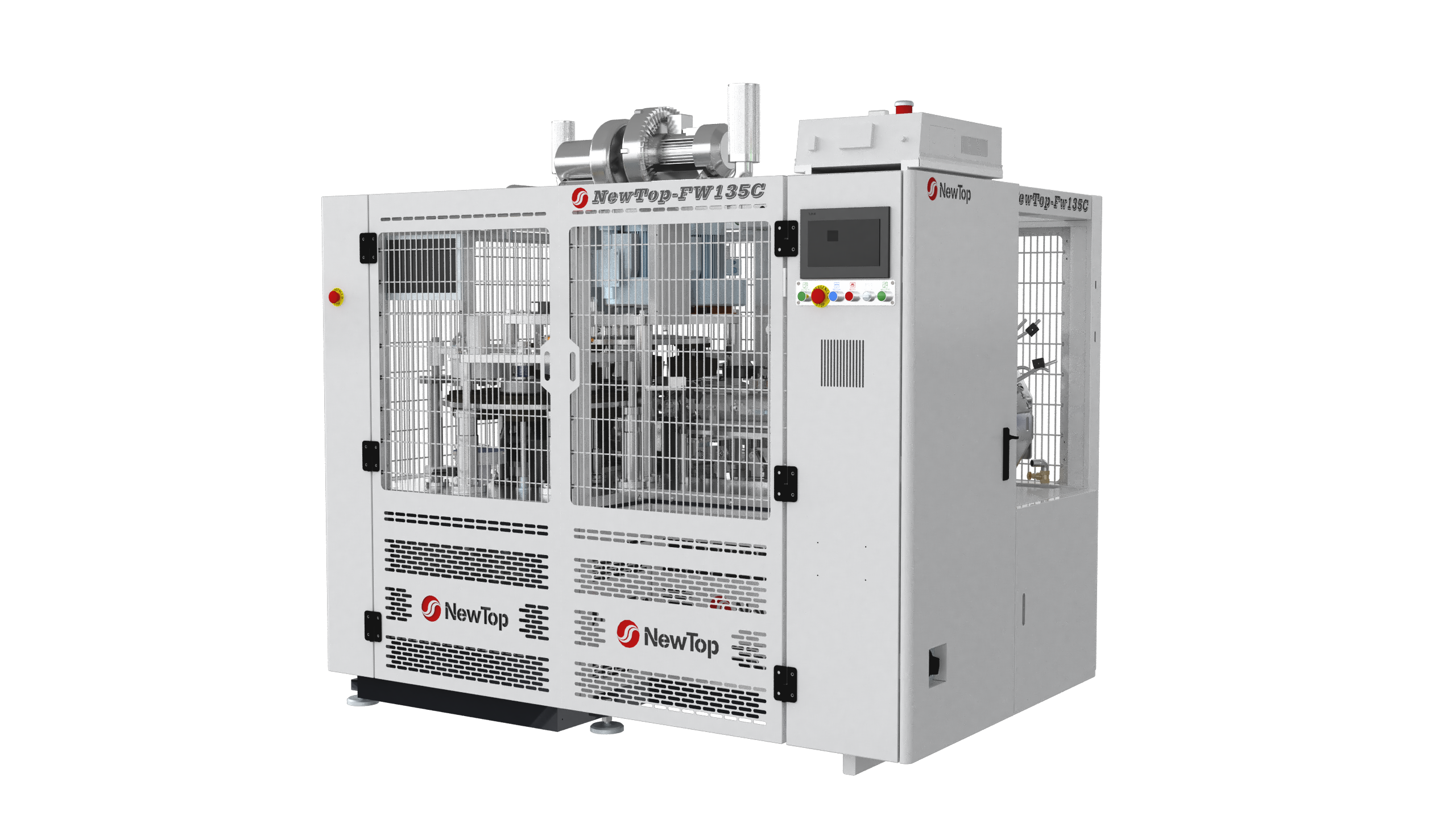
16-42oz Paper Cup Size
140 pcs/min Max Capacity
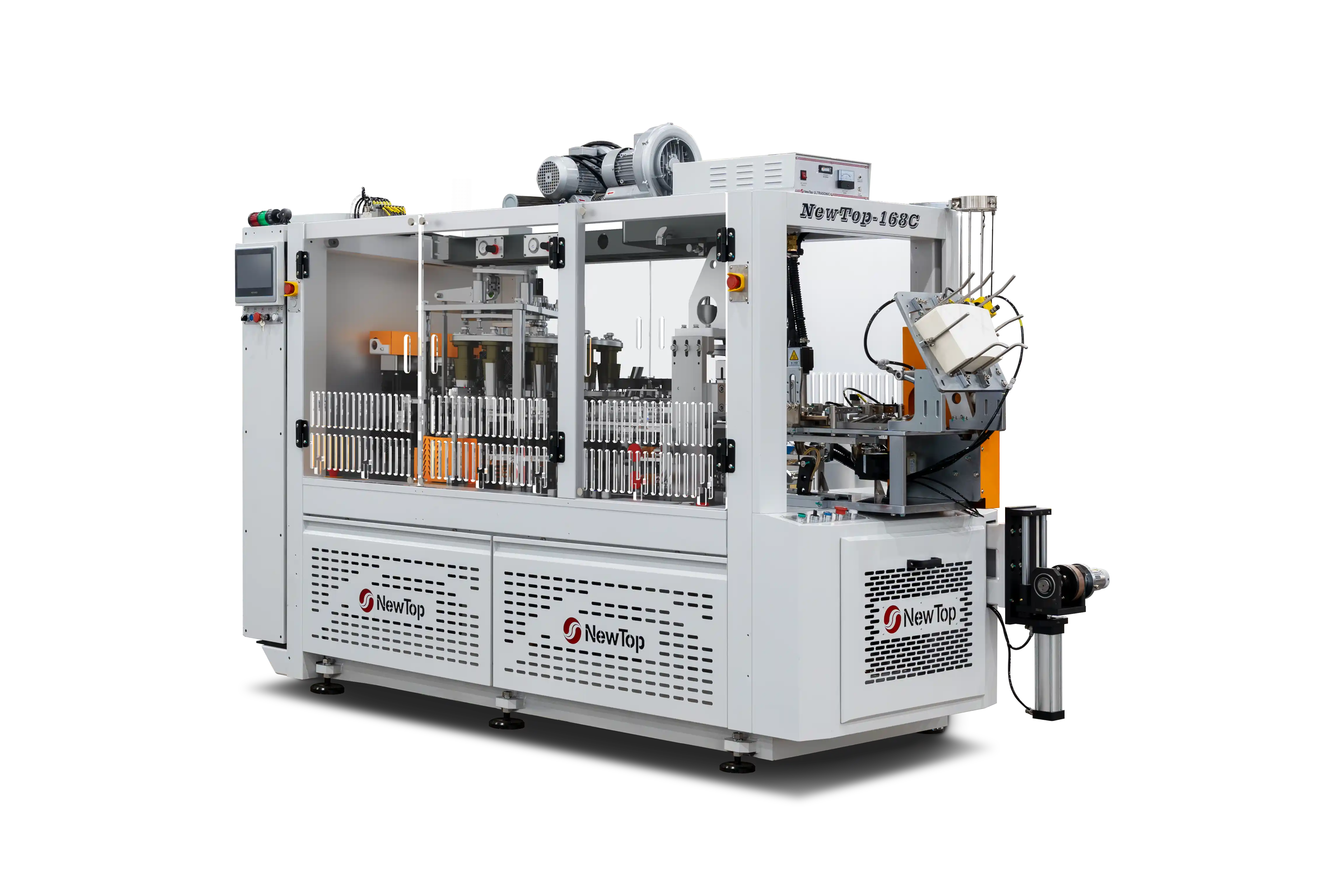
16-22oz Paper Cup Size
138 pcs/min Max Capacity


New Debao people pursue the concept of high quality and technology leading.
By changing the working mode with intelligent paper cup machine to make the operation more and more simple.
Fengzhai Natural Village,Wandu Village, Wanquan Town, Pingyang County, Zhejiang Province,China