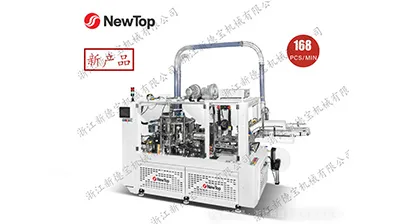

NewTop people pursue the concept of high quality and technology leading.
By changing the working mode with intelligent paper cup machine to make the operation more and more simple.

A paper bowl that looks perfect in the stack can still fail after ten minutes under a hot soup load. The bottom seal may be unevenly heated, the side seam may have been weakened during knurling, or the rim may have been rolled from paperboard that was too dry. These failures rarely announce themselves during casual inspection; they emerge under load, heat, and time. Understanding how a paper bowl is actually formed—and where each stage introduces risk—is the fastest way to separate stable production from intermittent field failures. This guide walks through the forming stages, explains the heating and sealing logic behind the bottom and rim, and identifies the quality factors that determine whether a bowl holds. For the complete manufacturing reference including capacity planning and format tiers, see the pillar guide on the Paper Bowl Manufacturing Process.
Paper bowl production follows the same broad sequence as paper cup production—blank preparation, side-wall forming, bottom insertion and sealing, rim forming, inspection, and packing—but the geometry changes which stages dominate quality risk. A bowl is shallower and wider than a cup, with a bottom diameter much closer to the rim diameter. That means the bottom seal is not a small circular joint but a broad annular bond that must be heated and pressed evenly around its entire circumference, and the rim has a longer edge to keep uniform.
The table below summarizes how each forming stage maps to the defect risk it controls.
| Forming stage | What it controls | Primary defect risk if parameters drift |
|---|---|---|
| Blank preparation | Side-wall arc, bottom disc diameter, paper moisture | Dimensional deviation, cracking, poor sealing |
| Side-wall forming | Seam overlap and sealing | Leakage, seam opening, ovality |
| Bottom heating and forming | Coating melt, knurling pressure, seal continuity | Bottom leaks, deformation, burn marks |
| Rim forming | Edge roll geometry, wall rigidity | Splits, uneven rims, lid fit failure |
Research published in BioResources on container forming documented that side seam buckling near the bottom fold can occur when the fit on the bottom forming tools is incorrect, because the tool pushes up on the container while the side seam seal is still hot—subjecting the seam to shear at its most vulnerable point. The same study found that even a single production run could produce defect rates ranging from near zero to 40% depending on material and machine settings, with defects concentrated in the bottom and rim zones. Bowl geometry amplifies these mechanisms because the bottom joint carries more load and the side wall is shallower, leaving less material to absorb mechanical stress.
For a closer look at how different bowl formats are supported by machine architecture—from countertop integrated layouts to large-format platforms—the Paper Bowl Machine series page provides an overview of the forming configurations available for different production scales.
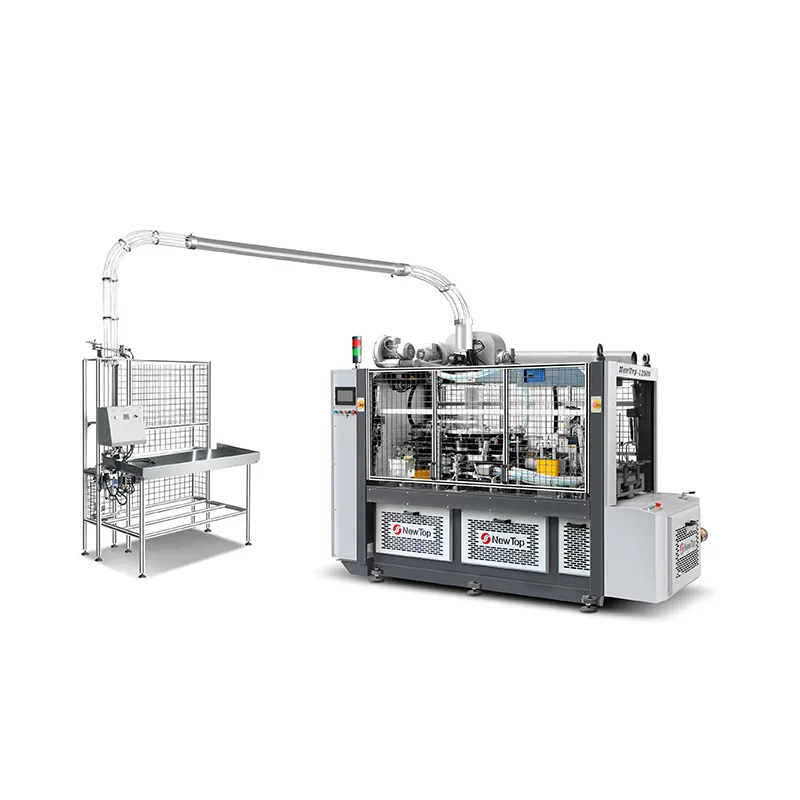
The bottom stage is the most quality-critical step in bowl production. A circular bottom blank is fed into the open end of the formed bowl body, and the edge of the bowl wall is folded inward and pressed against the disc to create a sealed joint. The seal depends on the coating reaching the right temperature, the pressure being applied evenly, and the paper and coating behaving consistently across the full annular area.
Why bottom heating is different in bowls. In a cup, the bottom heating ring is small enough that a single heater band can keep temperature uniform across the joint. In a bowl, the heating area is wider, and any temperature gradient across the die translates directly into a gradient in seal strength. Research from LUT University on container forming concluded that preserving a uniform bottom temperature is a necessity to avoid burn marks at the bottom sealing area and insufficient scalability, both of which can lead to bottom leaks. The same work found that bottom temperature consistently surpasses side seam temperature across production speeds, and that the gap between the two widens as speed increases for materials with lower coating grammage—meaning a machine tuned for one material may not hold its seal window when paper stock changes.
Hot air versus ultrasonic bottom sealing. Hot air sealing blows pre-heated air onto the polymer coating to soften it before compression; it is common and robust, but temperature, nozzle positioning, and dwell time must be controlled precisely. Ultrasonic sealing generates localized heat through high-frequency mechanical vibration at the interface, without applying external heat to the surrounding paper. A BioResources comparative evaluation of the two methods found that ultrasonic sealing showed an advantage in sealing consistency over hot-air sealing in high-speed converting processes. Many bowl platforms combine the two: ultrasonic for the side wall seam, hot air for the bottom, because the bottom joint’s geometry and load profile differ from the side seam’s.
The practical implication for production planning is that the bottom seal is not a “set and forget” parameter. A drop of 5–10°C can create a weak bond that passes a room-temperature leak test but fails under hot liquid, because the coating softens further and internal pressure increases. For an overview of how bottom sealing integrates with inspection and packing in a complete bowl line, the Bowl Machine Online Solution page describes the in-line configuration from forming through finished product handling.
The side-wall blank is wrapped around a mandrel and the overlapping edges are joined into a seam. In bowl production, the side seam runs the full height of the bowl wall, and its integrity is critical because the bowl’s wider profile subjects the seam to both hoop stress from the fill and bending stress from handling.
The BioResources forming study identified a specific failure mechanism that is directly relevant to bowls: major buckling of the side seam area occurs when the wall material adjacent to the seam collapses inward during seaming, reducing the overlapping area and affecting roundness. A related defect, side seam buckling near the bottom fold, produces a horizontal wrinkle that can affect liquid tightness—in the study’s testing, 4 out of 5 cups with this condition leaked coffee. In bowls, the shallower wall concentrates this shear over a shorter seam length, making the buckle more likely to propagate into a leak path.
The sealing method matters. Ultrasonic side sealing generates friction heat at the interface and is reported to produce a seam with high bond strength while avoiding the scorching risk of direct-contact thermal sealing. Hot air side sealing remains common, but it is sensitive to airflow temperature, nozzle positioning, and ambient humidity. The BioResources comparison of the two technologies reinforces that the choice is not purely about peak strength but about consistency across a production run—a seam that is strong on average but variable will still generate failures at the tail of the distribution.
Key checkpoints for side seam integrity: seam overlap width; seam appearance after flexing (white or stressed areas indicate incomplete bonding); bowl roundness after forming; mandrel wear.
The rim is the most visible part of the bowl and the most sensitive to material variability. The top edge is heated and rolled outward to create a rounded edge that provides a safe eating surface, adds rigidity to the wall, and gives the bowl a surface for lid or film sealing.
Why rims split. Split rim rolls are most often caused by low moisture content in the paperboard: dryness makes the board stiffer, causing the rim to split during tucking. But moisture is not the only variable. The BioResources study found that rim defects can occur even when measured moisture content is within an acceptable range, because low tensile strength of the material and a tendency to form smaller rim rolls compared to other materials can independently cause splitting. In other words, a paper that passes the moisture check can still fail at the rim if its mechanical properties are not suited to the curling die geometry.
Why large-format rims are harder. The longer circumference of a large-format bowl amplifies temperature variation around the curling die. A die that produces acceptable rims on a 16 oz bowl may produce visible variation on a 64 oz bowl because the edge travels a longer path through the heated zone, and the dwell time at each point on the circumference becomes more sensitive to speed fluctuation. The rim also interacts with the bottom seal: research has shown that a failure in the curling step can increase the height of the container, forcing too much material into the rim and causing splitting—so a rim defect can be a symptom of an upstream bottom problem rather than a rim problem itself.
Key checkpoints for rim quality: rim roundness and diameter consistency; rim smoothness under magnification; rim strength under lid application; paper moisture and tensile properties matched to the curling die.
Bowl quality is not determined by the forming stations alone. Four additional factors interact with the forming process and determine whether a bowl that passes inspection at the factory will survive its actual service conditions.
Hot-fill versus cold-fill suitability. A bowl validated with a room-temperature water leak test may fail under hot soup because the coating softens and internal pressure increases. Bowl specification should be application-driven, not format-driven: two bowls of the same size may require different paper, coating, and sealing parameters if one is intended for salad and the other for hot noodles. In the United States, paper and paperboard food-contact components are addressed under FDA 21 CFR Part 176, which specifies substances that may be safely used as components of coated or uncoated food-contact paper surfaces. For packaging manufacturers, ISO 22002-4 specifies prerequisite programmes for controlling food safety hazards in food packaging manufacturing, including handling of printed and coated materials and controlling risks of chemical migration.
Large-format dimensional stability. The deeper draw and longer wall of large-format bowls require tighter control of die clearance and blank positioning. A frame that flexes under forming load will produce dimensional variation that no parameter adjustment can eliminate. This is one reason large-format production typically runs at lower rated speeds than small-format production on the same platform—not because the machine is less capable, but because the physics of forming a larger container requires more time per cycle.
Surface cleanliness. Bowls are food-contact packaging. Dust, paper dust from cutting, or residue from sealing components compromises food safety. Enclosing critical forming zones and maintaining air filtration reduce contamination risk. Automated defect inspection for manufactured paper bowls has been demonstrated using internal, external, and bottom inspection methods capable of detecting dirt, burrs, holes, and uneven thickness.
Inspection coverage. Leak testing should target both the side seam and the bottom seal, because those are the two most likely leak paths. Compression and edge-crush checks verify stacking strength, which is more critical for bowls than cups because bowls nest less deeply and the bottom bowl in a stack bears more load relative to its wall height.
Scenario 1: Switching from a reference paper stock to a lower-coating material. A plant running 32 oz soup bowls with a standard PE-coated board decides to trial a lower-coating stock to reduce material input. The side seam and bottom temperature windows shift: the lower-coating material is more sensitive to temperature variation because more heat is transferred to fewer polymeric chains, and the gap between side seam and bottom temperature requirements widens as speed increases. The critical question is not whether the machine can reach the required temperature, but whether it can hold that temperature uniformly across the bottom die and across the full production shift. A machine with independent temperature control for side seam and bottom stations, and with recipe storage for material-specific profiles, reduces the trial-and-error cost of this switch. For a visual reference on how forming stations transfer a bowl through side seaming, bottom heating, and rim rolling, the machine operation videos on the videos page show the sequence in production conditions.
Scenario 2: Running large-format bowls on a platform rated for smaller formats. A manufacturer adds a 64 oz catering bowl to a line previously producing 16–32 oz takeaway bowls. The forming draw is deeper, the rim circumference is longer, and the bottom area is larger. Rated speed drops not because the machine is underpowered but because the stable process window narrows: heating and cooling times lengthen, and temperature uniformity across the larger bottom die becomes harder to maintain. The practical planning question becomes how much of the rated speed is actually available at the larger format. For a closer look at how large-format bowl production is supported in practice, the high-speed large-format bowl forming machine page describes the architecture used for 30–170 oz formats, including the forming stations and capacity range.
Once you understand how the bottom seal, side seam, and rim each contribute to bowl integrity—and how paper stock, coating grammage, and format size change the stable process window—the next logical step is to compare equipment configurations that match your bowl format and application. You can review the Paper Bowl Machine series for an overview of platforms designed for different production scales, or see how forming, inspection, and packing stages integrate in the Bowl Machine Online Solution. Contact Us
Paper Bowl Manufacturing Process: Forming, Capacity and Quality
Paper Cup Defects: Rim Curling, Side Seam and Bottom Knurling
Paper Cup Manufacturing Process: Forming, Quality Control and Packing
Solved: Common Bottlenecks in High-Volume Paper Cup Production
Customers in Asia | Paper Bowl Line Upgrade with NEWTOP-FW135S & DXD110
This article is part of NewTop’s technical content library. No direct sales or pricing information is included. All technical discussions aim to help you make informed purchasing decisions.
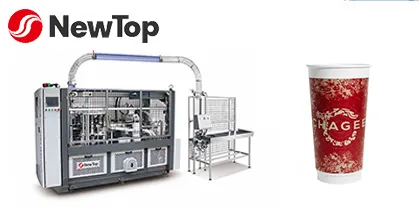
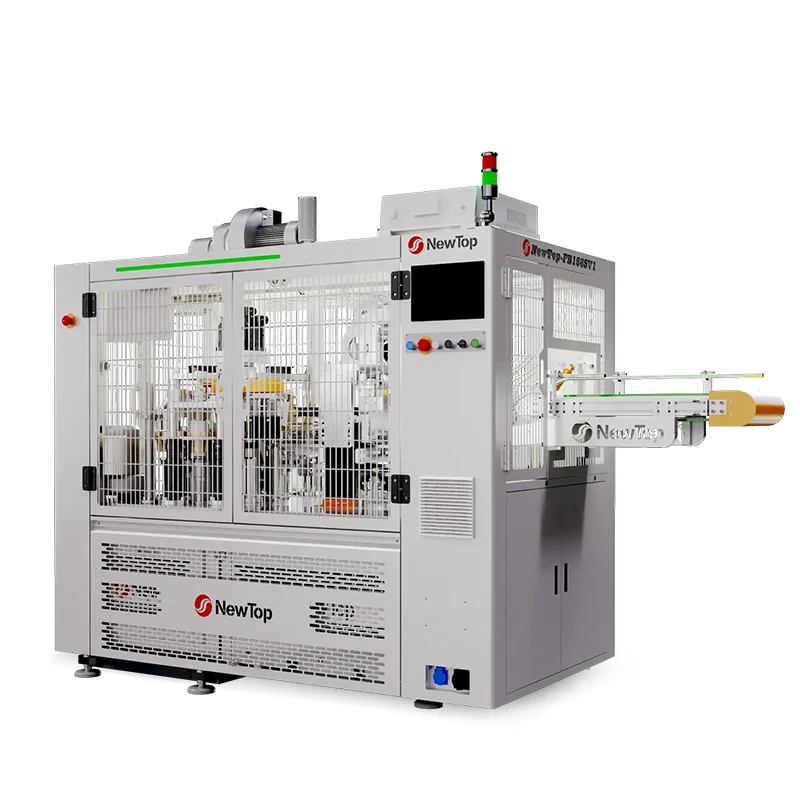
2.5oz-12oz Paper Cup Size
168-175 pcs/min Max Capacity
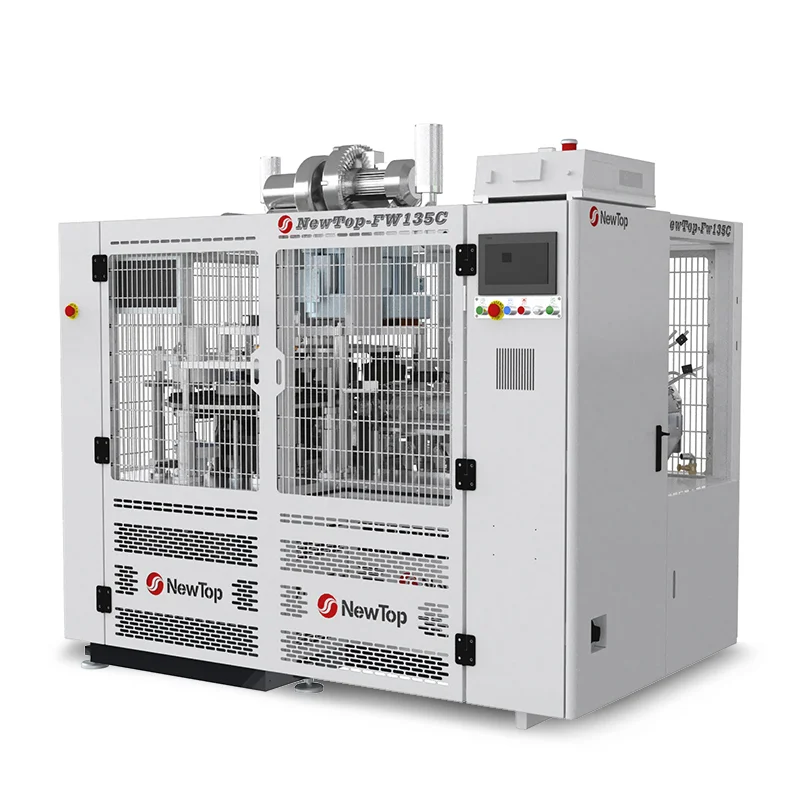
16-42oz Paper Cup Size
140 pcs/min Max Capacity
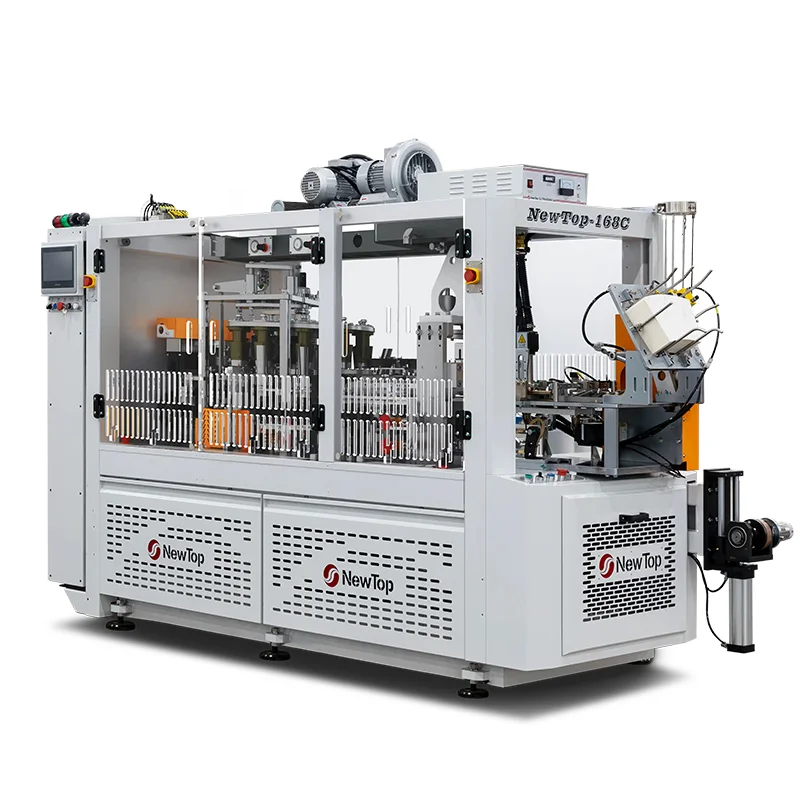
16-22oz Paper Cup Size
138 pcs/min Max Capacity


NewTop people pursue the concept of high quality and technology leading.
By changing the working mode with intelligent paper cup machine to make the operation more and more simple.
Fengzhai Natural Village,Wandu Village, Wanquan Town, Pingyang County, Zhejiang Province,China